

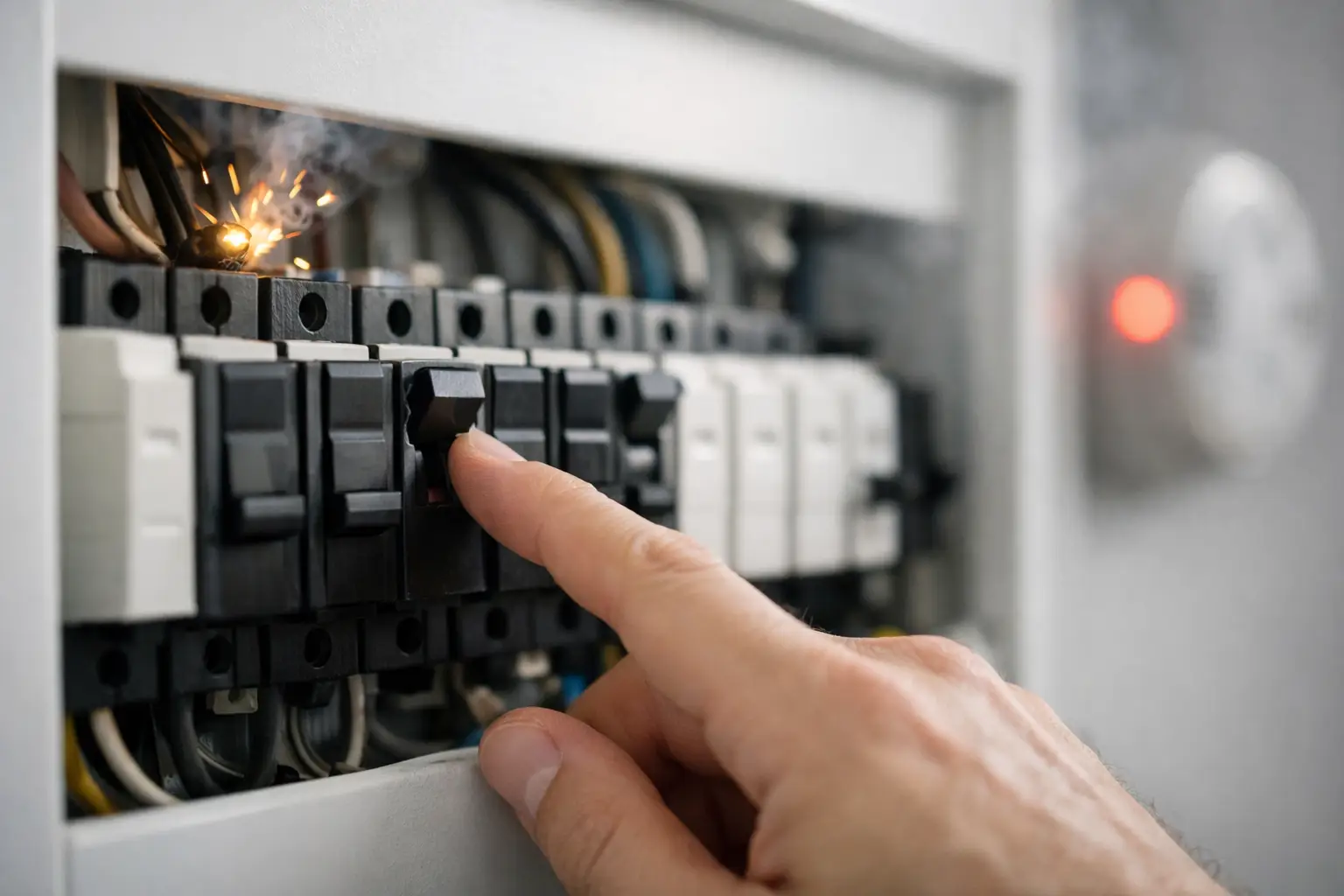
A breaker that trips once can be annoying. A breaker that trips repeatedly is your electrical system telling you something needs attention. If you are asking, “why does circuit breaker trip,” the short answer is that it has detected a condition that could overheat wiring, damage equipment, or create a fire or shock hazard.
The breaker is doing its job. The real question is what caused it to react. Some causes are simple, such as too many appliances running on one circuit. Others require a trained electrician to find and repair a damaged wire, failing outlet, overloaded panel, or problem appliance.
Why Does a Circuit Breaker Trip?
A circuit breaker is a safety device inside your electrical panel. It monitors the amount of electricity moving through a circuit and shuts power off when that circuit is carrying more current than it can safely handle. It can also trip when electricity takes an unintended path, such as through damaged insulation, moisture, or a faulty appliance.
Most breaker trips fall into a few categories: circuit overloads, short circuits, ground faults, arc faults, and equipment or panel problems. The pattern matters. A breaker that trips only when you run a space heater points to a different issue than one that trips the instant you reset it.
Circuit overloads
An overload happens when one circuit is asked to power more than it was designed to handle. This is common in older homes, garages, kitchens, workshops, rental properties, and commercial spaces where electrical needs have grown over time.
A 15-amp circuit may serve several outlets, lights, and a nearby room. Add a portable heater, microwave, hair dryer, air fryer, coffee maker, or window air conditioner, and the circuit can exceed its safe capacity. The breaker trips before the wire in the wall gets dangerously hot.
Overloads are often predictable. The breaker may trip after several minutes of use, or only when two specific appliances run at the same time. Moving a small device to another circuit may provide a temporary test, but it is not a long-term fix for a circuit that regularly runs out of capacity. A dedicated circuit, additional circuit, or panel upgrade may be the right answer depending on the building and load.
Short circuits
A short circuit occurs when a hot wire touches a neutral wire or another unintended conductive path. This allows electricity to move with very little resistance, producing a sudden high current that trips the breaker quickly.
Signs can include a breaker that trips immediately, a burning smell, discoloration at an outlet, buzzing, sparks, or a device that stopped working before the trip. Damaged cords, loose wiring connections, worn outlets, rodent damage, and failed appliances can all create a short circuit.
Do not keep resetting a breaker that trips immediately. Leave it off and have the circuit inspected. Repeatedly forcing power back onto a fault can worsen wire damage and raise the risk of overheating.
Ground faults and moisture problems
A ground fault happens when electricity leaves its intended wiring path and contacts a grounded surface or component. It is especially common where water or damp conditions are present: bathrooms, kitchens, laundry rooms, garages, crawl spaces, exterior outlets, pools, hot tubs, and outdoor equipment.
Ground-fault circuit interrupter, or GFCI, protection is designed to shut off power very quickly when it senses an imbalance. Sometimes the device that has tripped is not the breaker itself. It may be a GFCI outlet with test and reset buttons, often located in a bathroom, garage, basement, exterior area, or kitchen.
If an outlet near water will not reset, moisture may be present or an appliance may be leaking current. Unplug connected devices if it is safe to do so, but do not use the outlet until the source is found. Outdoor and recreational electrical systems need special attention because weather, landscape equipment, and aging covers can all affect safe operation.
Arc faults
An arc fault occurs when electricity jumps across a gap caused by a loose connection, damaged conductor, or failing cord. The arc may be small and intermittent, but it can create enough heat to damage surrounding material over time.
Newer homes may have arc-fault circuit interrupter, or AFCI, breakers that are designed to detect these conditions. An AFCI breaker can trip because of damaged wiring, a loose outlet connection, a worn extension cord, or a failing appliance. Certain tools and electronics can occasionally create conditions that require closer diagnosis, so the answer is not always obvious from the breaker alone.
If an AFCI breaker trips repeatedly, do not replace it with a standard breaker or bypass its protection. The goal is to locate the fault, not remove the device designed to detect it.
What the Timing of the Trip Can Tell You
When the breaker trips is one of the most useful clues. If it trips after a heavy load has been operating for a while, an overload is likely. If it trips as soon as you turn on a switch or plug in a particular item, suspect a damaged appliance, cord, outlet, or wiring fault.
If it trips overnight or when no obvious appliance is running, look beyond the usual suspects. A refrigerator, sump pump, HVAC equipment, freezer, water heater, outdoor lighting, or hardwired equipment may be cycling on automatically. In commercial properties, it may be refrigeration, signage, office equipment, equipment motors, or a circuit that has slowly collected too many loads.
A breaker that feels hot, looks damaged, makes crackling noises, or smells burnt needs prompt professional attention. Breakers can fail, but a failed breaker should never be assumed to be the only issue. The wiring and connected equipment must be checked as well.
Safe Steps to Take Before Resetting a Breaker
Start by turning off lights and unplugging portable items on the affected circuit. Go to the panel and move the breaker fully to the OFF position before turning it back to ON. A tripped breaker often sits between positions and must be switched off completely before it will reset.
If it stays on, reconnect devices one at a time and watch for the breaker to trip again. This can help identify a problem appliance without taking risks. Stop immediately if you notice heat, smoke, a burning odor, sparking, damaged insulation, or an outlet that is loose or discolored.
Do not replace a breaker with one rated for more amps to stop nuisance trips. The breaker size is matched to the wire size and circuit design. Installing a larger breaker on undersized wiring can allow the wire to overheat before the breaker reacts. Also avoid relying on extension cords, power strips, or outlet splitters to supply permanent power for high-demand equipment.
Never remove a panel cover or work inside the electrical panel unless you are qualified to do so. Even with the main breaker turned off, parts of a panel can remain energized.
When a Circuit Upgrade Makes More Sense Than Another Reset
Some homes and businesses simply have more electrical demand than their original system was built to support. A house with a newer electric vehicle charger, upgraded kitchen appliances, finished basement, workshop, hot tub, or additional HVAC equipment may need more than a quick repair. The same is true for commercial spaces that add equipment, workstations, lighting, or refrigeration.
A dedicated circuit gives high-demand equipment its own properly sized wiring and breaker. This reduces overloads and helps equipment perform as intended. In other cases, the electrical panel may be full, outdated, undersized, or showing signs that a service or panel upgrade is needed.
The right repair depends on the cause. Replacing an outlet will not solve an overloaded circuit, and adding a new circuit will not repair a damaged appliance. Proper troubleshooting identifies the actual failure first, then addresses the electrical capacity and safety requirements of the property.
Get Repeated Breaker Trips Checked
One trip after an obvious overload may have a simple explanation. Repeated trips, immediate trips, burning odors, warm outlets, flickering lights, or damaged electrical equipment are different. Those are signs to stop resetting the breaker and arrange for an inspection.
M Power Electric LLC helps homeowners, landlords, and businesses in Bowling Green and surrounding counties troubleshoot breaker issues, repair unsafe wiring, add dedicated circuits, and upgrade panels for modern electrical demand. A breaker that keeps tripping is not just an inconvenience to work around. Treat it as the warning it is, and get the cause corrected before it becomes a larger repair.
Leave a Reply