

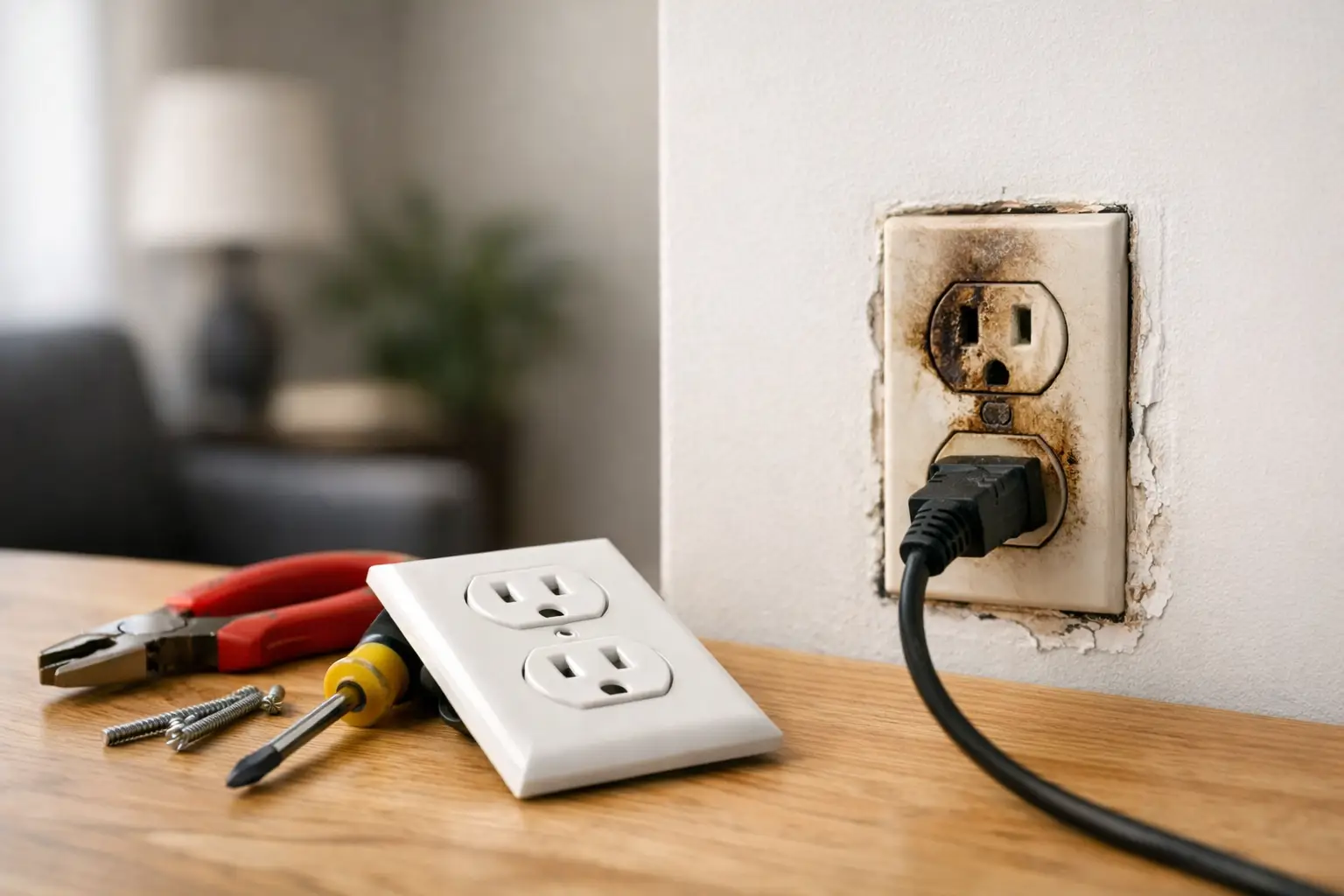
A loose plug that slips halfway out of the wall is easy to ignore – until a lamp flickers, a breaker trips, or you smell something hot. If you are asking when should outlets be replaced, the short answer is this: replace them when they show wear, damage, heat, poor performance, or when they no longer meet the safety needs of the space.
Outlets are one of the most used parts of any electrical system. They get plugged into, bumped, painted over, overloaded, and worn down year after year. Some fail in obvious ways. Others keep working just well enough to hide a real safety issue behind the cover plate. For homeowners, landlords, and business owners, knowing what to look for can help you avoid nuisance problems and catch dangerous ones early.
When should outlets be replaced in a home or business?
There is no single expiration date stamped on every receptacle. A quality outlet in a low-use room may last for many years, while one in a kitchen, garage, rental property, or commercial setting may wear out much faster. The real answer depends on condition, age, location, and whether the outlet still matches current electrical demands.
If an outlet is cracked, discolored, warm to the touch, sparking, loose, or no longer holds a plug securely, it should be evaluated and usually replaced. If it is in an area that now requires GFCI protection but still has an older standard receptacle, replacement may be part of bringing that location up to a safer standard. The same goes for older two-prong outlets in homes that need grounded or properly protected replacements.
Sometimes replacement is not about failure. It is about upgrading the system to fit how the building is actually used now. That comes up often with remodels, office reconfigurations, appliance changes, and modern power demands like EV charging or backup power equipment.
Common signs an outlet needs replacement
One of the clearest warning signs is a plug that falls out easily. Inside the outlet, the contact points wear down over time. When they lose tension, the connection becomes weaker. That weak connection can create arcing and heat, which is exactly what you do not want behind a wall.
Discoloration is another sign that should not be brushed off. Brown, black, or yellow marks on the faceplate or receptacle can point to overheating. Sometimes the outlet still works, but that does not mean it is safe. Heat damage usually means the outlet or the wiring connection has been under stress.
Cracks in the outlet body or faceplate matter too. A broken outlet is not just cosmetic damage. Exposed or unstable parts can increase the risk of shock or further damage, especially in homes with kids, pets, or heavy daily use.
Pay attention to performance issues. If power cuts in and out, devices only work when the cord is held a certain way, or the outlet trips a breaker with normal use, something is wrong. The issue might be the receptacle itself, a loose wire connection, or a larger circuit problem. Either way, it needs proper troubleshooting.
A buzzing sound, a burning smell, or visible sparking when plugging something in should always be taken seriously. A small spark can happen in some normal situations, but repeated sparking, noise, or odor is not normal wear. That is a service call.
Older outlets and outdated safety standards
Age alone does not automatically mean every outlet in a building has to be replaced. Still, older outlets deserve a closer look, especially in homes built decades ago and never meaningfully updated.
Two-prong receptacles are a common example. They were standard in older homes, but they do not provide grounding the way modern three-prong outlets do. That creates limitations and, in some cases, unsafe workarounds with adapters or extension cords. Replacing them is often part of a safer upgrade, but it needs to be done correctly. Simply swapping a two-prong outlet for a three-prong one without addressing grounding or proper protection is not the right fix.
Ungrounded outlets are not the only concern. In kitchens, bathrooms, garages, basements, exterior walls, laundry areas, and other moisture-prone locations, GFCI protection is a major safety feature. If those spaces still have older standard outlets, replacement may be necessary to reduce shock risk and meet current code expectations during repairs or renovations.
In some properties, especially rentals and commercial spaces, replacement is also about reliability. Old devices may technically still function, but if they are worn, mismatched, or failing under routine use, replacing them is cheaper than dealing with repeated service issues and tenant complaints.
When replacement is better than repair
Some outlet problems come from loose wiring or upstream issues, not just a bad receptacle. That is why a proper diagnosis matters. Still, there are many cases where replacement is the smarter move.
If the outlet has physical damage, heat damage, weak plug retention, or signs of internal failure, replacement is usually straightforward and worth doing. Receptacles are not expensive parts, but the safety benefit of a new, properly installed device is significant.
Replacement also makes sense when you are already updating part of the space. During a kitchen remodel, basement finish, office update, or service upgrade, it is often smart to replace older outlets in the affected areas rather than leave worn devices in place. This is especially true if you want tamper-resistant receptacles, USB-integrated outlets, GFCI protection, or commercial-grade devices built for heavier use.
There is also a practical side to it. If an electrician has to open the box, inspect connections, and troubleshoot recurring issues, replacing a questionable outlet is often the cleaner long-term fix.
Special cases: GFCIs, AFCIs, and heavy-use locations
Not all outlets are the same, and not every location puts the same strain on them. Kitchens, bathrooms, garages, workshops, break rooms, and exterior areas tend to see harder use and greater risk. Outlets in those spots should be watched more closely.
GFCI outlets deserve special attention. If the reset and test buttons do not work properly, if the outlet will not reset, or if it trips constantly without a clear reason, it may need replacement or further diagnosis. Sometimes the issue is the device itself. Sometimes it points to a wiring or ground fault elsewhere on the circuit.
Commercial properties and rental units often deal with repeated plug-in cycles, cleaning crews, tenant turnover, and equipment changes. That kind of wear adds up. A receptacle that might last years in a spare bedroom can wear out much faster in a storefront, office, or multi-unit property.
If you use space heaters, microwaves, refrigerators, window units, or other higher-draw equipment on certain outlets, that should also factor into the conversation. The problem may not be the outlet alone. It may be that the circuit is undersized, shared too heavily, or simply not designed for current demand.
Should you replace one outlet or several?
That depends on what you find. If a single outlet is damaged by impact, wear, or localized failure, one replacement may be enough. But if several outlets in the same home or building are loose, painted over, outdated, or showing similar age, replacing them in groups often makes more sense.
This comes up a lot in older homes. You call for one dead outlet and find a mix of worn receptacles, backstabbed connections, missing grounding, and no GFCI protection where it should be. At that point, treating one device like an isolated problem may not save much time or money in the long run.
For property owners, grouped replacement can also improve consistency and reduce future service calls. It is easier to deal with aging devices on your schedule than to wait for the next failure.
Why professional replacement matters
Outlet replacement looks simple until it is not. A licensed electrician is not just swapping a part. They are checking for heat damage, confirming proper wiring, identifying grounding issues, verifying circuit protection, and making sure the replacement fits the application.
That matters because the outlet you see is only part of the picture. Problems inside the box, at the breaker, or elsewhere on the circuit can make a new receptacle fail again if the real cause is left behind. In older homes and commercial buildings, that extra layer of troubleshooting is often the difference between a quick patch and a proper repair.
For customers in Bowling Green and nearby counties, this is the kind of work that benefits from a straightforward inspection by a trained electrician who knows what to look for and how to correct it safely.
If an outlet looks worn, feels hot, works inconsistently, or just does not match the safety needs of the space anymore, trust your instincts and get it checked. A small device on the wall can be a big warning sign, and catching it early is always the better call.