

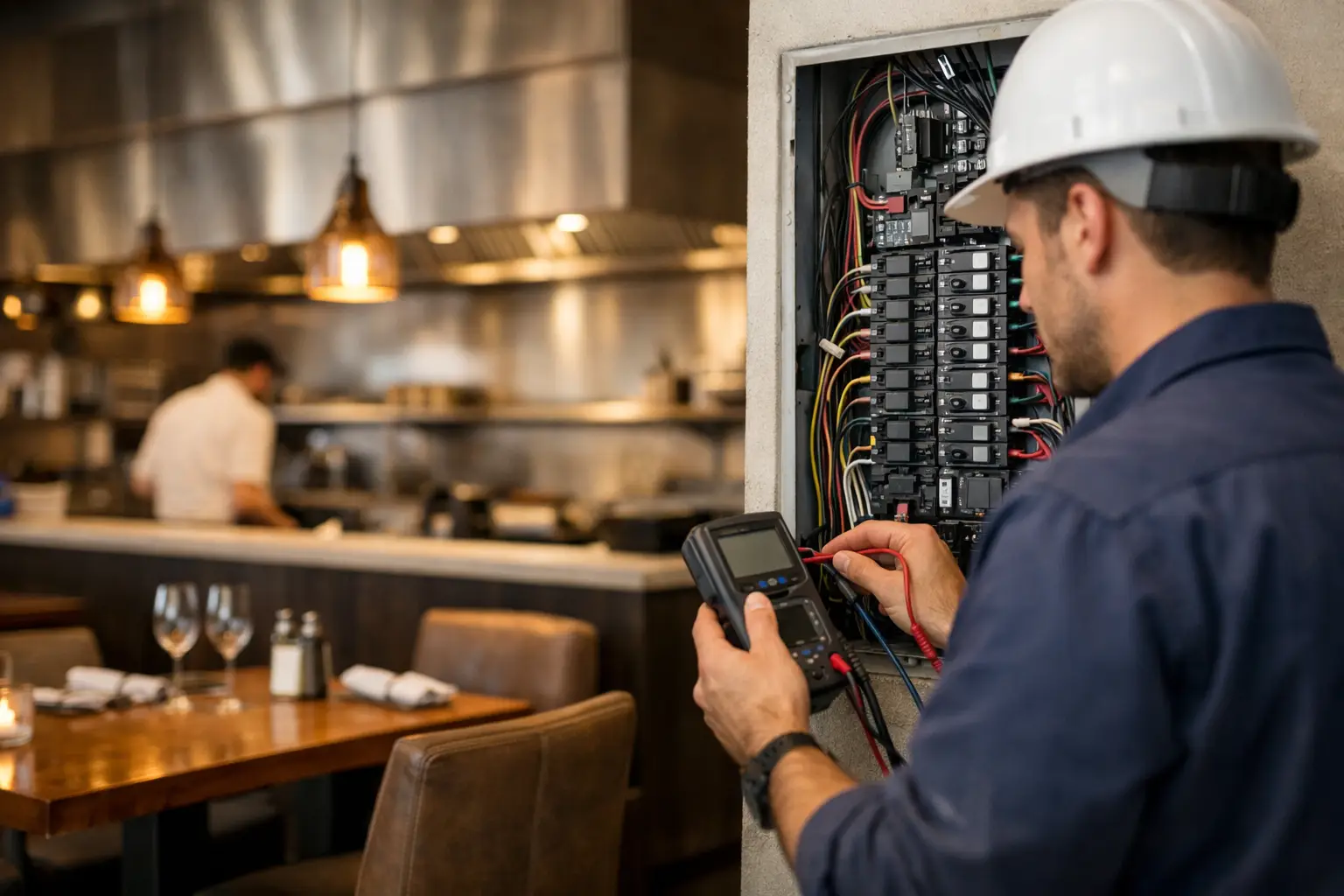
A busy Friday night is a bad time to discover that the kitchen’s circuits cannot handle the added load of a new fryer, cooler, or prep line. A restaurant electrical retrofit addresses the wiring, panels, circuits, lighting, and equipment connections that keep daily operations moving. Done correctly, it helps protect staff, avoid equipment failures, and give your restaurant room to grow.
For restaurant owners in Bowling Green and surrounding areas, electrical upgrades are rarely just about making a space look better. They are often tied to a remodel, a change in the menu, new kitchen equipment, a tenant build-out, or recurring breaker trips that are slowing down the team. The right plan starts with understanding what the building can safely support now and what it needs to support next.
When a Restaurant Electrical Retrofit Makes Sense
Older restaurant spaces were not always built for modern commercial kitchens. A location that once operated as a small retail shop or office may have limited electrical capacity, outdated wiring, and too few dedicated circuits for a full-service kitchen. Even an established restaurant can outgrow its original electrical system after adding refrigeration, heated holding equipment, point-of-sale stations, outdoor seating, or upgraded HVAC equipment.
Breaker trips are one of the clearest warning signs. A breaker that trips once may be responding to a temporary overload. A breaker that trips repeatedly needs attention. Resetting it over and over does not solve the underlying problem, and it can leave a kitchen without critical equipment during service.
Other signs include warm outlets or plugs, flickering lights when equipment starts, extension cords being used as permanent power sources, damaged receptacles, or a panel that has no available space for new circuits. These conditions do not automatically mean the entire building needs to be rewired. They do mean a qualified electrician should inspect the system before more equipment is added.
Start With Load Capacity, Not Just New Outlets
A proper restaurant electrical retrofit begins at the electrical panel. Before installing a new outlet for a range, dishwasher, ice maker, walk-in cooler, or exhaust system, an electrician needs to determine whether the existing service and panel can handle the added demand.
Commercial kitchen equipment can draw significant power, especially when several units run at the same time. Refrigeration cycles on throughout the day. Cooking equipment may be at full demand during lunch and dinner. Make-up air systems, ventilation, water heating, lighting, and HVAC add to the load. The electrical system has to be designed for the real operation of the restaurant, not just one piece of equipment at a time.
Sometimes the solution is straightforward: add dedicated circuits, replace worn receptacles, and install a properly sized subpanel. In other cases, the main panel or electrical service needs an upgrade. That is a larger project, but it may be the only safe way to support an expanded kitchen or a new concept in an older building.
Dedicated Circuits Protect Equipment and Operations
Most major commercial appliances need their own dedicated circuit. This prevents a single overloaded circuit from shutting down multiple pieces of equipment at once. It also helps avoid voltage issues that can shorten the life of motors, compressors, and electronic controls.
Dedicated circuits are especially common for refrigeration equipment, ice machines, dishwashers, cooking equipment, hood systems, and certain HVAC components. The exact voltage, amperage, and connection method depend on the manufacturer’s requirements. Equipment should never be connected based on assumptions or a plug that happens to fit.
Upgrade Kitchen Power Where the Work Happens
The kitchen is the heart of the restaurant, but it is also where electrical demands are often the highest. A retrofit should match the actual workflow of the staff. That means looking at where prep equipment sits, how food moves through the line, where cleaning takes place, and what equipment may be added later.
Outlet placement matters. Staff should not need to run cords across walkways, behind hot equipment, or near wet areas to power small appliances. Receptacles near sinks, dish areas, beverage stations, and other wet locations may require ground-fault circuit interrupter protection. Properly installed protection reduces shock risk when water and electricity are close together.
The same practical thinking applies to the dining area and front counter. POS terminals, receipt printers, display screens, beverage equipment, music systems, and charging needs all require reliable power. A clean installation keeps cords controlled, reduces tripping hazards, and makes the space easier to maintain.
Improve Lighting Without Creating New Problems
Lighting upgrades are often one of the most visible parts of a retrofit. LED lighting can reduce energy use and maintenance compared with older fixtures, particularly in dining rooms, restrooms, storage areas, exterior walkways, and kitchen spaces where lights operate for long hours.
But the goal is not simply to install brighter bulbs. Kitchens need clear task lighting that helps employees work safely. Dining rooms need lighting that fits the atmosphere and helps guests read menus without feeling like they are sitting under warehouse fixtures. Exterior lighting needs to improve visibility around entrances, parking areas, and service doors without creating glare for neighbors or drivers.
Controls should match how the space is used. Occupancy sensors can make sense in restrooms, offices, and storage rooms. They are usually not the right choice for areas where staff may remain still for extended periods. Dimmers may work well in dining areas, but the fixtures and controls must be compatible to avoid flickering or early failure.
Do Not Overlook Emergency and Exterior Electrical Work
Restaurant electrical work extends beyond the kitchen and dining room. Emergency lighting, exit signs, exterior wall packs, parking lot lighting, patio power, signage, and security equipment all affect safety and daily operations.
Emergency lighting and exit signs need to function when normal power is lost. These systems should be tested and maintained, not ignored until an inspection or power outage exposes a problem. Exterior lighting also deserves attention. Dark service entrances and poorly lit parking areas create avoidable safety concerns for employees, customers, and delivery drivers.
If the restaurant has outdoor seating, a bar area, or seasonal service space, electrical needs may include weather-rated receptacles, lighting, fans, and properly protected circuits. Outdoor work requires the right materials and installation methods for moisture exposure. Indoor-grade equipment does not belong outside simply because it is under a canopy.
Plan the Work Around Restaurant Hours
Downtime is a real cost for a restaurant. A well-planned retrofit separates work that can happen during operating hours from work that requires a shutdown. Replacing a few fixtures may have little effect on service. A panel replacement, service upgrade, or major kitchen rewiring may require coordinated outages and a schedule built around deliveries, prep time, and closing hours.
Before work begins, create a clear equipment list and identify what cannot be offline for long. Refrigeration, freezers, POS systems, ventilation, and security systems all need to be considered. A licensed electrician can help sequence the project so the business is not left guessing when power will be unavailable.
Permits and inspections may also be required depending on the scope of the work. That process protects the property owner and the business by confirming that installations meet applicable code requirements. Skipping it may seem faster at first, but it can create expensive problems during a sale, lease renewal, insurance claim, or health and safety inspection.
Choose an Electrician Who Understands Commercial Demands
Restaurant work is not the place for shortcuts. The electrical contractor should be able to assess service capacity, install commercial-grade circuits and equipment connections, troubleshoot existing issues, and communicate clearly about what the job requires.
M Power Electric LLC helps commercial clients in Bowling Green and nearby counties handle practical electrical upgrades with safety and dependable workmanship at the center of the job. Whether the need is a panel upgrade, new lighting, added circuits, receptacle replacement, or troubleshooting a recurring power problem, the work should be built to support the way your restaurant actually operates.
A restaurant that is adding equipment, remodeling its kitchen, or dealing with unreliable power does not need to wait for a full shutdown to start planning. Get the electrical system evaluated early, make upgrades before they become emergencies, and give your staff the dependable power they need to keep serving customers.
Leave a Reply