

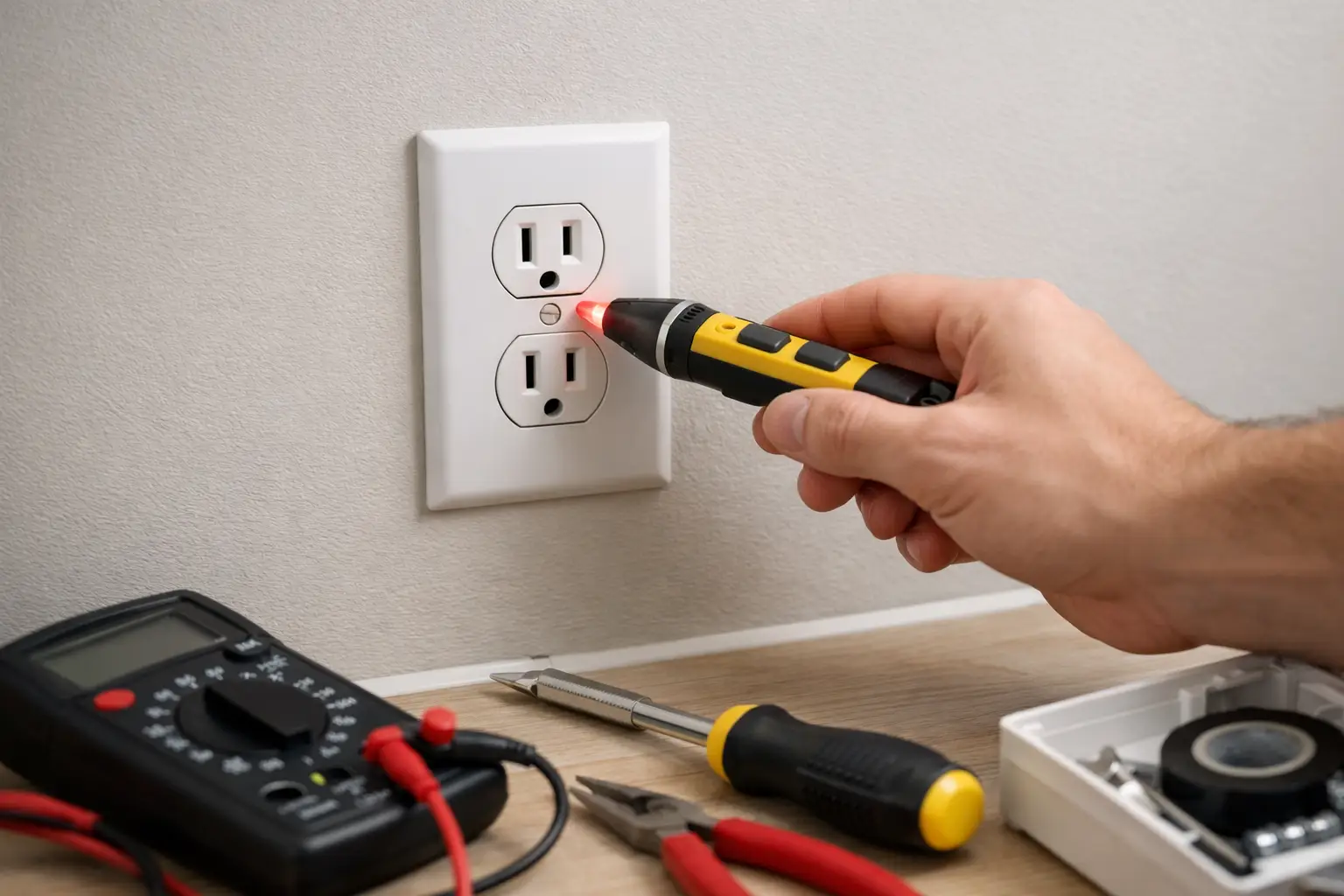
A dead outlet usually shows up at the worst time – your fridge in the garage stops running, a lamp won’t turn on, or a tenant tells you half a room lost power. If you’re trying to figure out how to troubleshoot dead outlet issues safely, the first step is staying calm and ruling out the simple causes before you assume the wiring has failed.
Some outlet problems are minor. Others point to a loose connection, a failed device, a tripped GFCI, or a circuit issue that needs a trained electrician. The key is knowing what you can check safely and what should not turn into a DIY repair.
How to troubleshoot dead outlet problems safely
Start by confirming the problem is actually the outlet. Plug in a lamp, phone charger, or another device you know works. Sometimes the issue is a bad cord, a failed power strip, or a switch-controlled receptacle that got turned off.
If the outlet still has no power, look around the room. Check whether nearby outlets, lights, or ceiling fans are out too. A single dead receptacle can mean the outlet itself has failed. Multiple dead devices on the same circuit usually point to a tripped breaker, a GFCI problem, or a wiring issue further upstream.
Before touching anything, avoid using metal tools or removing the outlet cover. If you smell burning, see discoloration, hear buzzing, or notice the outlet feels warm, stop there. That is no longer basic troubleshooting. That is a safety issue.
Check the breaker panel first
Go to your electrical panel and look for a breaker that has tripped. It may not always look fully off. Often it sits in the middle position between on and off. Reset it by switching it firmly all the way off, then back on.
If the breaker trips again right away, do not keep resetting it. That usually means there is a fault on the circuit, an overloaded line, or a problem with the outlet or wiring. Repeated resets can make the situation worse.
If nothing in the panel appears tripped, don’t assume the panel is fine. It is common to miss a partially tripped breaker on the first pass, especially if the panel labeling is vague or outdated.
Look for a tripped GFCI outlet
A lot of dead outlet calls trace back to a GFCI that tripped somewhere else. Bathrooms, garages, kitchens, laundry rooms, unfinished basements, exterior outlets, and some utility spaces often have GFCI protection. One GFCI outlet can protect several standard outlets downstream.
Press the reset button on any nearby GFCI outlets you can find. Sometimes the dead outlet is in a bedroom, garage corner, or exterior wall, but the actual reset point is in a bathroom or utility room.
If the GFCI will not reset, unplug anything on that circuit and try again. If it still won’t reset, that may mean a ground fault, a failed GFCI device, or another wiring problem that needs professional service.
Common reasons an outlet goes dead
When homeowners ask how to troubleshoot dead outlet situations, they usually expect one obvious cause. In the field, it is not always that simple. A dead outlet can come from several different issues, and the fix depends on where the failure actually starts.
A tripped breaker is common, especially in garages, kitchens, and rooms with heaters, microwaves, hair dryers, or window units. A tripped GFCI is just as common and often gets overlooked because the reset location is not near the dead outlet.
A worn-out receptacle is another possibility. Outlets do not last forever. If plugs have felt loose for a while, if the face is cracked, or if the outlet has seen heavy daily use, the device itself may have failed.
Loose wiring is more serious. A connection can work loose over time from heat, heavy use, poor installation, or backstabbed wiring methods used on some older devices. In those cases, one dead outlet may also interrupt power to outlets further down the line.
Then there are switch-controlled outlets. In living rooms, bedrooms, and older homes especially, half of an outlet may be tied to a wall switch. That catches people off guard all the time.
What a dead outlet can tell you
A completely dead outlet with no signs of heat may be a tripped protection device or an open connection somewhere on the circuit. An outlet that stopped working after plugging in a space heater or appliance may suggest overload. An outlet that works off and on, sparks, or only powers devices when the plug is held a certain way often points to a worn receptacle or damaged connection.
Those details matter. They help narrow down whether you are dealing with a nuisance trip, a failed device, or a real hazard inside the box.
What you should not do
This is where a lot of simple outlet problems turn into expensive repairs.
Do not replace a breaker with a larger one to stop tripping. Do not open the panel if you are not trained. Do not swap out an outlet just because it looks easy online. And do not assume a dead outlet is harmless because there is no power at the face of the receptacle.
A loose connection behind the outlet can still create heat. A damaged neutral can cause unpredictable behavior on the circuit. In commercial spaces and older homes, you can also run into shared circuits, outdated wiring methods, and code issues that need a careful diagnosis.
If you are a landlord or property owner, this matters even more. An outlet problem is not just an inconvenience. It can affect habitability, tenant safety, and liability.
When to call an electrician for a dead outlet
If the breaker keeps tripping, the GFCI won’t reset, the outlet is warm, or there are signs of burning, call a licensed electrician. The same goes for buzzing sounds, loose plugs, flickering power, or multiple dead outlets on one circuit.
You should also call if the outlet is part of a kitchen, bathroom, garage, exterior area, pool setup, hot tub area, or commercial space. Those locations often involve code-required protection and heavier electrical demands. Guessing is not worth it.
A trained electrician can test the circuit, inspect line and load conditions, identify a failed receptacle versus a wiring fault, and make the repair safely. That saves time, avoids repeat issues, and gives you a clear answer instead of trial and error.
For homeowners and businesses in the Bowling Green area, M Power Electric LLC handles this kind of troubleshooting the right way – direct, safe, and built around finding the actual cause instead of just treating the symptom.
How to prevent future outlet failures
Dead outlets are not always preventable, but a few habits help. Avoid overloading one receptacle with high-draw devices. Replace loose or damaged outlets before they become a bigger problem. Test GFCI outlets periodically. If your home has older wiring, frequent breaker trips, or outlets that have never worked quite right, have the system evaluated before a small issue turns into a service call after hours.
For commercial properties, regular electrical maintenance matters even more. Office equipment, breakroom appliances, tenant improvements, and seasonal loads can all stress circuits in ways that are easy to miss until something fails.
Older panels, undersized circuits, and worn receptacles tend to show up during day-to-day use, not during convenient times. Staying ahead of those issues usually costs less than reacting to a failure.
A practical way to approach a dead outlet
If you want a clear process for how to troubleshoot dead outlet issues, keep it simple. Confirm the device is good, check for other outlets or lights that are out, inspect the breaker panel, and look for a tripped GFCI nearby. That covers the most common causes without crossing into unsafe repair work.
If power does not return after those checks, or if anything looks or smells wrong, it is time to bring in a professional. Electrical troubleshooting is not about taking chances. It is about finding the problem cleanly, fixing it correctly, and making sure the outlet is safe to use again.
A dead outlet can be a quick fix, or it can be the warning sign that tells you something else on the circuit needs attention. Either way, the smart move is to treat it seriously and handle it before it becomes a larger problem.