

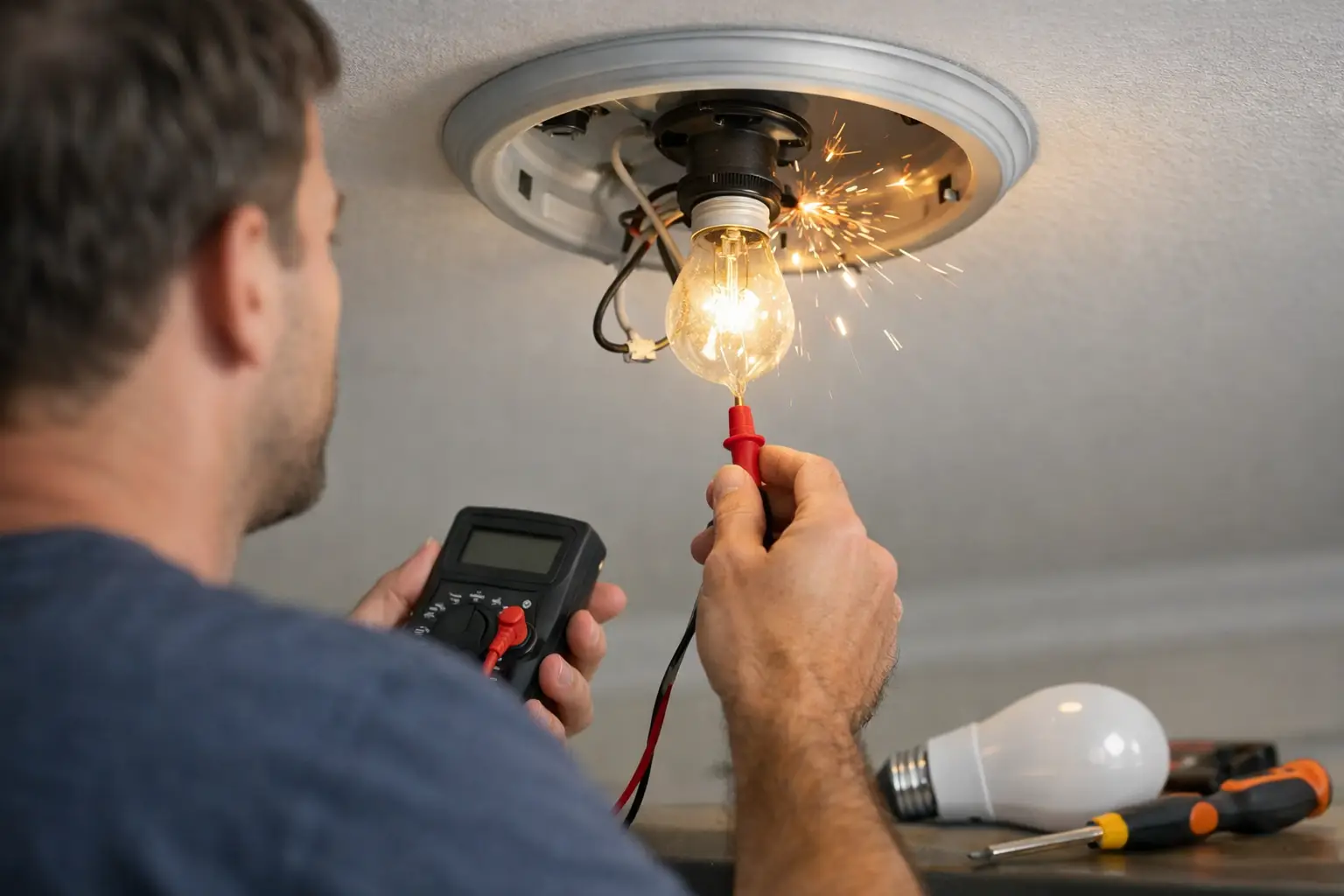
A light that flickers once might be a nuisance. A light that keeps flickering is your electrical system telling you something is off. If you are searching for how to fix flickering lights, the right answer depends on whether the problem is isolated to one bulb, one fixture, one circuit, or the whole building.
Some causes are simple. Others point to loose wiring, overloaded circuits, voltage problems, or panel issues that need a trained electrician. The key is knowing what you can check safely and what should be left alone.
How to Fix Flickering Lights: Start With What Changed
Before you assume the worst, think about what changed around the time the flickering started. Did you replace a bulb, install a dimmer, add a new appliance, or notice the issue after storms or renovation work? That context matters.
If one lamp or one ceiling fixture is flickering, the problem is often local. If lights dim or flicker when the HVAC kicks on, the refrigerator starts, or equipment powers up in a shop or office, that points more toward load and circuit issues. If multiple lights across different rooms are flickering, the issue may go deeper into the wiring, service connection, or electrical panel.
The pattern helps narrow it down. Random flickering usually means one thing. Flickering tied to another device starting up usually means something else.
Check the Bulb First
The simplest fix is also the most common. A loose bulb can flicker because it is not making steady contact in the socket. Turn off the switch, let the bulb cool if needed, and make sure it is seated properly.
If that does not solve it, swap in a new bulb. LED bulbs are efficient, but low-quality LEDs can flicker early, especially in enclosed fixtures or high-use areas. Sometimes the bulb is the whole problem.
Bulb compatibility matters too. If you have a dimmer switch, not every LED bulb will work with it. A non-dimmable bulb on a dimmer often flickers, buzzes, or drops out entirely. In that case, the fix is using a dimmable bulb that matches the switch, or replacing the dimmer with one designed for LED loads.
Look at the Fixture and Switch
If a new bulb does not fix it, the next likely cause is the fixture or switch. A worn switch can interrupt current and cause flickering, especially if the light reacts when you flip the switch, touch the wall plate, or notice a slight crackling sound.
A bad socket inside the fixture can do the same thing. You may see discoloration, looseness, or intermittent performance that gets worse over time. This is common in older fixtures, fixtures exposed to heat, or fixtures that have seen years of heavy use.
At this point, there is a line between basic observation and electrical repair. Replacing switches, fixtures, and damaged sockets should be handled correctly and safely. If there is any sign of heat, burning smell, or visible damage, stop using that light until it is inspected.
When a Dimmer Is the Problem
Dimmer-related flicker is common in homes and businesses that upgraded to LED lighting without updating the controls. Older dimmers were built for incandescent loads, and many do not play well with modern LEDs.
If the flickering only happens when the light is dimmed to certain levels, the dimmer is a strong suspect. This does not always mean the wiring is bad. It may simply mean the switch and bulb are incompatible. Still, the fix should be deliberate. The right dimmer depends on the bulb type, fixture type, and number of lights on the circuit.
This is one of those cases where the cheapest fix is not always the best one. A mismatched bulb and dimmer can keep causing trouble until both sides are addressed properly.
If Multiple Lights Flicker, Think Bigger
When several lights flicker in different rooms, the issue is less likely to be a single bulb or fixture. Now you are looking at possibilities like a loose neutral, failing breaker, overloaded circuit, poor connection in a junction box, or service problems coming into the property.
This is where flickering shifts from annoying to potentially serious. Loose electrical connections can create heat and become a fire hazard. A failing neutral connection can also cause unstable voltage, which puts electronics and appliances at risk.
Watch for these signs. Lights get brighter and dimmer on their own. The flickering affects more than one area. Outlets act strange. Appliances sound different. Breakers trip. If you are seeing any combination of those symptoms, it is time for professional troubleshooting.
How Appliances and Heavy Loads Affect Lights
It is normal for lights to dim slightly for a moment when a large appliance starts. Air conditioners, well pumps, refrigerators, and other motor-driven equipment draw extra power on startup. A brief dip is not unusual.
What is not normal is repeated, obvious flickering every time equipment runs, or lights that stay unstable while a device is on. That can mean the circuit is overloaded, the wiring is undersized, connections are loose, or the panel is struggling to support the demand.
This comes up more often in older homes and buildings that were not designed for current electrical loads. Add a new microwave, EV charger, workshop equipment, hot tub, or commercial gear, and weaknesses in the system start showing up fast.
What You Can Check Safely
If you want to know how to fix flickering lights without guessing, start with safe checks only. See whether the issue is tied to one bulb, one fixture, or several areas. Try a new bulb. Note whether the light is on a dimmer. Pay attention to whether flickering starts when other equipment turns on.
You can also check your breaker panel for a tripped breaker, but do not remove the panel cover or start tightening anything yourself. The same goes for switches, outlets, fixtures, and junction boxes. Once the issue points beyond a bulb or simple compatibility problem, the safest move is a licensed electrician.
Electrical troubleshooting is about more than replacing parts until something works. The goal is finding the actual fault, checking the condition of the circuit, and making sure the fix is safe and lasting.
When to Call an Electrician Right Away
Some flickering light problems should not wait. If lights are flickering throughout the house or building, if you smell something burning, if switches or outlets feel warm, or if the issue started after weather damage or electrical work, get it checked immediately.
The same is true if flickering is paired with buzzing, sparking, tripping breakers, or partial power loss. Those are not cosmetic problems. They are warning signs.
For property owners and landlords, fast action matters even more. A tenant complaint about flickering lights may seem minor on the surface, but the cause can range from a bad lamp to a serious wiring defect. Waiting too long can turn a repair call into a larger safety issue.
Why the Right Repair Depends on the Cause
There is no single answer to how to fix flickering lights because the repair depends on what is actually failing. Sometimes the fix is a better LED bulb. Sometimes it is replacing a switch or fixture. In other cases, it is correcting a loose connection, balancing circuits, upgrading a panel, or addressing service-side problems.
That is why a quick online answer only goes so far. If your lights flicker once in a while in one lamp, your next step is different than someone whose whole home dims when the AC starts. The symptom may look similar, but the repair is not.
A dependable electrical contractor should look at the full picture – the age of the system, the type of lighting, panel condition, current power demand, and whether the problem is isolated or system-wide. That is how you avoid repeat problems and hidden hazards.
A Practical Approach for Homes and Small Commercial Spaces
For most homeowners and small business owners in the Bowling Green area, the right approach is simple. Rule out the obvious. Do not ignore recurring flicker. And do not treat wiring problems like a DIY experiment.
M Power Electric LLC handles this kind of troubleshooting the way it should be handled – direct, safe, and built around the actual cause instead of guesswork. Whether the problem is a bad switch, a failing fixture, an overloaded circuit, or a panel that needs attention, the job is getting the system steady and safe again.
If your lights are flickering, trust what the system is telling you. Small symptoms have a way of pointing to bigger problems, and catching them early is usually the better repair.