

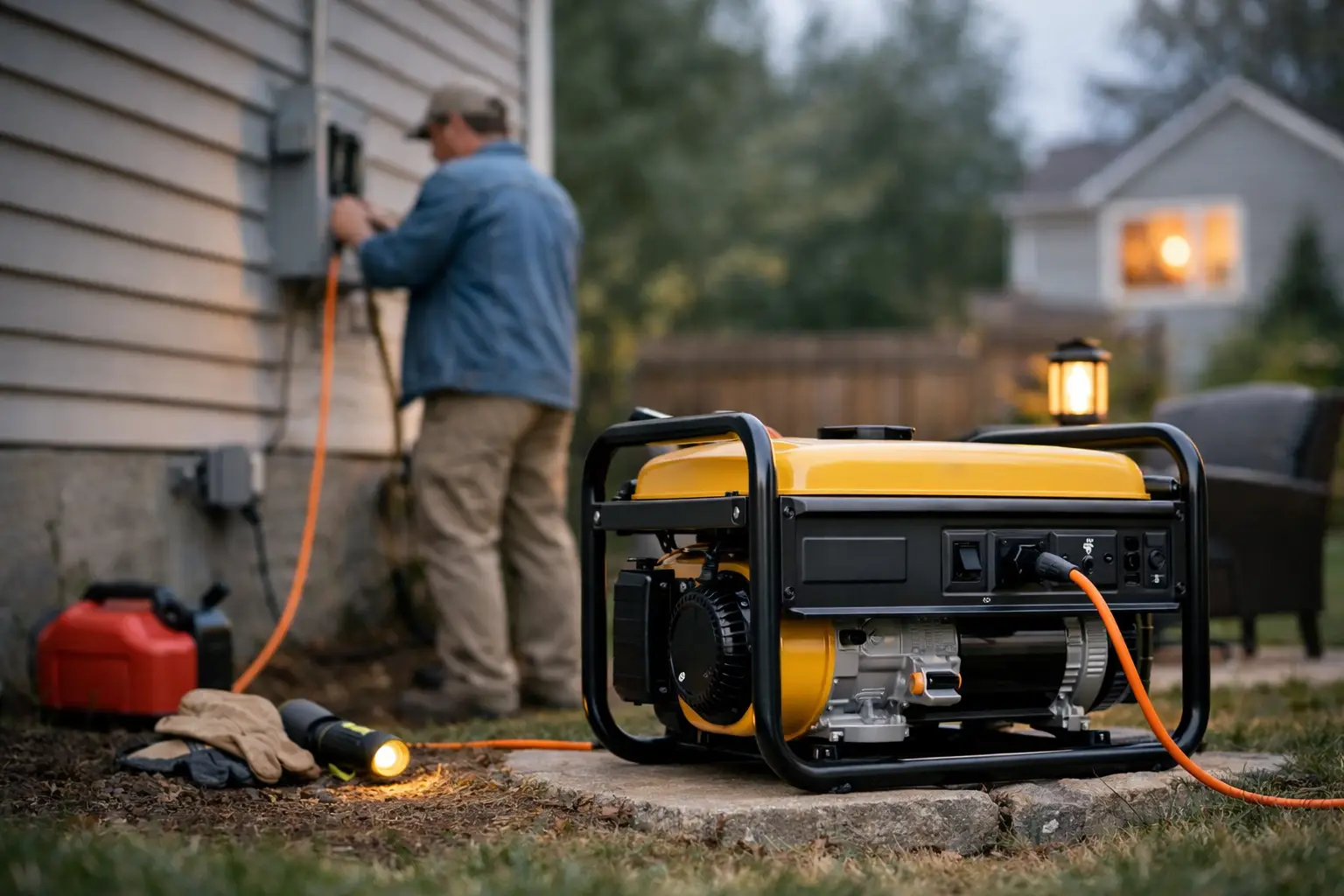
The power goes out, the refrigerator gets warm, the sump pump stops, and suddenly that portable generator in the garage feels like the answer to everything. That is exactly when generator safety for homeowners matters most. Most generator accidents happen during stressful situations, when people are tired, in a hurry, or trying to make do with extension cords and improvised setups.
A generator can keep a home running during storms, outages, and grid interruptions, but it also brings real risk. Carbon monoxide, backfeeding, overloaded circuits, fuel fires, and improper grounding are not small mistakes. They can injure your family, damage your home, and put utility workers at risk.
For most homeowners, the safest approach is simple: treat a generator like major electrical equipment, not a convenience tool. If you are using one to power parts of your house, the setup needs to be planned correctly before the next outage, not during it.
Why generator safety for homeowners is different from jobsite use
A generator at a home is usually connected to more than one concern at once. You are not just powering a saw or a fan. You may be trying to run a refrigerator, freezer, lights, medical equipment, a well pump, internet equipment, or a heating system. That means the electrical load matters, the connection method matters, and the generator location matters.
Residential use also creates a common temptation – plugging the generator into the house in whatever way seems to work. Homeowners sometimes try to feed power through a dryer outlet, use undersized cords, or place a generator in a garage with the door cracked open. Those shortcuts are exactly what turn an outage into an emergency.
The biggest danger is carbon monoxide
If you remember one thing, make it this: never run a generator inside your house, garage, crawl space, basement, or enclosed porch. Not even for a few minutes. Not even with windows open. Not even with the garage door open.
Generators produce carbon monoxide fast, and the gas cannot be seen or smelled. It can build up in attached garages and travel into living areas. It can also collect near doors, windows, and vents if the generator is too close to the home.
The safest placement is outdoors, well away from the house, with exhaust pointed away from doors and windows. Dry ground matters too. If conditions are wet, the unit still needs weather protection that does not trap exhaust or create a fire hazard. A generator should never sit where rainwater, standing water, or poor drainage can create shock risk.
Carbon monoxide alarms should be working before storm season starts. If your home has fuel-burning appliances or any backup power equipment, fresh batteries and tested alarms are part of basic safety, not an extra precaution.
Safe connection matters more than generator size
A lot of homeowners focus on wattage first. Wattage matters, but the connection method is what determines whether the system is safe.
The wrong way is backfeeding a home through an outlet. This can energize circuits in ways they were not designed for and send power back onto utility lines. That puts lineworkers, neighbors, and your own electrical system in danger. It can also damage appliances and create fire risk when utility power comes back.
The right way is using transfer equipment designed for generator use. That usually means a transfer switch or an interlock installed by a qualified electrician. Those setups isolate the home from utility power while the generator is running. In plain terms, they prevent the house from trying to pull power from two sources at once.
If your goal is to run selected circuits safely, this is the part to get right. A proper installation also makes outages easier to manage because you know exactly what the generator is meant to handle.
Extension cords are not a whole-house plan
Portable generators often rely on extension cords, but that only works safely in limited situations. The cord has to be rated for outdoor use, heavy enough for the load, and in good condition. If it is undersized, damaged, warm to the touch, or stretched through standing water, it is a hazard.
Inside a home, cords also create practical problems. They run through doorways, across traffic areas, and into rooms that may not be intended for temporary power. That increases trip hazards and can lead to overloaded plugs or power strips.
If you only need to run a few items directly, such as a refrigerator and a lamp, a cord setup may be enough for a short outage. If you are trying to power parts of the house, that is where a professionally installed transfer setup makes more sense and gives you a much safer result.
Fuel handling is a fire issue, not just a storage issue
Gasoline-powered generators are common, and fuel problems are common too. Spilled gas on a hot engine can ignite quickly. Refueling while the generator is running or still hot is one of the most avoidable mistakes homeowners make.
Shut the generator down and let it cool before adding fuel. Store gasoline in approved containers only, and keep those containers out of living spaces and away from ignition sources. A shed may be suitable in some cases. A utility closet or attached room is not.
If you have a propane or natural gas generator, the safety concerns shift a bit, but they do not disappear. Leak prevention, regulator condition, proper piping, and code-compliant installation all matter. Fuel type changes the details, but not the need for a professional setup.
Load management protects your equipment
One generator does not automatically power everything in the house. Starting watts and running watts are different, and motors draw more power when they start. Refrigerators, freezers, sump pumps, well pumps, and HVAC equipment can push a generator harder than homeowners expect.
When a generator is overloaded, you may trip breakers, damage equipment, or get unstable performance from sensitive electronics. That is why planning the load ahead of time matters. Decide what is essential, what can wait, and what should never be on generator power unless the system was designed for it.
A smaller generator with a smart circuit plan is often safer and more practical than a larger generator used without one. It depends on your home, your panel, and what you actually need to keep running during an outage.
Grounding and placement are not guesswork
Many homeowners assume setting a generator outside is enough. It is not that simple. Depending on the generator type and how it connects to the house, grounding and bonding requirements can vary. This is one of those areas where guessing is a bad plan.
Placement matters beyond carbon monoxide. The generator needs stable footing, adequate clearance, protection from physical damage, and enough space for cooling and maintenance. It should not be placed where runoff, mud, snow buildup, or vehicle traffic can create additional risk.
For standby generators, permanent installation brings another layer of code and clearance requirements. These systems must be installed in the right location with proper electrical connections and fuel supply. A clean-looking install is not the same thing as a safe install.
Generator maintenance is part of safety
A generator that sits for months and then gets called into service during a storm is only reliable if it has been maintained. Old fuel, weak batteries, dirty filters, and neglected oil changes can all turn into failure when you need the system most.
Run the generator on the schedule recommended for the unit. Check cords, connections, breakers, and fuel condition before outage season. If you have a standby unit, routine inspection and service should be part of home maintenance, not something you think about after it fails to start.
Homeowners also need to know what normal operation looks and sounds like. If a generator starts surging, smoking, tripping, or struggling under a routine load, stop using it until the issue is identified.
When to call an electrician
If you want to connect a generator to your home’s electrical system, add a transfer switch, install an interlock, evaluate panel capacity, or set up a standby generator, call a qualified electrician. Those are not weekend experiment jobs.
This is especially true in older homes, homes with panel issues, or properties with high-demand equipment like sump pumps, well pumps, HVAC systems, hot tubs, or EV chargers. The more your electrical system has going on, the more important it is to build a backup power plan that matches the real load and the actual wiring conditions.
For homeowners in and around Bowling Green, this is the kind of work that needs to be done cleanly, safely, and up to code. M Power Electric LLC works with homeowners who want backup power that functions when it counts and does not create a new safety problem in the process.
The best time to think about generator safety is when the weather is clear, the lights are on, and there is no pressure to improvise. A safe setup gives you more than backup power. It gives you one less thing to worry about when the outage hits.