

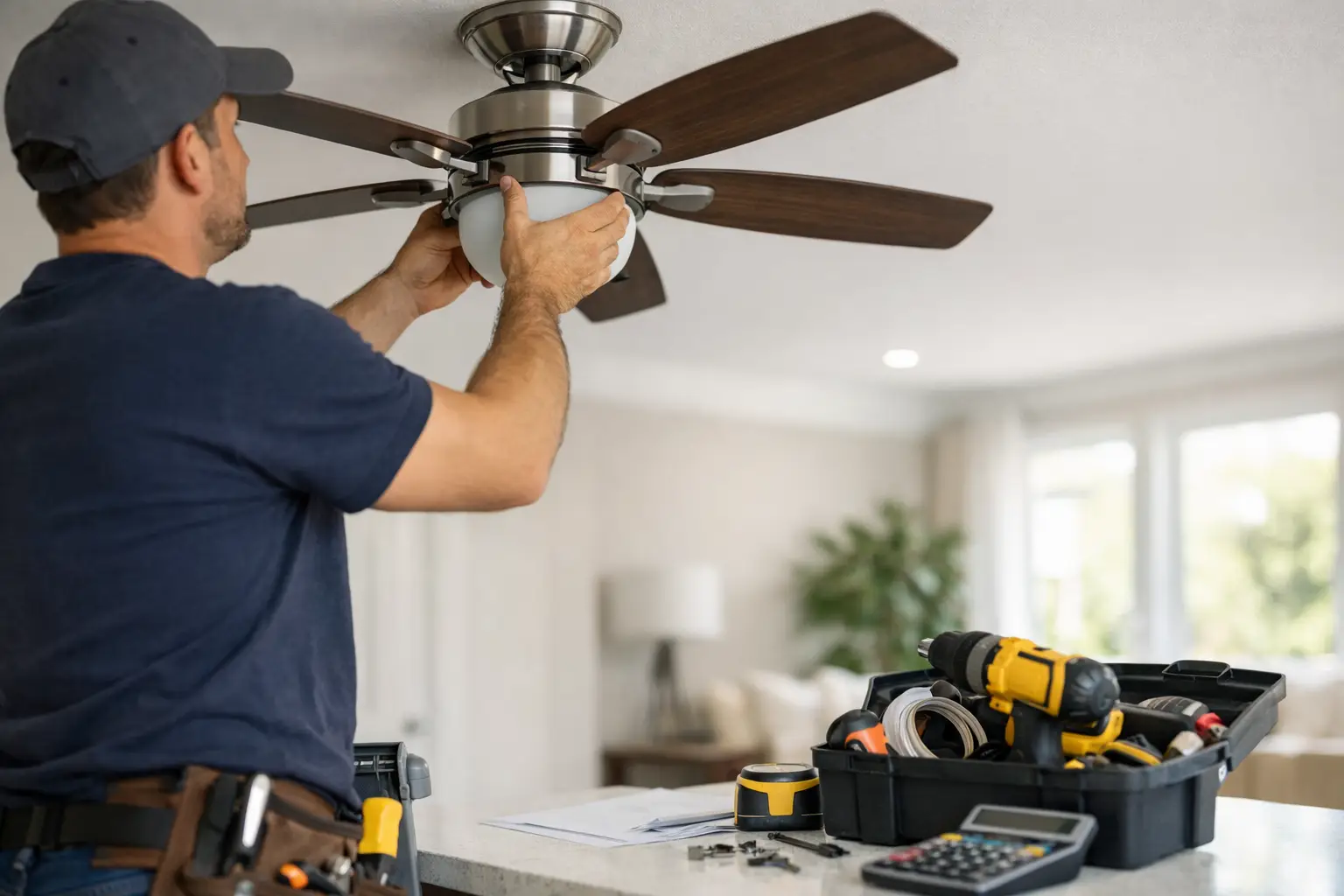
If you are planning a new fan for a bedroom, living room, porch, or office, ceiling fan installation cost usually comes down to one simple question – is the electrical setup already there, or does it need to be built out? That single detail can change the price more than the fan itself.
For most property owners, the real goal is not just getting a fan mounted. It is getting safe wiring, solid support, proper switch control, and dependable performance without guessing at what is hidden above the ceiling. A cheap install is not a good deal if the box is wrong, the wiring is overloaded, or the fan wobbles from day one.
What affects ceiling fan installation cost
The biggest factor is whether the job is a straightforward replacement or a brand-new installation. Replacing an existing ceiling fan with a similar model is usually the most efficient option because the wiring, fan-rated box, and switch leg may already be in place. In that case, labor is typically lower and the work moves faster.
A first-time install is different. If there is no existing fixture, an electrician may need to run new wiring, install a proper ceiling fan box, add wall switch control, and verify the circuit can handle the load. That adds labor, materials, and sometimes attic or crawlspace work, which can raise the total quickly.
Ceiling height also matters. Standard-height ceilings are usually the simplest. High ceilings, vaulted ceilings, and stairwell areas take more time, more setup, and sometimes specialized ladders or mounting hardware. The same fan that takes a short visit in a basic bedroom may take substantially longer in a two-story great room.
Fan style plays a role too. A standard fan with basic pull chains is easier to install than a large fan with integrated LED lighting, remote receiver, smart controls, or specialty mounting requirements. Outdoor-rated fans for covered patios also need the right location, weather-appropriate equipment, and proper circuit protection.
Typical price ranges for ceiling fan installation cost
In many homes, replacing an existing fan or light fixture with a new ceiling fan is often the lower end of the range. A straightforward replacement may land somewhere around $150 to $350 in labor, depending on access, ceiling height, and the complexity of the fan.
If the job involves installing a ceiling fan where no fan existed before, the cost often moves into a higher range. A new install with wiring and switch work may run from roughly $300 to $700 or more. If there are access issues, drywall repair needs, or a long wiring run, the final number can go beyond that.
Commercial spaces and rental properties can vary even more. A simple office fan replacement may be quick, but work in retail spaces, garages, workshops, or multi-unit properties may involve different access conditions, scheduling needs, or code considerations.
These ranges are not flat-rate promises. They are realistic examples of how pricing usually works in the field. The actual cost depends on the conditions at your property, not just the fan in the box.
Replacement vs. new installation
A replacement is generally the most predictable job. If the existing fan is wired correctly, mounted to a fan-rated box, and controlled the way you want, the electrician can remove the old unit and install the new one with fewer surprises. That is often where homeowners get the best value.
A new installation is where the “it depends” part gets real. Some rooms have easy attic access, open framing, and a nearby power source. Others have finished ceilings, limited access, crowded framing, or no practical way to add wiring without extra labor. Two rooms in the same house can have very different installation costs for that reason.
If you are comparing quotes, make sure you are comparing the same scope. “Install ceiling fan” can mean replacement only, or it can mean full new wiring, switch installation, support box installation, and testing. Clear scope avoids confusion.
Why wiring and support matter more than the fan price
A lot of people focus on the cost of the fan itself, but the electrical infrastructure is what determines whether the install is safe. Ceiling fans need a properly rated electrical box that can support movement and weight. A standard light box is not always enough.
The wiring setup matters just as much. Some customers want the fan and light on one switch. Others want separate controls. Some fans use remotes, while others need dedicated wall controls. If you are replacing a basic light fixture with a fan-light combo, existing wiring may limit your control options unless new conductors are run.
This is also where older homes can change the price. Aging wiring, undersized boxes, missing grounds, or crowded switch boxes may need correction before the fan can be installed properly. That adds cost, but it is the right kind of cost – the kind that fixes the system instead of covering up a problem.
Hidden issues that can raise the cost
Not every ceiling fan installation is hidden-problem territory, but there are a few issues that commonly affect pricing.
First is an improper or loose ceiling box. If the existing box is not fan-rated, it should be replaced. Second is damaged wiring or poor prior work. Wire splices, overloaded boxes, and questionable connections slow the job down because they need to be corrected safely.
Third is access. Tight attics, plaster ceilings, or finished spaces without easy routing paths can turn a simple plan into a more involved one. Fourth is control upgrades. If you want a new wall switch, dimmer-compatible light control, or separate fan speed control, that may require more than a basic hookup.
None of these issues mean the project should be avoided. They just explain why one installation can be quick while another needs more time and a higher price.
Is DIY worth it?
Some property owners consider installing a ceiling fan themselves to save on labor. On paper, that sounds reasonable. In practice, it depends on whether the existing wiring is correct, whether the ceiling box is fan-rated, and whether you are comfortable working safely with electrical systems overhead.
The risk is not just getting shocked. It is also ending up with a fan that wobbles, hums, trips a breaker, or is mounted to hardware that was never meant to hold it. If the job requires new wiring, switch changes, or troubleshooting, it is time to bring in a licensed electrician.
That is especially true in older homes, rental properties, and commercial spaces where code compliance and long-term reliability matter more than shaving a little off the upfront price.
How to keep ceiling fan installation cost under control
The smartest move is to decide what you want before the electrician arrives. Pick the fan size, decide whether you want a light kit, and know how you want it controlled. Changing plans mid-job usually adds time.
It also helps to mention site conditions upfront. If the ceiling is vaulted, the fan is going over a stairway, or there is no existing fixture, say that early. Good information leads to a more accurate estimate.
If you are doing several upgrades at once, bundling work can improve efficiency. For example, if you already need light fixture replacement, switch updates, or general electrical repairs, it may make sense to handle them in one visit instead of splitting everything into separate service calls.
When hiring a pro makes the most sense
A professional installation is the right call when safety, wiring quality, and long-term performance matter more than cutting corners. That applies to new fan locations, high ceilings, older wiring, and any situation where you want proper switch control or clean troubleshooting if something is not right.
For homeowners and property managers in Bowling Green and nearby areas, the value is simple: get the fan installed correctly, get the wiring checked by someone who knows what to look for, and avoid repeat problems later. M Power Electric LLC handles this kind of work the way it should be handled – safely, efficiently, and with the kind of workmanship that holds up.
If you are trying to budget for a fan install, the best approach is to think beyond the fixture price. A well-installed ceiling fan should run smoothly, stay secure, and work the way you expect every time you flip the switch. That is money better spent than paying twice for a shortcut.