
When the power goes out, the real question is not whether you want backup power. It is how much of your home or business you need to keep running, for how long, and how safely. The best backup power options are not the same for every property in Bowling Green or the surrounding area. A freezer full of food, a sump pump, medical equipment, a server room, or a small retail operation all change the answer.
That is why backup power should be treated like any other electrical upgrade. It needs to match your load, your building, and your priorities. Some property owners need a simple short-term solution. Others need automatic whole-home or whole-building coverage that comes on without delay. The right choice depends on what you are protecting and what you are willing to invest upfront.
Best backup power options for different needs
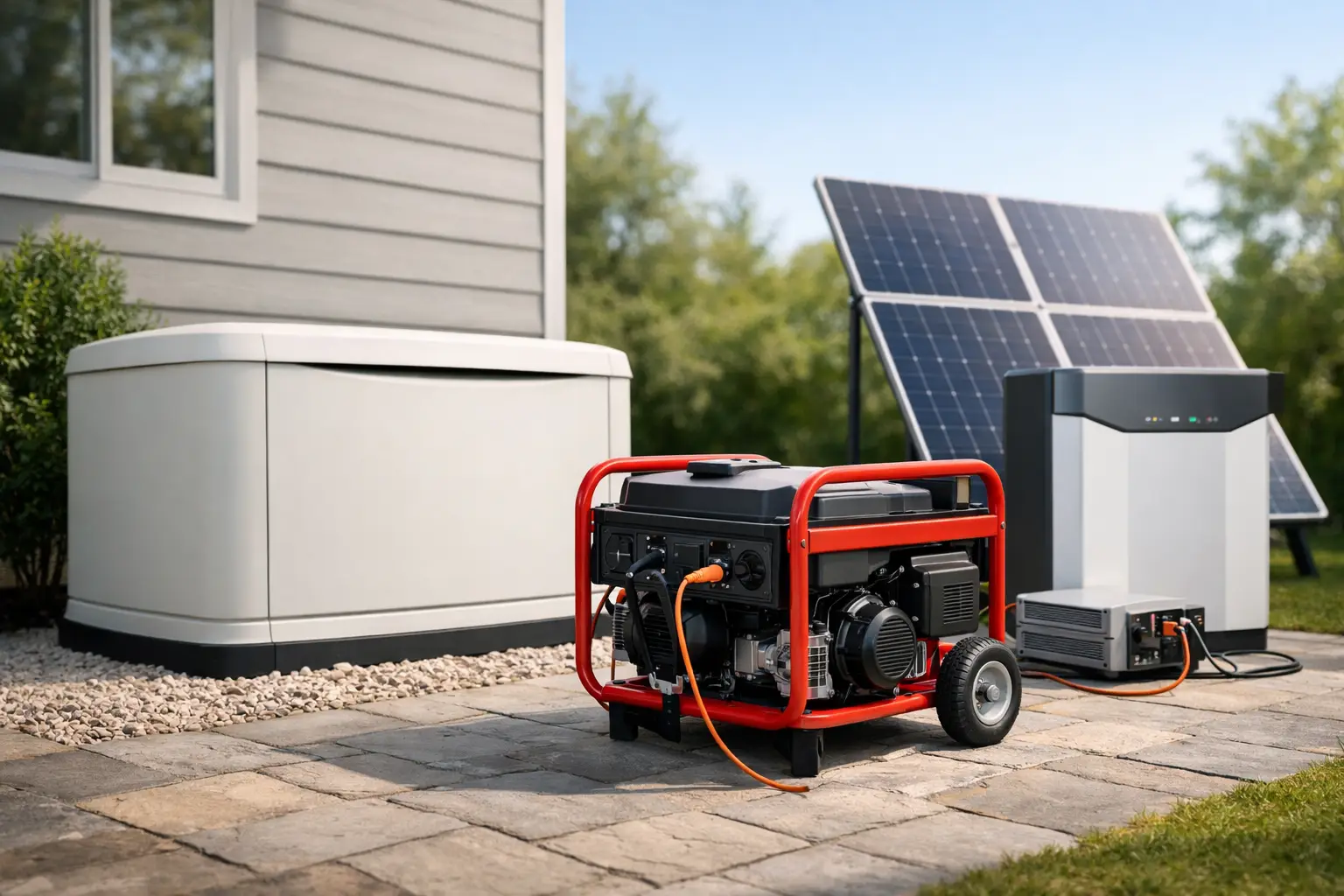
For most homes and small commercial properties, backup power usually falls into four categories: portable generators, inverter generators, whole-home standby generators, and battery backup systems. Each one has a place. Each one also has limitations that matter once you move beyond the sales pitch.
Portable generators are often the first thing people consider because they cost less to buy. They can run essentials during an outage, especially if you are focused on refrigeration, a few lights, device charging, or a small space heater or fan depending on the season. They are practical for short outages and for property owners who do not need the entire building powered.
The trade-off is convenience and capacity. A portable generator has to be set up manually, fueled manually, and used correctly outside and away from openings because of carbon monoxide risk. It also needs the right connection method. Running extension cords all over the house may work in a pinch, but it is not a good long-term plan. A proper transfer switch or inlet setup makes a major difference in safety and usability.
Inverter generators are a more refined version of portable backup power. They are usually quieter, more fuel-efficient, and better suited for sensitive electronics. If you want to protect office equipment, routers, computers, or modern appliances with circuit boards, an inverter unit may be a better fit than a basic portable generator.
Still, inverter generators are not a substitute for a true standby system when power demands are higher. They are great for targeted loads, not for pretending a whole property will operate normally through an extended outage.
When a standby generator is the best backup power option
For many homeowners, a standby generator is the best backup power option when reliability matters more than saving money upfront. A standby generator is permanently installed, connected through an automatic transfer switch, and set up to restore power quickly when utility service drops. That means no dragging equipment out of the garage, no late-night fueling in bad weather, and no guessing which extension cord goes where.
This is often the right choice for larger homes, homes with HVAC equipment that needs to stay online, properties with well pumps or sump pumps, or households with medical or mobility needs. It is also a strong fit for business owners who cannot afford extended downtime, spoiled inventory, lost transactions, or interrupted security systems.
The biggest advantage is consistency. A properly sized standby generator can support selected essential circuits or the entire home, depending on the design. That sizing work matters. Too small, and you end up disappointed when major loads cannot run together. Too large, and you spend more than necessary on both equipment and installation.
Fuel source is another practical factor. Many standby generators run on natural gas or propane. Natural gas is convenient where available because the fuel supply is continuous. Propane works well too, especially in areas without natural gas service, but runtime depends on tank size and refill logistics during a widespread outage.
This is where experienced electrical planning matters. Generator installation is not just about placing a unit outside. It involves load calculations, transfer equipment, code compliance, safe clearances, and integration with your existing panel. If your panel is outdated or undersized, that may need to be addressed first.
Battery backup systems are improving, but they are not always enough
Battery systems have gained attention for good reason. They are quiet, they switch over quickly, and they do not require fuel storage in the same way a generator does. In some homes, especially those trying to cover a few critical loads, batteries can be an excellent part of the plan.
They are especially appealing if noise is a concern or if you want backup for lighting, refrigeration, internet equipment, garage door access, and selective receptacles. For short outages, that can be plenty.
The limitation is duration and load demand. Batteries are not magic. If you expect them to carry electric heat, central air, water heating, clothes drying, or a large commercial load for long periods, the price climbs fast. The more runtime and power you want, the more storage and supporting equipment you need.
For some property owners, a battery system works best as a targeted backup solution rather than a whole-property answer. In other cases, batteries and generators can complement each other. It depends on how you use power and how often outages happen in your area.
How to choose among the best backup power options
The fastest way to make a bad choice is to shop by wattage alone. Real backup power planning starts with priorities. Ask yourself what absolutely must stay on during an outage and what can wait.
For a homeowner, that might mean refrigeration, kitchen outlets, internet, lights, medical devices, a garage door opener, and one HVAC system. For a landlord, it may be common-area lighting, sump pumps, and basic safety systems. For a business, it could be point-of-sale equipment, refrigeration, security, emergency lighting, and select production equipment.
Then consider outage length. A two-hour outage and a two-day outage are different problems. Portable solutions may be fine for short interruptions. If you want automatic coverage through overnight or storm-related outages, permanent backup power starts making more sense.
You also need to think about your existing electrical system. Older panels, overloaded circuits, and past DIY modifications can create problems when backup power is added. A system is only as dependable as the wiring and equipment behind it. That is one reason backup installations should not be treated like a plug-and-play add-on.
Budget matters too, but it should be weighed against risk. A lower-cost portable unit may be enough for some homes. On the other hand, if your basement floods when the power fails, or if your business loses money every hour you are offline, the cheaper option may end up costing more.
Safety matters more than convenience
There is no good backup power setup that ignores safety. Portable generators used too close to a structure can create deadly carbon monoxide hazards. Improper backfeeding can endanger utility workers and damage equipment. Undersized cords, overloaded circuits, and homemade connection methods create fire risk fast.
That is why transfer switches, proper inlets, code-compliant wiring, and correct load management are not optional details. They are the difference between backup power that helps you and backup power that creates a second emergency.
For permanent systems, maintenance matters as much as installation. Generators need periodic service, testing, and inspection. Batteries need correct configuration and monitoring. If the system sits untouched for years, there is a real chance it will disappoint you when the outage finally comes.
What makes the most sense in Kentucky homes and small businesses
In this part of Kentucky, many property owners want a practical answer, not a complicated one. If your goal is to keep a few essentials running for occasional outages, a properly connected portable or inverter generator can be a smart choice. If you want the property to function normally and automatically when the grid goes down, a standby generator is usually the stronger investment.
Battery backup can make sense for targeted needs, especially where quiet operation and fast switchover matter. But for larger loads and longer outages, it often works best as part of a broader strategy rather than the whole solution.
A local electrician can help you sort through the real-world details, from load demands to panel condition to transfer equipment. That matters because the best system on paper is not always the best system for your building. M Power Electric LLC helps homeowners and commercial clients think through those decisions with safety, reliability, and practical performance in mind.
If you are considering backup power, start with the loads you cannot afford to lose. That one step usually points you toward the right system faster than any product brochure will.