

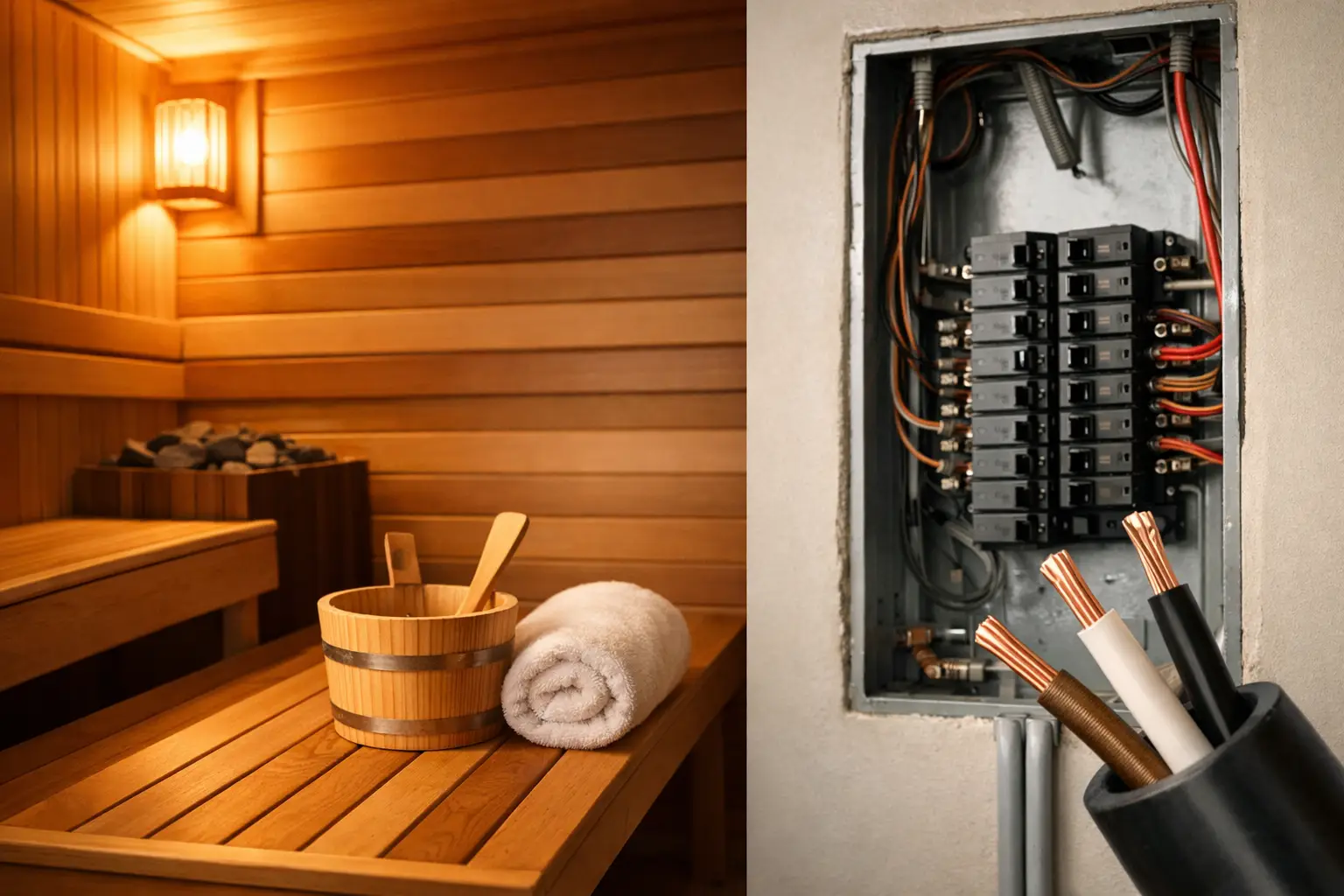
A sauna heater that keeps tripping a breaker is not a minor annoyance. It is usually a sign that the electrical setup does not match the load. In many cases, a dedicated circuit for sauna equipment is not just a smart upgrade – it is the right way to power a high-demand appliance safely and reliably.
If you are adding a sauna to a home, rental property, or commercial space, the electrical side needs to be planned before the heater is installed. Sauna systems draw serious power, and that means the breaker size, wire size, voltage, and panel capacity all need to line up. Guesswork is where problems start.
Why a dedicated circuit for sauna setups matters
A sauna heater is a continuous high-load appliance. Unlike a lamp or a television, it can pull substantial amperage for long periods while it heats the room and maintains temperature. When that kind of equipment shares a circuit with lights, receptacles, or nearby appliances, you increase the chance of overloaded wiring, nuisance breaker trips, voltage drop, and premature wear on components.
A dedicated circuit means the sauna heater has its own breaker and its own wiring run back to the electrical panel. Nothing else is tied into it. That gives the heater the capacity it was designed for and reduces the risk of hidden issues that show up later.
For homeowners, this matters because saunas are often added during renovations, backyard upgrades, or basement finishing projects where existing electrical systems are already carrying a lot. For landlords and commercial property owners, it matters because reliability and code compliance are part of protecting the property.
Is a dedicated circuit for sauna equipment always required?
In most real-world installations, yes, the heater needs its own circuit. The exact requirements depend on the sauna heater’s electrical rating and the manufacturer’s installation instructions. That is the first place any electrician should look, because the equipment listing and manufacturer specs are not optional details.
Small plug-in infrared units can be a different story. Some lower-power models are designed to run on a standard 120-volt receptacle, though even then the circuit needs to be suitable for the actual load. Larger traditional sauna heaters, especially hardwired models, commonly require 240 volts and a dedicated breaker sized specifically for that unit.
That is where people get in trouble. They assume a sauna is like another space heater or appliance that can be worked into what is already there. It usually is not. A traditional sauna heater can demand far more power than a typical branch circuit should share.
What determines the right circuit size
The heater nameplate tells the story. Voltage, wattage, and required overcurrent protection all matter. A higher-output heater for a larger sauna room will usually call for a larger breaker and heavier-gauge conductors than a compact unit built for a small residential sauna.
Panel capacity matters too. Even if the heater itself needs, for example, a 240-volt dedicated circuit, the service panel must still have the space and available load capacity to support that addition. In older homes, especially those with crowded panels or previous DIY work, that may lead to a subpanel installation or a full panel upgrade.
Distance also plays a role. If the sauna is located in a detached structure, backyard building, pool house, or far end of a commercial property, conductor sizing and installation method may need to account for the run length and the environment. Heat, moisture, and location all affect how the work should be done.
Common mistakes homeowners make
One common mistake is assuming a nearby dryer circuit, hot tub wiring, or spare breaker can be reused. Electrical systems are not mix-and-match. The sauna heater must be wired according to its listed requirements, and that includes the right breaker type, conductor size, disconnecting means if required, and placement.
Another mistake is focusing only on whether the sauna powers on. A heater may appear to work on an undersized or shared circuit for a while, but that does not mean the installation is safe. Overheating conductors, loose terminations, or repeated breaker stress can take time to show up.
Moisture is another issue that gets overlooked. Saunas create a demanding environment. The room construction, nearby controls, and electrical components all need to be suitable for the application. This is not the place for shortcuts or leftover materials from another project.
Residential versus commercial sauna electrical needs
A residential sauna usually has a simpler layout, but the same core rules apply. The heater load still has to be calculated correctly, and the installation still has to fit the panel and the space. In a newer home with available capacity, the job may be straightforward. In an older home, there may be more groundwork involved before the sauna circuit can be added safely.
Commercial saunas can bring additional complexity. Load demands may be higher, operating time may be longer, and there may be more code considerations depending on the occupancy and use of the space. A small gym, rental property amenity, wellness room, or hospitality setting needs dependable electrical work because downtime costs money and unsafe work creates liability.
That is why commercial clients should not treat sauna wiring as a small add-on. It needs the same level of attention as any other specialized load.
Signs your existing setup is not adequate
If you already have a sauna and are seeing problems, the electrical system may be telling you something. Breakers that trip during heat-up cycles, dimming lights in nearby rooms, a heater that struggles to maintain temperature, buzzing at the panel, or warm receptacles and wiring are all warning signs.
Sometimes the issue is not the circuit alone. It may be a loose connection, a breaker that is failing, undersized wiring, or service capacity that is stretched too thin. The right fix starts with a proper evaluation, not a bigger breaker swapped in to make the problem disappear for the moment.
What a proper installation usually involves
A professional sauna circuit installation starts with confirming the heater specifications and checking the panel capacity. From there, the electrician determines the correct breaker, conductor size, wiring route, and any disconnect or control requirements. If the panel is full or undersized, that gets addressed before the sauna is energized.
The installation also needs to fit the location. Indoor basement saunas, garage conversions, patio structures, and detached outbuildings all come with different practical concerns. The wiring method has to make sense for the environment, and the final result needs to be both code-compliant and serviceable later.
For customers in Bowling Green and surrounding counties, this is the kind of job where experienced electrical work matters. M Power Electric LLC handles specialty electrical needs with the same no-nonsense approach as panel upgrades, generators, and EV chargers – get the load right, install it cleanly, and make sure it is safe to use.
When a panel upgrade becomes part of the sauna project
A dedicated circuit for sauna equipment can expose a bigger issue in the home or building – not enough electrical capacity. That does not mean the sauna cannot be installed. It means the project may need to start with the panel.
This comes up often in older homes that already have added appliances, workshop loads, hot tubs, or HVAC upgrades. If the panel is maxed out, adding another large 240-volt load without a proper upgrade is asking for trouble. A panel upgrade may add cost to the project, but it also creates room for safer operation and future electrical needs.
That is one of those situations where it depends. Some properties only need a new breaker space and a properly run circuit. Others need a larger conversation about service capacity and long-term reliability.
The practical takeaway for property owners
If you are planning a sauna, assume the heater will need dedicated power until an electrician confirms otherwise. That is the safest starting point. It keeps the project grounded in actual load requirements instead of assumptions based on whatever wiring happens to be nearby.
It also helps to involve the electrical side early. Waiting until the sauna is already built often limits options and can turn a clean installation into a more expensive rework. A little planning upfront usually saves time, money, and frustration.
A sauna should be a place to relax, not a source of breaker trips and electrical concerns. When the circuit is sized correctly, the panel can support the load, and the wiring is installed the right way, the whole system works the way it should – steady, safe, and ready when you need it.