

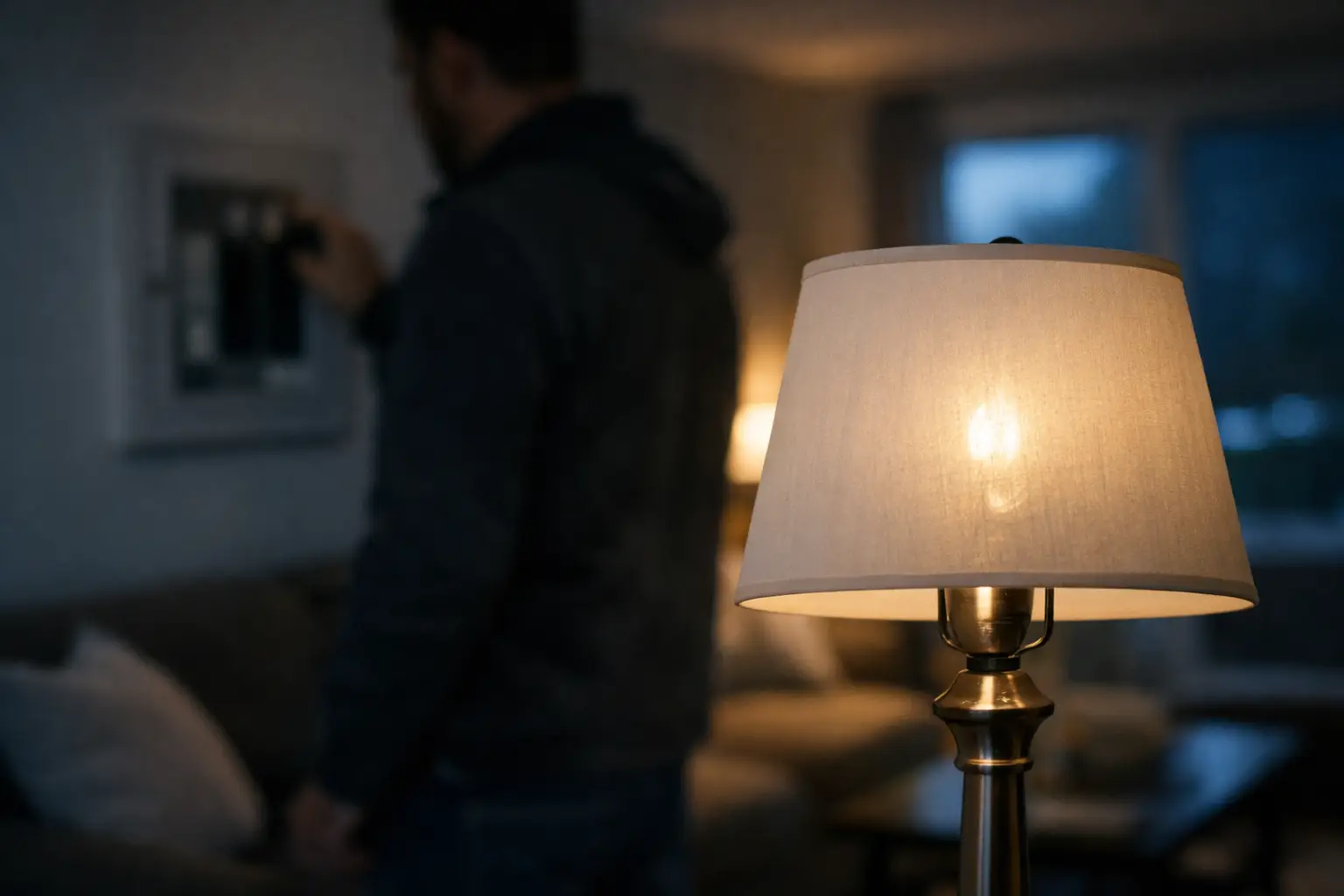
You flip on the microwave, the living room lights dip for a second, and then everything goes back to normal. Or maybe the lights in one room seem to pulse for no clear reason. If you are asking what causes dimming house lights, the short answer is this: some dimming is minor and expected, but repeated or worsening dimming can point to an overloaded circuit, a loose connection, voltage issues, or equipment problems that need professional attention.
The key is figuring out whether the dimming happens only when a large appliance starts up, only in one area of the house, or throughout the whole property. That pattern tells you a lot about what is going on behind the walls.
What causes dimming house lights in the first place?
House lights dim when the voltage available to the lighting circuit drops, even briefly. Incandescent and halogen bulbs make this especially obvious, but many LED fixtures will also flicker, pulse, or dim when power is inconsistent. The reason can be simple, or it can be a warning sign.
A common example is motor-driven equipment. When an air conditioner, refrigerator, well pump, garbage disposal, or microwave starts, it draws a surge of power. That startup demand can cause a brief drop in voltage, and nearby lights may dim for a moment. In some homes, that is normal. In others, it is a clue that the circuit is stretched too thin or the electrical system is not keeping up with modern demand.
Older homes in particular tend to show this problem more often. Houses built before today’s heavier appliance use may still be running on panels, branch circuits, or wiring setups that were never meant to support EV chargers, larger HVAC equipment, multiple refrigerators, workshop loads, or added outdoor electrical features.
When dimming lights are normal
Not every dimming event means you have a dangerous condition. If the lights dim slightly for less than a second when a large appliance kicks on, and it only happens occasionally, that can be a normal response to a temporary inrush of current.
This is more common with central air systems, heat pumps, sump pumps, and other equipment with compressors or motors. Those systems need extra power to start, not just to run. A brief dip can happen even in a healthy electrical system.
That said, normal dimming should be mild and short. It should not happen constantly, and it should not be getting worse over time. If the lights noticeably dip every time equipment turns on, or if the dimming lasts more than a moment, it is worth having it checked.
When dimming house lights point to a problem
If your lights dim frequently, dim without any major appliance turning on, or dim across multiple rooms, the issue may be more serious. This is where troubleshooting matters.
Overloaded circuits
One of the most common answers to what causes dimming house lights is a circuit carrying too much demand. If lighting, receptacles, and appliances are all sharing a branch circuit, the load can become uneven and hard on the system.
This shows up a lot in kitchens, laundry areas, garages, workshops, and older additions. A space heater, microwave, and lighting circuit might all be pulling from the same area of the panel. When one device turns on, the lights react.
An overloaded circuit does not always trip a breaker right away. Sometimes it just causes nuisance dimming, warm outlets, or inconsistent performance first. That is one reason not to ignore it.
Loose or damaged connections
Loose electrical connections are a bigger concern. A poor connection at a switch, receptacle, light fixture, breaker, neutral bar, meter base, or service connection can create resistance. Resistance creates heat, and heat is where trouble starts.
Loose connections often cause more than dimming. You may also notice flickering, buzzing, warm wall plates, a burnt smell, or lights that brighten and dim unpredictably. If the problem seems random, or if different rooms act differently at the same time, a failing connection could be involved.
This is not a wait-and-see issue. Connections do not tighten themselves, and a bad one can get worse under load.
Utility service or service drop issues
Sometimes the problem is not inside the home at all. If the incoming utility service is unstable, your house may see voltage fluctuations that affect lights and electronics.
You may notice dimming throughout the house rather than in just one room. In some cases, lights get dim in one area while getting brighter in another. That kind of imbalance can suggest a service neutral problem, which is a serious condition and should be addressed quickly.
If nearby homes are seeing the same issue, the utility side may be involved. If it seems limited to your property, your panel, service equipment, or main connections may need inspection.
An outdated or undersized panel
An electrical panel that is old, full, improperly configured, or simply undersized for the home’s actual power needs can contribute to recurring dimming issues. This is especially true in homes that have added new loads over time.
Think about how many houses now support more than they did 20 or 30 years ago. Bigger kitchen appliances, home offices, more electronics, hot tubs, pool equipment, generators, and EV charging all change the electrical demand. If the panel never got upgraded to match, dimming lights may be one of the first signs that the system needs attention.
LED compatibility problems
Not all dimming is caused by the house wiring alone. LED bulbs and fixtures can act strangely if they are paired with incompatible dimmer switches, lower-quality drivers, or poor fixture design.
This usually looks more like flickering, pulsing, or uneven brightness than a full-house voltage dip. If the issue is limited to one fixture or one room, the problem may be with the bulb, dimmer, or fixture rather than the panel or service.
It still helps to have it checked, because electrical symptoms can overlap. What looks like a bad LED lamp can sometimes mask a wiring issue, and vice versa.
Signs you should call an electrician soon
If the dimming is new, stronger than it used to be, or happening in more parts of the house, do not brush it off. The same goes for dimming paired with flickering, breaker trips, buzzing, hot outlets, or burning smells.
Another red flag is when lights dim from ordinary loads that should not cause much strain, like a bathroom fan, a coffee maker, or a vacuum. That suggests the system may not be distributing power the way it should.
You should also pay attention if only one section of the home is affected. That can help isolate the issue to a specific circuit, subpanel, or connection point. On the other hand, if the entire house dims, the source may be closer to the main service equipment.
What an electrician looks for
A proper diagnosis is about patterns, load behavior, and the condition of the equipment. An electrician will usually start by identifying when the dimming happens, what loads trigger it, and whether it affects one circuit, multiple circuits, or the whole home.
From there, the inspection may include the panel, breakers, neutrals, grounding, service conductors, switches, fixtures, and devices on the affected circuit. Load calculations can also help determine whether the home has outgrown its current electrical setup.
If the issue comes down to a dedicated circuit need, a failing connection, a panel problem, or aging service equipment, the fix should match the cause. There is no one-size-fits-all repair. Sometimes it is a straightforward circuit correction. Sometimes it points to a needed panel upgrade.
For homeowners in Bowling Green and nearby areas, this is where working with a skilled local contractor matters. M Power Electric LLC handles troubleshooting, repairs, panel upgrades, and the kind of electrical work that keeps homes safe and dependable.
Can you keep using the system while lights are dimming?
It depends on the severity. Mild, occasional dimming from a large motor starting is not unusual. But if the dimming is frequent, worsening, or tied to heat, smell, noise, or breaker issues, you should treat it as a safety concern.
Do not start opening panels or tightening electrical connections yourself unless you are qualified to do that work. Electrical troubleshooting at the panel or service level carries real shock and fire risk. Even when the problem seems small, the cause may be deeper in the system.
The best move is simple: pay attention to the pattern, avoid overloading the affected area, and get it checked before a nuisance becomes a repair emergency.
House lights are supposed to be steady. When they are not, your electrical system is telling you something, and it is worth listening.