

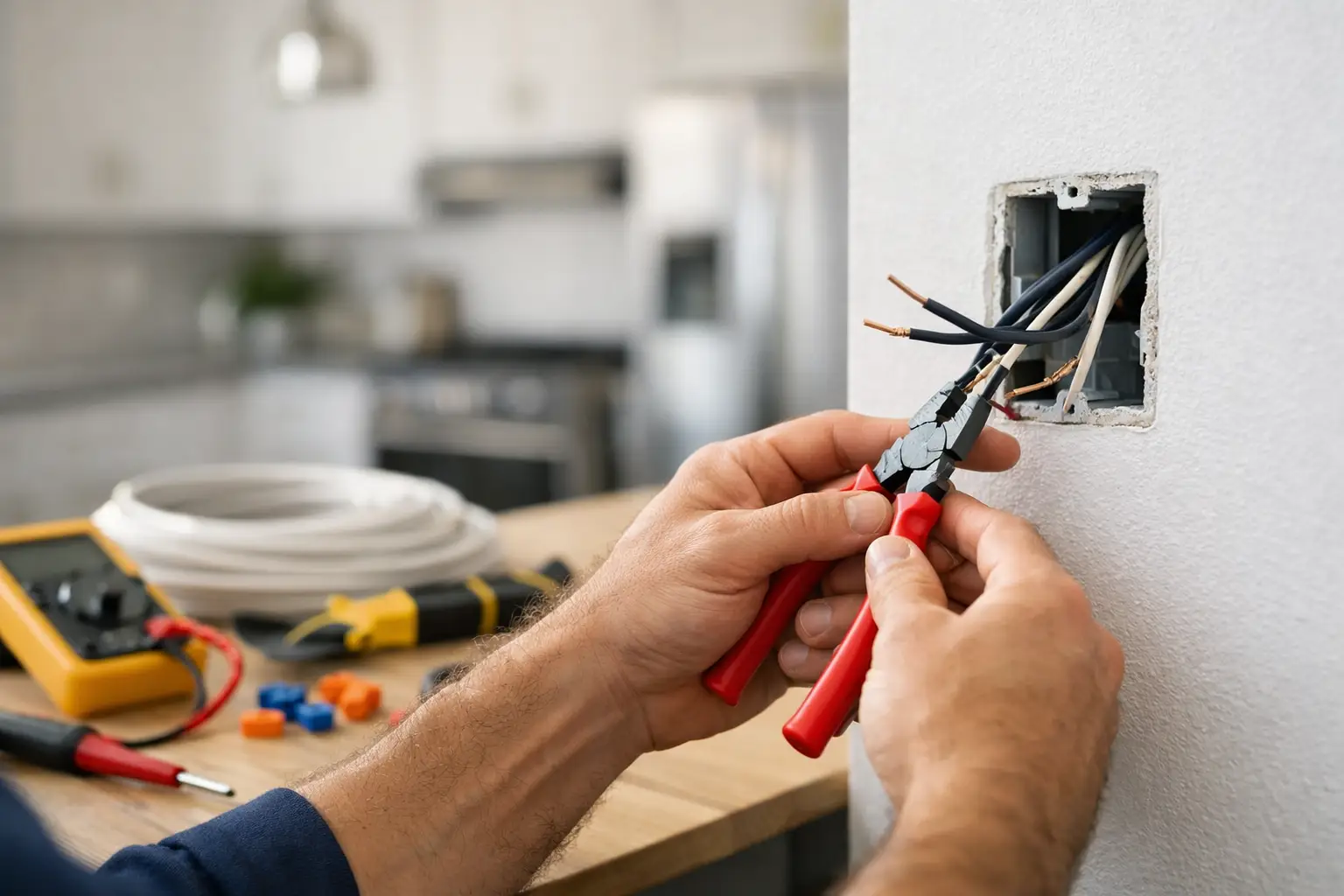
A flickering light may look like a minor annoyance. A warm outlet, a breaker that trips repeatedly, or a buzzing panel is different. Those signs can point to overloaded circuits, loose connections, damaged wiring, or equipment that no longer matches your home’s electrical demand.
This residential electrical wiring guide gives homeowners a practical way to understand what is behind the walls, what changes are worth planning, and when to bring in a qualified electrician. The goal is not to turn electrical work into a weekend project. It is to help you make smart decisions before a small issue becomes a safety problem or an expensive repair.
Start With the Electrical System You Already Have
Most homes receive power through a service panel, commonly called a breaker box. From that panel, individual circuits carry power to lighting, receptacles, appliances, HVAC equipment, and outdoor equipment. Each breaker is sized to protect the wiring on that circuit from carrying more current than it can safely handle.
That basic layout matters because electrical problems are rarely isolated. A kitchen outlet that stops working may be tied to a tripped GFCI device elsewhere. A new appliance may expose a circuit that was already near capacity. A breaker that trips after installing a space heater is doing its job, but it is also telling you the circuit needs attention.
Older homes in Bowling Green and surrounding counties may have panels, wiring methods, or receptacles that were acceptable when installed but are not a good fit for current demand. Modern households use more electronics, larger kitchen appliances, home office equipment, EV chargers, hot tubs, and backup power systems than homes did decades ago.
Know the Parts That Affect Safety
Homeowners do not need to diagnose wiring inside a wall, but knowing the major components makes service conversations clearer and helps you recognize warning signs.
Service panel and breakers
The service panel distributes electricity throughout the home. Its rating, often 100, 150, or 200 amps, reflects the amount of power the home can receive. A larger panel does not automatically mean a home needs a service upgrade. The condition of the equipment, available capacity, calculated load, and your planned additions all matter.
Breakers protect individual circuits. If one trips once after a clear overload, such as several high-draw appliances on one circuit, reset it only after unplugging or turning off the likely load. If it trips again, do not keep resetting it. Repeated tripping needs professional troubleshooting.
Receptacles, switches, and GFCI protection
Standard receptacles provide general power. GFCI receptacles or breakers are designed to cut power quickly when they detect a ground fault. They are commonly required in areas where moisture is present, including bathrooms, kitchens, garages, basements, outdoor spaces, and near pool or spa equipment.
A GFCI that will not reset, trips frequently, or has no power may be protecting you from a problem downstream. Replacing it without finding the cause can leave the real issue unresolved.
AFCI protection
Arc-fault circuit interrupters, or AFCIs, are designed to detect certain dangerous arcing conditions that standard breakers may not catch. They are commonly used in living areas and bedrooms under current code requirements. AFCI breakers can trip because of damaged cords, loose connections, aging equipment, or certain appliance issues. They should be evaluated rather than bypassed.
Warning Signs You Should Not Ignore
Electrical systems usually give notice before a serious failure. Pay attention when you see lights dim when larger equipment starts, outlets that feel warm, scorch marks, burning odors, buzzing sounds, loose plugs, or breakers that trip repeatedly.
Other signs are less dramatic but still worth addressing. Two-prong outlets in a room used for modern electronics, extension cords used as permanent wiring, power strips daisy-chained together, or a lack of outlets where you need them can all signal that the home was not designed for present-day use.
If you smell burning, see smoke, notice sparking, or have an outlet or panel that is hot to the touch, turn off power if it can be done safely and call an electrician. For an active fire or immediate danger, call emergency services first.
Plan Wiring Around How You Use the Home
Good electrical work starts with the load, not just the fixture or device you want to add. A new ceiling fan, for example, may need a properly rated support box, a wall control, and a circuit with adequate capacity. A garage receptacle for an EV charger is a very different project from a standard outlet replacement.
Kitchen and laundry upgrades
Kitchens and laundry rooms place heavy demands on electrical systems. Microwaves, disposals, dishwashers, refrigerators, countertop appliances, washers, and dryers can require dedicated circuits or specific protection. During a remodel, this is the time to add properly placed outlets and bring older wiring up to current requirements where the scope of work calls for it.
Do not assume an existing circuit can accept another appliance because there is an open spot in a junction box. Circuit capacity depends on conductor size, breaker rating, connected loads, and the type of equipment being used.
EV chargers and high-demand equipment
EV charging is one of the clearest reasons to have a professional load calculation performed. A Level 2 charger can add a significant continuous load to the home. The right installation may involve a dedicated circuit, panel upgrades, service changes, or load management equipment. It depends on the home’s existing electrical capacity and the charging equipment selected.
The same thinking applies to hot tubs, saunas, pool equipment, electric ranges, and larger HVAC systems. These installations involve special wiring, disconnects, grounding and bonding requirements, and location-specific safety rules. They are not places to cut corners.
Lighting and ceiling fans
Lighting upgrades can improve comfort and reduce energy use, but the wiring details still matter. Recessed lighting must be compatible with insulation and the space above the ceiling. Exterior lighting needs weather-rated components. Ceiling fans must be supported by an approved fan-rated box, not a standard fixture box.
If a switch controls the wrong outlet, a light has no wall switch, or you want to add dimmers or smart controls, an electrician can determine what wiring is available and what changes are required behind the wall.
What Homeowners Can Do Safely
There is a clear line between routine homeowner awareness and electrical repair. Homeowners can test GFCI receptacles using their test and reset buttons, label breakers accurately, keep electrical panels accessible, and replace bulbs with the correct type and wattage. They can also reduce risk by removing damaged extension cords and avoiding overloaded power strips.
Work inside a panel, in a junction box, or on fixed wiring belongs to a trained electrician. The risk is not limited to shock. Poor connections can overheat over time, hidden wiring can be damaged, and incorrect grounding or bonding can defeat critical safety protection.
Before any electrical service visit, make a simple record of what happens and when. Note which breaker trips, what was running at the time, whether the problem affects one room or several, and whether weather or moisture seems involved. That information can speed up troubleshooting and help identify an intermittent issue.
When an Upgrade Is the Better Repair
Sometimes a repair is enough. A worn receptacle, failed switch, damaged outdoor cover, or defective breaker may have a direct fix. Other times, the reliable answer is an upgrade.
A panel upgrade may make sense when the existing equipment is damaged, outdated, full, undersized for current demand, or unable to support planned additions. Rewiring may be needed when conductors are unsafe, insulation is deteriorated, connections are unreliable, or renovations expose wiring that no longer meets the needs of the space.
The best choice depends on the age and condition of the home, the scope of future projects, and the result of a professional evaluation. Spending less on a temporary fix can cost more if it has to be redone when you add a generator, EV charger, finished basement, or major appliance later.
A Residential Electrical Wiring Guide for Calling an Electrician
Call a licensed electrician when power loss affects more than one circuit, breakers trip repeatedly, outlets or switches are warm, lights flicker without an obvious cause, or you are planning new high-demand equipment. It is also the right move before opening walls for a renovation or adding electrical service to a garage, workshop, outdoor living area, pool, hot tub, or sauna.
For homeowners who want straightforward answers, M Power Electric LLC can evaluate the system, explain the options in plain terms, and complete the work with safety and long-term performance in mind. A proper electrical repair or upgrade should leave you with dependable power, a clean installation, and confidence in the work behind the walls.
If something about your electrical system does not feel right, trust that instinct. A timely service call can protect your home, your equipment, and the people who rely on both every day.