

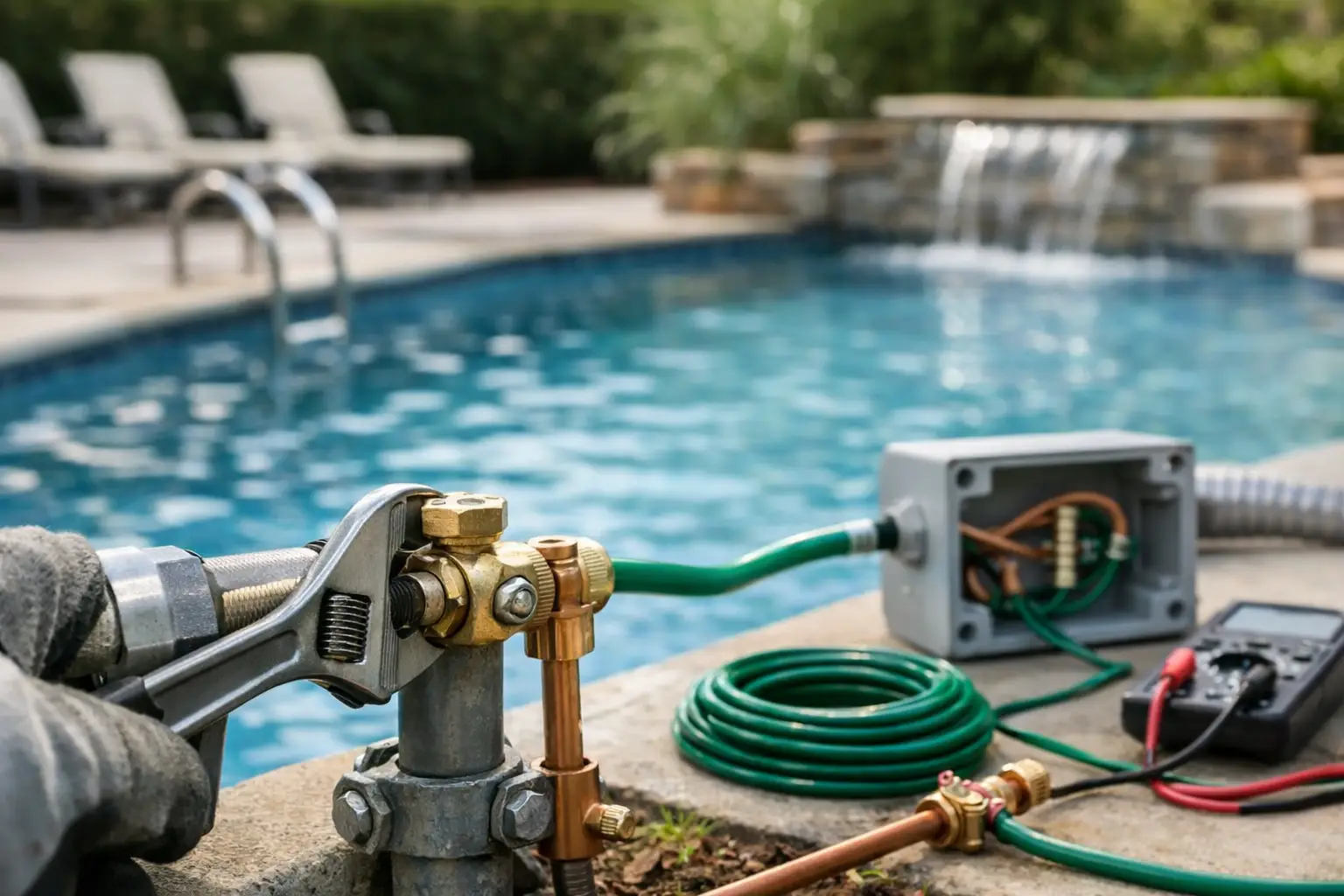
If you’re planning a new pool or updating an older one, pool bonding requirements are not a small detail to sort out later. They are one of the key safety measures that help protect people in and around the water from dangerous voltage differences. Homeowners usually notice pumps, lights, and heaters first. Bonding is less visible, but it matters just as much.
A lot of people mix up bonding and grounding. They are connected, but they do different jobs. Grounding helps direct fault current safely to ground. Bonding connects metal parts and conductive components together so they stay at the same electrical potential. Around a pool, that matters because water, concrete, metal rails, ladders, and nearby equipment can all become part of a shock path if the system is not installed correctly.
What pool bonding requirements are meant to do
The goal of pool bonding requirements is simple – reduce the risk of electric shock. When all required metal parts are bonded together, the chance of a harmful voltage difference between them is lowered. That means a person touching a ladder, standing on a wet deck, or entering the water is less likely to become the path electricity takes.
This is why bonding is not just about the pool itself. It often includes the pump motor, metal piping, metal fittings, ladders, diving structures, and reinforcing steel in the pool shell or surrounding deck. In some cases, fixed metal parts near the pool also need to be included. The exact setup depends on the pool type, nearby materials, and the equipment involved.
If that sounds broader than expected, it is. Pool electrical work is one of those areas where small omissions can create major safety problems.
Pool bonding requirements for common pool components
In most installations, the bonding system forms a continuous network around the pool and ties together the conductive parts that a person could contact. This commonly includes the pump motor and other electrical equipment associated with circulating or treating the water. If there are metal ladders, handrails, diving board supports, or underwater light housings, those usually need attention too.
Concrete pools often involve bonding to reinforcing steel in the shell. Pool decks may also require a bonded perimeter surface, depending on the construction. For some installations, that perimeter extends around the pool edge to address the surfaces people walk on while entering and exiting the water.
Above-ground pools can be simpler in some ways, but they are not exempt from bonding rules. Metal wall panels, frames, pumps, and nearby equipment may all come into play. The mistake some property owners make is assuming a smaller or prefabricated pool means minimal electrical requirements. That is not always true.
Hot tubs and spas bring similar concerns. The details can differ, but the same safety principle applies – keep conductive parts at the same potential and make sure the installation meets code.
Bonding is not the same as grounding
This is where confusion causes trouble. A grounded system is not automatically a bonded pool. You can have equipment that is grounded properly and still have a bonding problem that creates a hazard around the water.
Grounding deals with fault current and system protection. Bonding deals with equalizing voltage between conductive parts people can touch. Both matter. Neither replaces the other.
For homeowners, the practical takeaway is straightforward: if someone says your pool is grounded, that does not answer whether the bonding is complete and code-compliant.
Why DIY pool electrical work often goes wrong
Pool wiring is not a place for guesswork. The issue is not just connecting a pump or adding a light. The issue is understanding every part that must be bonded, how the conductor must be installed, what clamps and connectors are approved, and how local inspection requirements apply.
A pool can look finished and still be unsafe. Missing connections, improper terminations, corroded clamps, or changes made during a remodel can all leave gaps in the bonding system. That is especially common with older pools that have had equipment replaced over time.
We also see problems when decks are repaired, liners are changed, or railings are added after the original installation. Once metal components are introduced or altered, the bonding system may need to be updated as well.
When pool bonding requirements come up during a project
For a new pool, bonding needs to be planned before surfaces are closed up. Waiting too long can turn a straightforward installation into a costly rework job. If steel, perimeter surfaces, or buried conductors are part of the design, those elements need to be in place at the right stage of construction.
For existing pools, bonding becomes a priority when you replace equipment, add lighting, install a heater, upgrade a panel, or notice signs of electrical trouble. Tingling sensations in the water, mild shocks from ladders or rails, tripped breakers, or corrosion around electrical connections all deserve immediate attention.
Sometimes there are no obvious warning signs. That is what makes pool safety different from many other household electrical issues. A hidden bonding defect may not announce itself until conditions are right for a dangerous event.
Code compliance depends on the full installation
People often want a quick yes-or-no answer on whether their pool meets code. In reality, it depends on the full installation. Pool type, material, deck construction, equipment location, metal within the surrounding area, and the age of the installation all affect what is required.
That is why code compliance cannot be judged by one photo of a pump pad or one view of the pool wall. A proper evaluation looks at the pool, the electrical equipment, the surrounding conductive surfaces, and the service feeding the system.
In Kentucky, local enforcement and inspection processes matter too. National code requirements are the baseline, but local authorities may have specific expectations during permitting and inspection. Working with a professional and reliable electrician helps keep the project moving and reduces the risk of failed inspections or unsafe shortcuts.
Signs your pool bonding may need attention
Some problems are visible, and some are not. Rusted or loose bonding connections are a concern. So are replaced pumps or heaters that were installed without confirming the bonding path. If you have added handrails, a slide, a diving board structure, or nearby metal fencing, those changes should be reviewed.
Older pools deserve extra caution. Many have been updated in stages over the years, often by different contractors. A new pump might be connected correctly, while an older metal fitting or deck area no longer meets current expectations. That does not automatically mean the entire pool has to be rebuilt, but it does mean the system should be checked carefully.
If you are buying a home with a pool, this is worth asking about before closing or early in the inspection process. Cosmetic upgrades are easy to spot. Bonding defects are not.
Why professional pool electrical work matters
Pool safety depends on details being right, not just mostly right. The best electrician for this kind of work is someone who understands residential service, equipment loads, code compliance, and safety-sensitive outdoor installations. Pool bonding is one of those jobs where experience matters because the work crosses into structural materials, wet locations, equipment connection, and inspection readiness.
At M Power Electric LLC, we handle electrical work for pools, hot tubs, and other specialty installations with a safety-first approach. That means looking beyond the obvious equipment hookup and making sure the installation is professional, reliable, and built to meet code.
For homeowners and property managers, the main benefit is peace of mind. You do not have to sort through code language, guess what a previous installer did, or hope a visible wire means the whole system is correct. You get trained electricians who can evaluate the setup, explain what needs to happen, and complete the work the right way.
If you are building a pool, upgrading equipment, or questioning an older installation, now is the right time to address it. Bonding is one of those things that is easiest to do correctly before there is a problem – and that is exactly why it deserves serious attention.