

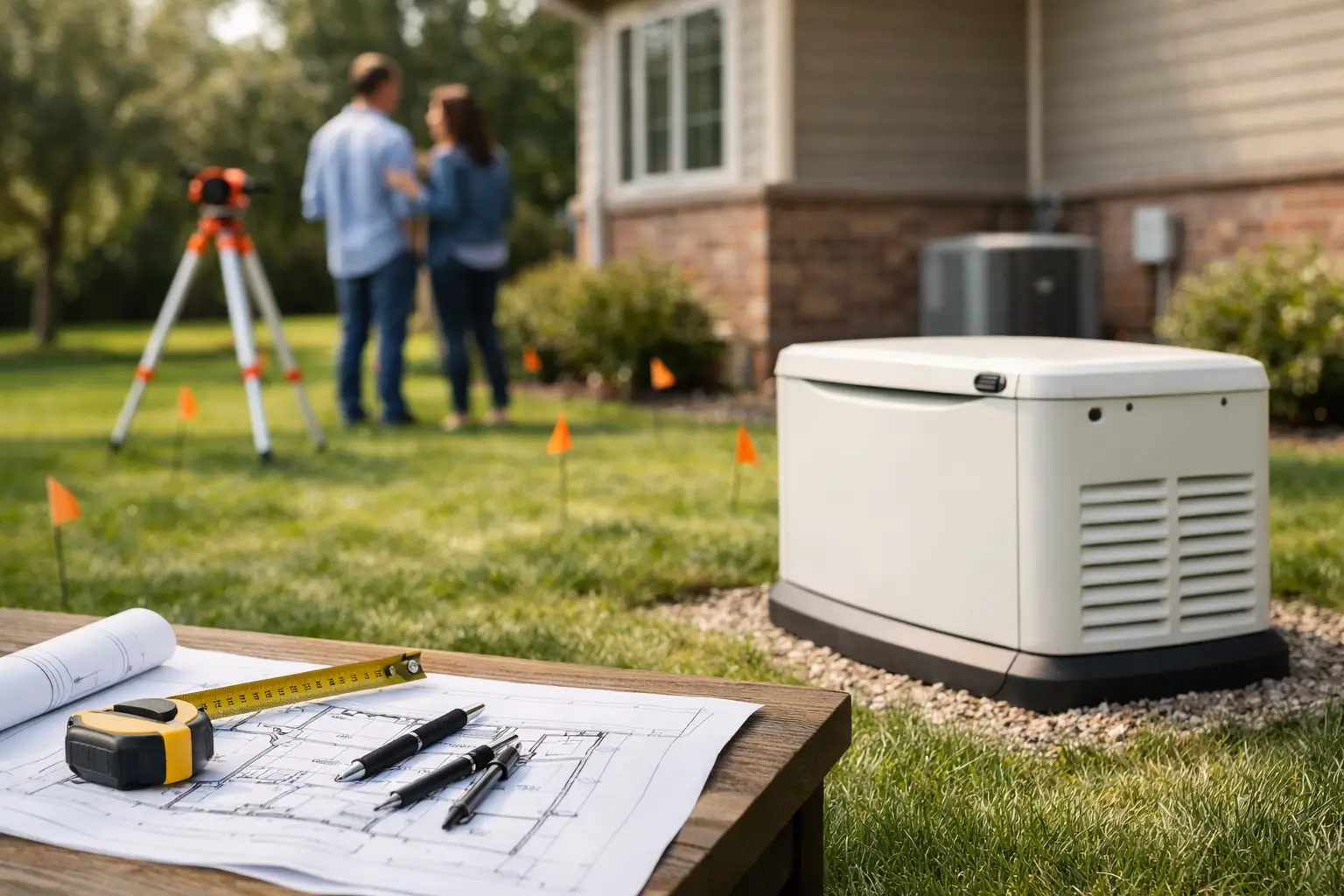
A standby generator is only useful when it can start safely, carry the right loads, and receive service without creating problems for your home or neighbors. That is why knowing how to plan generator placement matters before equipment is ordered, a pad is poured, or wiring begins. The best location is not simply the closest open spot beside the house. It has to work with fuel supply, electrical access, airflow, drainage, noise, code requirements, and future maintenance.
For homeowners and property owners in Bowling Green and surrounding counties, a professional site review is the right first step. Generator installation involves high-voltage electrical work, fuel connections, and safety clearances. Getting the location right up front helps prevent expensive changes later.
Start Generator Placement With the Equipment Plan
Generator size and type affect where the unit can go. A portable generator used during short outages has different placement needs than a permanently installed standby generator connected to an automatic transfer switch. This article focuses mainly on standby units, since they require a permanent location, electrical connection, and fuel source.
Before choosing a spot, determine what the generator will power. A system intended to run only essential circuits – such as refrigeration, sump pumps, lighting, internet equipment, and a few outlets – may be smaller than one designed to support central air conditioning, well pumps, electric heat, or a full commercial load. Larger units generally need more space, more fuel capacity, and more consideration for sound.
The electrical panel location also matters. The generator does not have to sit directly beside the panel, but longer wire runs add labor, materials, and voltage-drop considerations. A qualified electrician can evaluate the panel, transfer switch location, service capacity, and route for the generator feeder before locking in a site.
Keep Required Clearances Front and Center
Clearances are not optional details. They protect your home from exhaust heat, reduce fire risk, provide airflow for cooling, and give technicians room to service the equipment. Generator manufacturers publish specific installation instructions, and local code requirements can also apply. Those requirements should guide the final location.
In practical terms, a standby generator needs open space around it. It should be kept away from doors, windows, vents, crawl-space openings, and other areas where exhaust could enter the building. It also needs clearance from combustible materials, overhead obstructions, fences, shrubs, and structures that could restrict airflow.
Do not assume a narrow side yard is automatically a good generator location. It may look convenient, but it can create issues if the space is too tight for service access or too close to windows and utility equipment. Likewise, placing a unit under a deck, inside a garage, or in an enclosed shed is unsafe. Generators produce carbon monoxide and need manufacturer-approved outdoor installation conditions.
Property lines deserve attention too. Noise, exhaust, access, and local setback rules can affect where a unit may be placed. This is especially relevant on smaller residential lots and commercial properties with neighboring buildings close by.
Choose a Stable, Dry Location
A generator needs a level, durable base. Most standby units are installed on an approved composite pad or a properly prepared concrete pad. The pad must support the equipment without settling, shifting, or holding water around the enclosure.
Look closely at drainage before installation. A low spot near a downspout may seem out of the way, but standing water, mud, and runoff can shorten equipment life and make service difficult. Avoid locations where roof runoff pours directly onto the generator or where the ground stays soft after heavy rain.
The area should also remain accessible in bad weather. During an outage, no one wants to walk through deep mud, standing water, or an icy slope to inspect equipment. A location with firm ground and a clear approach is better for both the owner and the service technician.
If the property is sloped, a contractor may need to grade the area, build up the pad location, or select another part of the lot. The goal is a unit that stays level and dry through every season.
Plan for Fuel Before Finalizing the Spot
A standby generator typically runs on natural gas or propane. Fuel availability can narrow the placement options quickly.
For natural gas, the generator must be connected to a properly sized gas line. The existing line may not have enough capacity for both the generator and the home’s current gas appliances. Distance from the meter, generator size, pipe sizing, and the demands of furnaces, water heaters, ranges, and fireplaces all factor into the design.
For propane, consider where the tank will be located and how a supplier will reach it for deliveries. The tank and generator each have placement rules, and the fuel line must be protected and sized correctly. A generator site that is convenient for wiring but impractical for propane service is not a good long-term plan.
Do not choose a location based only on the shortest fuel line. The best layout balances fuel routing with electrical routing, clearances, access, and the appearance of the property.
Think About Noise and Neighborhood Impact
Modern standby generators are much quieter than older equipment, but they are not silent. During an extended outage, the unit may run for hours or days. Weekly exercise cycles can also be heard by anyone nearby.
Place the generator where normal operating sound is less likely to affect bedrooms, patios, outdoor living areas, or neighboring homes. Avoid aiming the exhaust side toward a frequently used sitting area or a neighbor’s window. A reasonable distance and thoughtful orientation can make a major difference.
Landscaping can help the unit blend into the property, but plants cannot crowd the enclosure. Keep required service and airflow clearance open. If screening is planned, use a design that follows manufacturer requirements and still allows a technician to safely reach panels, controls, and connections.
For commercial sites, consider employees, customers, loading areas, outdoor dining, and adjacent tenants. Generator placement should support the business during an outage without blocking operations or creating an avoidable noise complaint.
Make Maintenance Access Easy
Generators need periodic inspections, oil and filter changes, battery checks, load testing, and repairs when needed. A unit hidden behind a fence with no gate, buried in overgrown shrubs, or placed in a difficult corner will cost more time and frustration over its service life.
Leave a clear route from the driveway or parking area to the generator. Technicians need room to remove enclosure panels and work safely around the unit. The electrical disconnect, transfer switch, and fuel shutoff should also be accessible and clearly located.
Think ahead about additions to the property. A future fence, deck expansion, storage building, pool, hot tub, or landscaping project can interfere with a generator that was properly installed years earlier. Mark the planned generator area on property plans and keep its required clearance zone open.
Coordinate Electrical, Fuel, and Permit Work
A proper generator installation is a coordinated job, not a drop-off-and-connect project. The electrician evaluates the service panel and installs the transfer equipment that separates generator power from utility power. This prevents dangerous backfeeding and allows the system to operate as designed during an outage.
Fuel work must be performed by the appropriate qualified professional, and the installation may require permits and inspections depending on the location and scope. Utility requirements, manufacturer instructions, and local codes all need to line up. Skipping those steps can create safety hazards, equipment damage, insurance concerns, and problems when selling the property.
When planning generator placement, ask the installer to walk the property with you. Discuss likely pad locations, electrical routing, fuel connection options, clearance requirements, drainage, noise, and service access before the installation date. A site visit turns assumptions into a workable plan.
M Power Electric LLC helps homeowners and local businesses plan generator installations around the real conditions of the property, not a one-size-fits-all layout. The right location protects the equipment, supports reliable backup power, and keeps the installation clean for years to come.
A generator should be ready before the next outage, not become another project during one. Choose the location carefully, have the electrical work evaluated by a qualified professional, and build the system around safety, access, and dependable performance.