

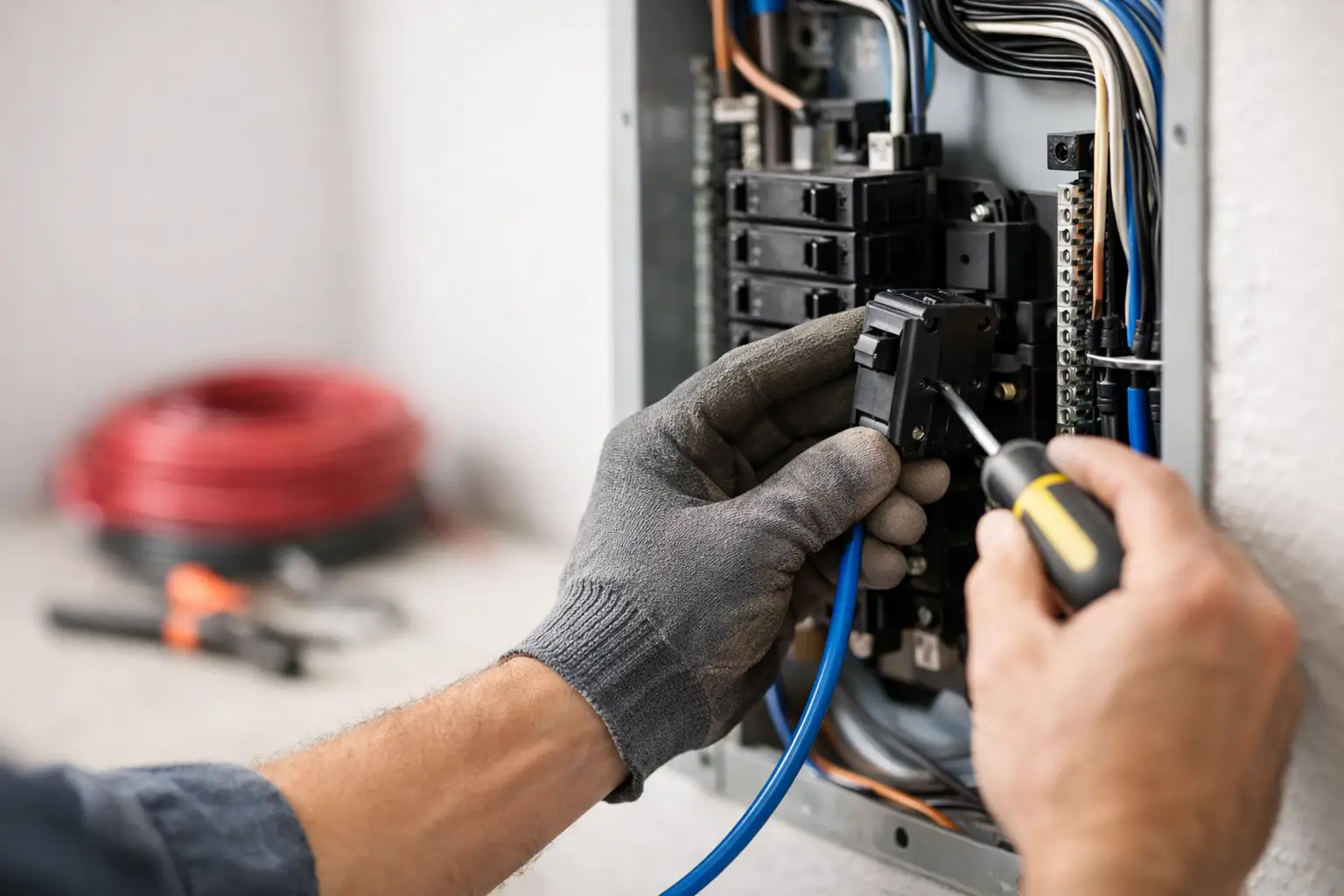
A new appliance should not have to compete with the rest of your home for power. When homeowners ask how to add dedicated circuit capacity, they are usually planning for an EV charger, hot tub, electric range, microwave, garbage disposal, garage equipment, or another high-demand load. The right answer starts with your electrical panel, not just the outlet location.
A dedicated circuit supplies one appliance or piece of equipment from its own breaker. It is designed to carry that equipment’s electrical load without sharing capacity with lighting, receptacles, or other devices. That helps prevent overloaded circuits, nuisance tripping, damaged equipment, and fire hazards.
What a Dedicated Circuit Does
Most general-use circuits serve several outlets, lights, or rooms. That setup works well for everyday loads such as lamps, televisions, phone chargers, and small appliances. It is not the right setup for equipment that runs for long periods, draws significant power, or has a large startup demand.
A dedicated circuit has its own breaker, properly sized wiring, and a direct path from the panel to the equipment or outlet. Depending on the equipment, it may be a standard 120-volt circuit or a 240-volt circuit. The breaker size, wire size, receptacle type, and safety protection all need to match the manufacturer’s requirements and current electrical code.
Common equipment that may require or benefit from a dedicated circuit includes:
- EV chargers and electric vehicle charging outlets
- Electric ranges, ovens, dryers, and water heaters
- Dishwashers, garbage disposals, microwaves, and refrigerators
- Hot tubs, pools, saunas, and spa equipment
- HVAC equipment, sump pumps, workshop tools, and generators
The exact requirement depends on the appliance, its nameplate rating, the installation instructions, and the existing electrical system. A dedicated circuit is not a one-size-fits-all upgrade.
How to Add a Dedicated Circuit: Start With a Load Check
The first step is determining whether your service and panel have enough capacity for the new load. A panel may have open breaker spaces but still lack the available electrical capacity needed for another major appliance. This is a common issue in older homes and in houses that have added electric heating, finished basements, hot tubs, workshops, or EV charging.
A qualified electrician performs a load calculation to review the size of your electrical service, existing loads, and the proposed equipment. For example, a 240-volt EV charger may need a 40-, 50-, or 60-amp circuit depending on the charger and its settings. Adding that load to a full 100-amp service can require more than installing a breaker and running cable. It may point to a panel upgrade or service upgrade.
The electrician will also inspect the panel’s condition. Corrosion, overheating, outdated equipment, double-tapped breakers, missing covers, or improper past work should be addressed before adding a new circuit. A clean installation begins with a safe, serviceable panel.
The Installation Process
Once capacity and panel condition are confirmed, the work can be planned correctly. The basic process includes selecting the circuit rating, routing approved cable or conduit, installing the required breaker, setting the correct receptacle or hardwired connection, and testing the completed circuit.
Match the Circuit to the Equipment
The appliance label and installation manual provide the electrical requirements. Those details matter. A circuit that is too small may trip repeatedly or overheat. A circuit that is too large can fail to protect the wiring and equipment properly.
Wire size is selected based on the circuit amperage, installation method, temperature conditions, and other code factors. Voltage also matters. A standard 15- or 20-amp, 120-volt circuit uses a different configuration than a 30-, 40-, or 50-amp, 240-volt circuit for a dryer, range, or charger.
For hardwired equipment, the connection must include the correct disconnecting means when required. For receptacle-fed equipment, the outlet must match the plug and circuit rating. Installing a high-amperage receptacle on undersized wiring is not an upgrade. It is a serious safety issue.
Route Wiring the Right Way
The new wiring has to be protected from damage and supported correctly throughout the run. In a finished home, that may mean working through an attic, crawl space, basement, garage, or wall cavity. Outdoor, garage, wet-location, and buried wiring have additional requirements.
Long runs can also affect the design. Voltage drop may need to be considered when a detached garage, workshop, pool area, or outbuilding is located far from the main panel. In some cases, a feeder and subpanel are a better solution than running several individual circuits across the property.
Install Protection Required by Code
Modern electrical code often requires safety devices such as GFCI or AFCI protection, depending on the location and type of circuit. GFCI protection helps reduce shock risk in areas such as garages, outdoors, bathrooms, kitchens, unfinished basements, and around water. AFCI protection is designed to detect certain dangerous arcing conditions in dwelling units.
These requirements are not optional details to skip because a circuit appears to work. They are part of building a system that protects people and property. Local permit and inspection requirements may also apply in Bowling Green and surrounding counties, especially for panel work, added circuits, EV chargers, and major equipment installations.
Why Panel Work Is Not a Typical DIY Project
Homeowners can handle planning tasks such as checking an appliance manual, choosing a charging location, clearing access to the panel, and noting when breakers trip. But working inside an energized electrical panel is different from replacing a light bulb or changing a faceplate.
Even with the main breaker turned off, parts of many panels can remain energized. A mistake involving the service conductors, breaker connection, wire termination, grounding, or neutral bar can cause severe injury, equipment damage, or a hidden fire hazard. Poorly installed work can also create permit, inspection, insurance, and resale problems later.
There is also a practical reason to call a professional: troubleshooting capacity problems takes experience. If the panel is full, an electrician can determine whether a properly listed tandem breaker is acceptable, whether a subpanel makes sense, or whether the service needs to be upgraded. Adding a breaker without understanding the full system can leave you with a circuit that trips, overheats, or fails inspection.
Signs You May Need More Than One New Circuit
A single dedicated circuit is often the right answer, but not always. If your lights dim when an appliance starts, breakers trip regularly, outlets feel warm, or you rely heavily on extension cords and power strips, the issue may be broader than one new line.
Older panels can also be undersized for how people use homes now. A house that once supported basic lighting and appliances may now need power for a home office, electric vehicle, larger HVAC equipment, smart devices, a finished garage, or outdoor entertainment. Planning ahead can save money compared with opening walls and modifying the panel again later.
For commercial properties, dedicated circuits are equally important for refrigeration, point-of-sale systems, office equipment, kitchen equipment, signage, and specialized tools. Downtime from a tripped circuit is not just inconvenient. It can interrupt business and damage equipment.
Get the Circuit Built for the Load
The goal is not simply to get power to a new outlet. The goal is to provide the right amount of power, with the right protection, from a panel that can support it. That takes a proper assessment before the first wire is run.
M Power Electric LLC helps homeowners, landlords, and businesses in Bowling Green and nearby counties install dedicated circuits for modern electrical demands. Whether you are preparing for an EV charger, replacing an appliance, adding a hot tub, or building out a workshop, have the circuit sized and installed correctly so you can use the equipment with confidence.