

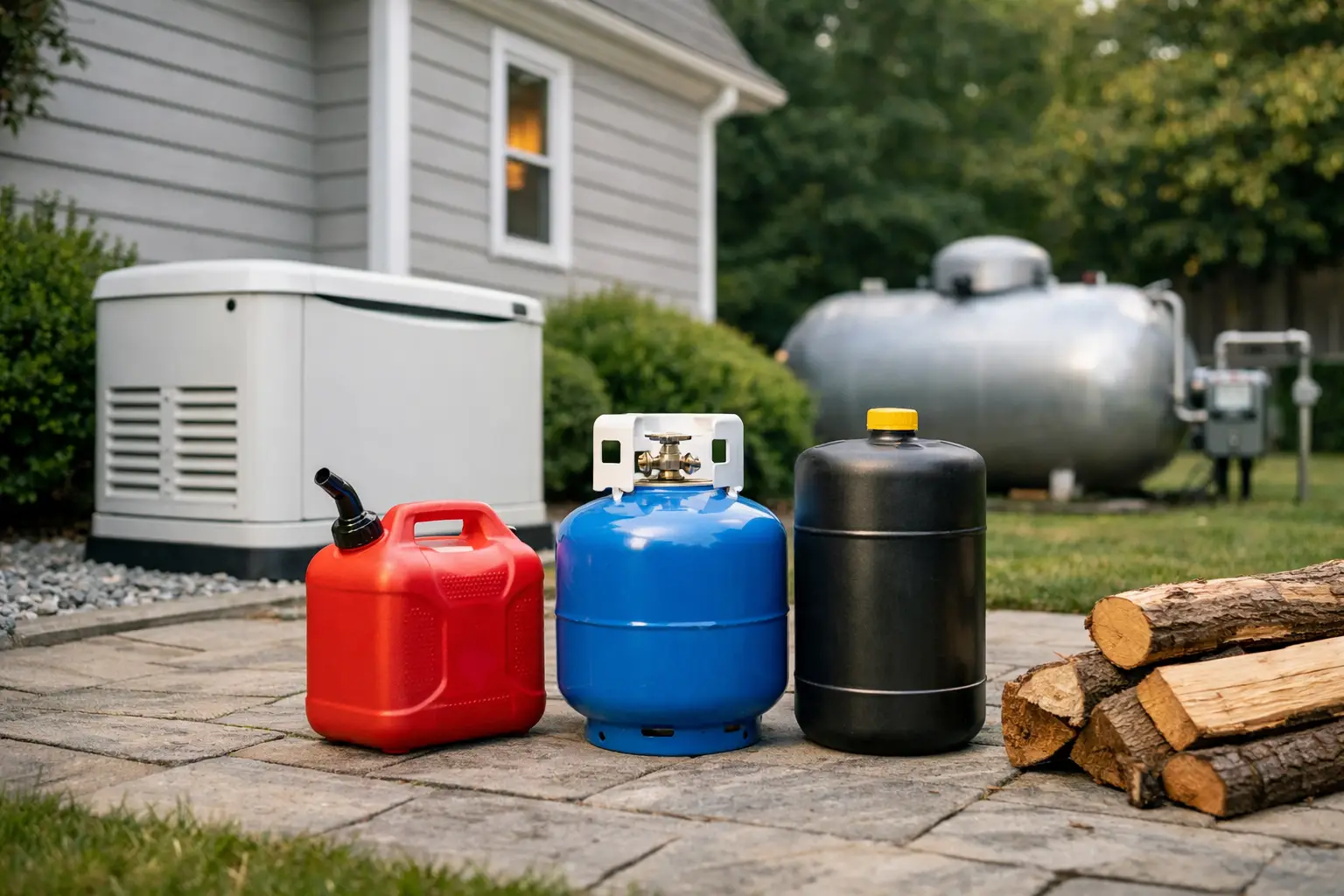
A generator is only as dependable as the fuel behind it. When Bowling Green homeowners compare home generator fuel options, the right answer depends on more than generator size. You need to consider how long outages typically last, whether utility gas serves your property, how much space you have for fuel storage, and which systems you want to keep running.
For a permanently installed standby generator, fuel planning should happen before equipment is ordered. A generator that is undersized, connected to an inadequate gas line, or supplied by a small propane tank may not deliver the backup power you expected when the lights go out.
Home Generator Fuel Options at a Glance
Most residential generators run on natural gas or propane. Diesel has a place in certain larger or more specialized applications, while gasoline is common for portable generators but is rarely the best fuel choice for a whole-home standby system.
Each fuel has real advantages. The best choice is the one that fits your property, outage risk, budget, and electrical load plan.
Natural gas
Natural gas is often the most convenient option for homes already connected to a reliable utility gas line. A standby generator can draw fuel continuously from the utility supply, so there is no tank to refill or fuel to rotate. For homeowners who want automatic backup power with minimal day-to-day attention, that is a major benefit.
Natural gas is usually a strong fit for neighborhoods in and around Bowling Green where service is available. It also avoids the concern of running out of stored fuel during a multi-day outage, assuming the gas utility remains operational.
The trade-off is that a generator needs enough gas volume at the correct pressure while running under load. A line that adequately serves a furnace, water heater, and range may not have the capacity for a large generator at the same time. Proper pipe sizing is not optional. The installation team must account for the generator’s fuel demand, distance from the meter, existing gas appliances, and local code requirements.
Natural gas may not be available on rural properties. Even where it is available, utility disruptions are possible, though they are less common than electrical outages.
Propane
Propane is a dependable standby-generator fuel for homes without natural gas service. It is stored on-site in a tank, giving the homeowner direct control over the available fuel supply. Propane also stores well. Unlike gasoline and diesel, it does not degrade in the tank over time, making it a practical choice for emergency equipment that may sit unused for long periods.
A properly sized propane tank can support a generator through many hours or several days of outage, depending on generator capacity and electrical demand. This makes propane especially useful for rural homes, properties with frequent storm-related outages, and homeowners who want fuel independence from a utility gas line.
Tank size matters. A small tank may be enough for a few essentials, but a large standby generator running central air conditioning, well pumps, electric appliances, or multiple comfort systems can use fuel quickly. Your propane provider can help establish a delivery plan, but the tank still needs enough reserve capacity for an outage when delivery routes may be delayed.
Propane tanks can be above ground or underground. Above-ground tanks are generally simpler to service and less expensive to install. Underground tanks preserve curb appeal but add excavation, placement, and maintenance considerations. Local setbacks and site conditions affect what is possible.
Diesel
Diesel generators are known for durability and long run times, particularly in commercial, agricultural, and larger backup-power applications. Diesel fuel has a higher energy density than propane, and diesel-powered equipment can be a practical choice where heavy loads or extended operation are expected.
For a typical single-family standby generator, diesel is less common than natural gas or propane. It requires on-site fuel storage, and diesel fuel needs proper maintenance. Water contamination, algae growth, and fuel degradation can create reliability problems if a tank sits for years without testing or treatment.
Diesel can still make sense for certain properties. A larger home with substantial electrical loads, a business with equipment that cannot tolerate downtime, or a site already set up for diesel storage may benefit from it. The fuel tank, ventilation, fire-safety requirements, and maintenance routine all need to be part of the decision from the start.
Gasoline
Gasoline is widely available and familiar, which is why it remains common for portable generators. It is useful for short outages when the goal is to run a refrigerator, a few lights, a sump pump, or selected appliances through a properly installed generator inlet and transfer setup.
It is not usually the right choice for an automatic whole-home standby generator. Gasoline has a limited shelf life, requires safe storage, and often means refueling the generator by hand during an outage. That can be inconvenient in bad weather and unsafe if fuel is handled near hot equipment.
If you rely on a portable gasoline generator, never run it in a garage, porch, crawlspace, or any enclosed or partially enclosed area. Carbon monoxide can build up quickly and become deadly. Place it outdoors, well away from doors, windows, and vents, and use working carbon monoxide alarms inside the home.
Match the Fuel to the Loads You Need to Protect
Fuel selection and generator sizing work together. A homeowner who only needs refrigeration, internet equipment, lighting, a garage door, and a few receptacles has a different need than a homeowner who expects to run central HVAC, electric heat, a well pump, kitchen appliances, and every circuit in the house.
Start by deciding whether you need essential-circuit backup or broader whole-home coverage. Essential-circuit systems are often more affordable because they power only selected loads. Whole-home systems provide greater convenience, but they usually require a larger generator and more fuel capacity.
High-demand equipment deserves special attention. Air conditioners, heat pumps, electric water heaters, electric ranges, dryers, pool equipment, and EV chargers can quickly push generator demand beyond a practical limit. Some installations use load-management equipment to prevent large appliances from starting at the same time. This can allow a homeowner to install a right-sized system instead of simply buying the largest generator available.
Installation Details That Affect Fuel Reliability
A good generator installation is more than placing equipment on a pad. The generator must be located with proper clearances from the home, doors, windows, vents, and combustible materials. It needs a code-compliant electrical connection, a transfer switch or approved interlock arrangement, grounding and bonding that match the system design, and a fuel connection sized for the actual equipment.
For natural gas and propane systems, the generator’s fuel demand is typically measured in BTUs per hour or cubic feet per hour. The supply line must deliver enough fuel at full load, not just during a light weekly exercise cycle. Undersized gas piping is one of the most common reasons a standby generator performs poorly when it is needed most.
Permits and inspections may also apply, depending on the scope and location of the work. Professional planning helps prevent costly changes after the generator, tank, or electrical equipment is already in place.
Think About Outage Length, Not Just Purchase Price
The least expensive fuel setup is not always the least expensive ownership decision. Natural gas may have a lower up-front fuel infrastructure cost if service is already at the house. Propane may require a tank and delivery arrangement but offers stored fuel on-site. Diesel may require more maintenance, while gasoline requires regular rotation and hands-on refueling.
Ask yourself how your household functions during a three-hour outage, a 24-hour outage, and a three-day outage. If your home relies on a well pump, medical equipment, a sump pump, refrigerated medication, or remote work connectivity, dependable backup power has a different value than simple convenience.
The right fuel option is the one that supports a safe installation and gives your household a realistic plan when the utility power stays off longer than expected. M Power Electric can help evaluate the electrical side of that plan so the generator, transfer equipment, and protected loads are built for the way your home actually operates.