

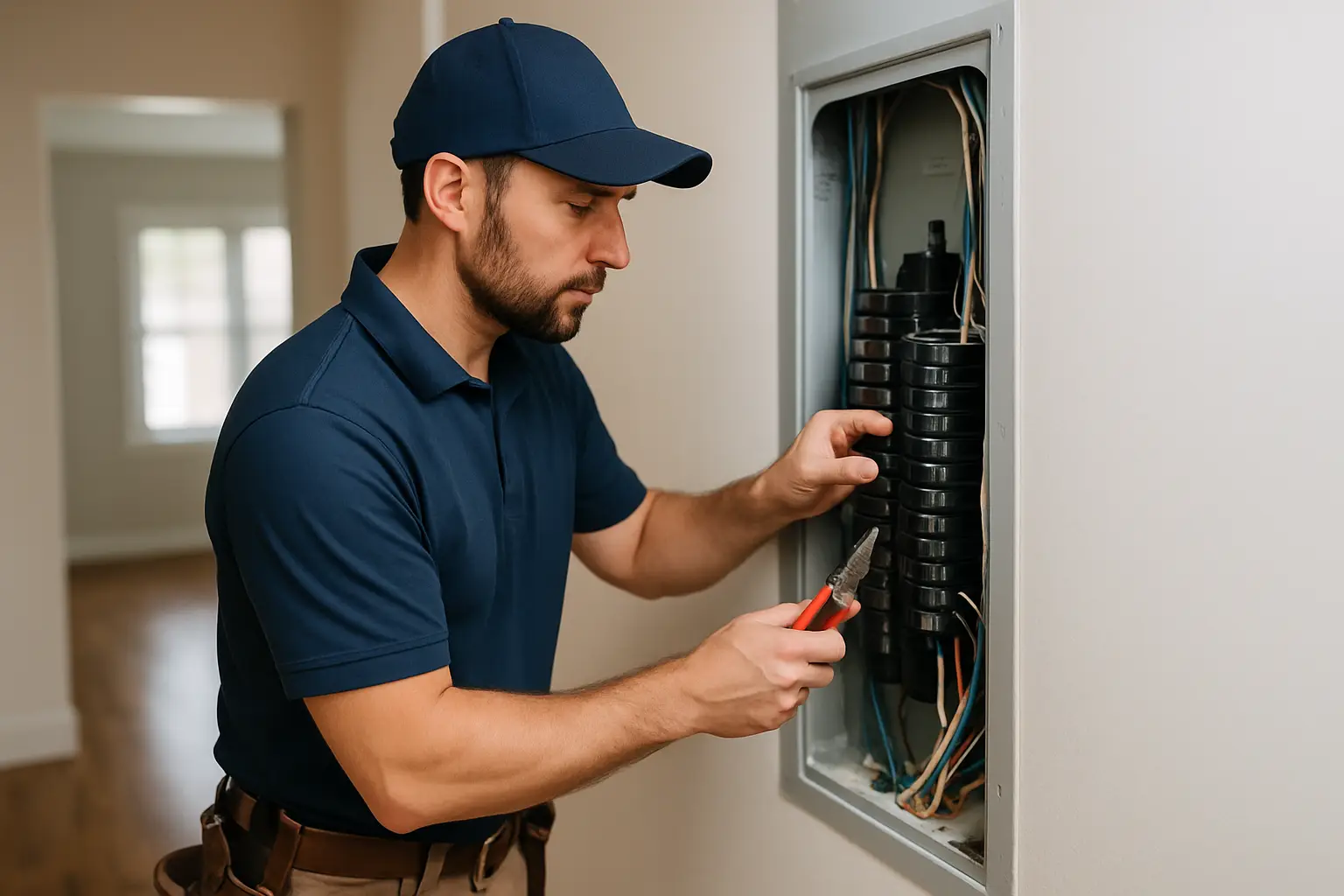
If your lights dim when the HVAC kicks on, or your breaker trips when the microwave and air fryer run together, your electrical system is telling you something. Around Bowling Green, KY, we see it all the time in older homes, busy rentals, and small businesses that have added more equipment over the years. The panel that worked fine in 1995 might not be the right fit for today’s load – especially with EV chargers, hot tubs, bigger HVAC units, and home offices running all day.
An electrical panel upgrade is one of those projects that feels “invisible” once it’s done. But it changes everything about how safely and reliably your property runs. Here’s how to know when it’s time, what the process looks like, and what to ask so you get the right capacity without paying for more than you need.
Electrical panel upgrade Bowling Green KY: what it really means
When people search for an “electrical panel upgrade bowling green ky,” they’re usually describing one of three situations.
The first is a true service upgrade, where the amperage coming into the building is increased (for example, moving from 100 amps to 200 amps). This can involve coordination with the utility, a new meter base or service equipment, and updates to the service entrance.
The second is a panel replacement at the same amperage. Your service might still be 200 amps, but the panel is old, crowded, corroded, or simply not in great shape. Replacing it gives you better reliability and room for proper breaker sizing without changing the incoming service.
The third is adding capacity the right way – like installing a subpanel, rearranging circuits, or adding dedicated circuits for a new load. Sometimes you don’t need a full service upgrade, but you do need a cleaner, safer layout.
A good electrician will start with what you’re trying to power and what your existing equipment can safely support. The goal is not “bigger is always better.” The goal is a system that matches your real load and stays code-compliant.
Signs your panel is too small or too stressed
Some warning signs are obvious, and some are easy to ignore until you smell something hot. If you notice one issue occasionally, it might be a single circuit problem. If you’re seeing a pattern, it’s worth having the panel checked.
Frequent breaker trips are the big one. A breaker that trips once because you overloaded it can be normal. Breakers that trip regularly, breakers you “baby” by turning things off, or breakers that feel warm can point to overloaded circuits, failing breakers, or a panel that’s at its limit.
Flickering or dimming lights are also common. It can be a loose connection, a failing device, or a voltage drop when large loads start up. The point is this: if the system can’t handle normal starting loads without visible changes, it’s time to investigate.
Another red flag is a panel that’s full. If your electrician opens the door and there are no spaces left, the temptation is to use shortcuts like double-tapping or adding breakers in ways that aren’t allowed. A full panel isn’t automatically unsafe, but it often leads to unsafe decisions over time.
Age matters too. Even if you’re not having daily issues, older panels can have corrosion, damaged bus bars, or breakers that don’t trip as designed. That’s not something you want to discover during a storm, a power surge, or an equipment failure.
Finally, if you’re planning new high-demand additions – EV charger, generator connection, hot tub, sauna, pool equipment, workshop tools, or a kitchen remodel – it’s smart to evaluate the panel before you spend money on the new equipment. Many “new install” projects turn into “new install plus panel work” if the infrastructure isn’t there.
How much power do you actually need?
This is where “it depends” is real, and it’s why a one-size-fits-all quote over the phone usually isn’t the best approach.
A typical modern single-family home in Bowling Green often lands well with 200-amp service, especially if you have electric cooking, electric water heating, or a larger HVAC setup. If you’re adding an EV charger, 200 amps is often the sweet spot, but not always. Some homes can support EV charging with load management or careful circuit planning. Others need a service upgrade because the existing load is already close to the limit.
Small businesses vary even more. A light office might be fine with what it has, while a shop with motors, compressors, commercial refrigeration, or specialized equipment may need a more substantial service.
The right way to answer “what size panel do I need?” is to do a load calculation and confirm what the service equipment and wiring can support. That protects you from under-building (constant trips and nuisance issues) and over-building (paying for capacity you won’t use).
What happens during an electrical panel upgrade
Most customers want to know two things: how long the power will be off, and what the electrician is actually doing.
A professional panel upgrade usually starts with an on-site evaluation. The electrician checks the current panel condition, breaker layout, grounding and bonding, available spaces, and service equipment. They also talk with you about what you’re adding now and what you might add later.
Once the plan is set, the job day typically involves a planned power shutdown. The old panel is removed, circuits are labeled and re-terminated in the new panel, and grounding and bonding are brought up to current requirements. If it’s a service upgrade, there may be coordination with the utility for disconnect and reconnect.
After installation, the electrician verifies proper breaker sizing, checks connections, tests circuits, and makes sure everything is safe, clean, and organized. A neat panel isn’t just “nice.” It makes future troubleshooting faster and helps prevent bad connections.
Power downtime varies based on complexity. A straightforward replacement can sometimes be handled within a day. More involved upgrades – especially those requiring service changes or additional corrective work – can take longer. The important part is that you should know the plan before the work begins, including any steps that might extend the outage.
Code compliance and safety: what customers should look for
Panel work is not the place for guesswork. The panel is where the whole property’s power is distributed, and mistakes show up as heat, arcing, damaged equipment, or fire risk.
Ask how grounding and bonding will be handled. Ask whether any damaged conductors, corrosion, or improper connections will be corrected as part of the job. If the panel has a history of moisture exposure, pest damage, or overheating, the scope may need to expand beyond a simple swap.
Also ask how circuits will be labeled and organized. Clear labeling is a safety feature. It helps you shut off the right breaker in an emergency and makes future upgrades cleaner.
Permits and inspections can be part of a professional approach depending on the scope. If you’re increasing service size or making significant changes, that’s typically not something you want done quietly.
Cost factors in Bowling Green homes and businesses
People understandably want a number, but panel upgrade pricing depends on the conditions at your property.
A same-size panel replacement is often more straightforward than a service upgrade, but even replacements can vary if there’s damaged wiring, an outdoor meter base that needs attention, or a panel location that requires additional work.
Service upgrades can include more components and coordination. That can mean additional labor, new service conductors, upgrades to the service mast or meter equipment, and time aligning schedules for disconnect and reconnect.
The biggest cost driver is usually not the panel itself. It’s the scope around it. The more your existing setup needs to be corrected to meet current standards and safely support your load, the more time the job takes. The upside is that you’re paying for long-term reliability and fewer “mystery electrical problems” down the road.
If you’re comparing quotes, compare the scope, not just the total. A low number can mean missing work that will show up later as added charges or unresolved issues.
Upgrades that often go hand-in-hand with a new panel
Many customers schedule a panel upgrade because they’re also adding something. This is common in Bowling Green as homes modernize.
EV charger installations are a big one. A dedicated circuit with correct sizing, a proper breaker, and a clean run back to the panel is the right way to do it. If your panel is already tight, it’s better to address that first.
Generator connections are another. A safe generator setup often includes a transfer switch or interlock configuration designed for your panel. Planning the panel work with generator readiness in mind can save time and prevent rework.
Outdoor and lifestyle electrical – pools, hot tubs, and saunas – also tends to trigger panel changes. Those installations require careful GFCI protection, correct bonding, and reliable capacity. If your panel is old or crowded, it’s not a great foundation for safety-sensitive outdoor loads.
Choosing the right electrician for panel work
You want a contractor who does panel upgrades regularly, not as a once-in-a-while job. Panel work moves fast when it’s planned well and labeled well, and it stays safe when the electrician is disciplined about connections, torque, and layout.
Look for clear communication about downtime, scope, and what happens if they open the panel and find additional issues. A professional should be able to explain trade-offs, like whether a subpanel makes sense versus a full service upgrade.
If you’re in Bowling Green or nearby counties and want a local team that handles everyday electrical repairs and higher-demand upgrades, M Power Electric LLC can help – you can reach out through https://Mpowerelectricllc.com.
A practical way to decide: fix the symptoms or fix the capacity?
Sometimes a homeowner calls because “the breaker keeps tripping” and expects a quick swap. If the underlying issue is an overloaded circuit, replacing the breaker won’t solve it. Other times, a panel upgrade feels like a big step when the real solution is adding a dedicated circuit for one appliance.
The decision comes down to this: if your panel is outdated, damaged, or out of space, it makes sense to fix the foundation. If your panel is in good shape but a few areas are overloaded, you may be able to solve the problem with targeted circuit work.
Either way, the best outcome is the one where you stop worrying about what you can run at the same time. When your electrical system supports your life instead of limiting it, the house feels calmer – and that’s a good place to be.