

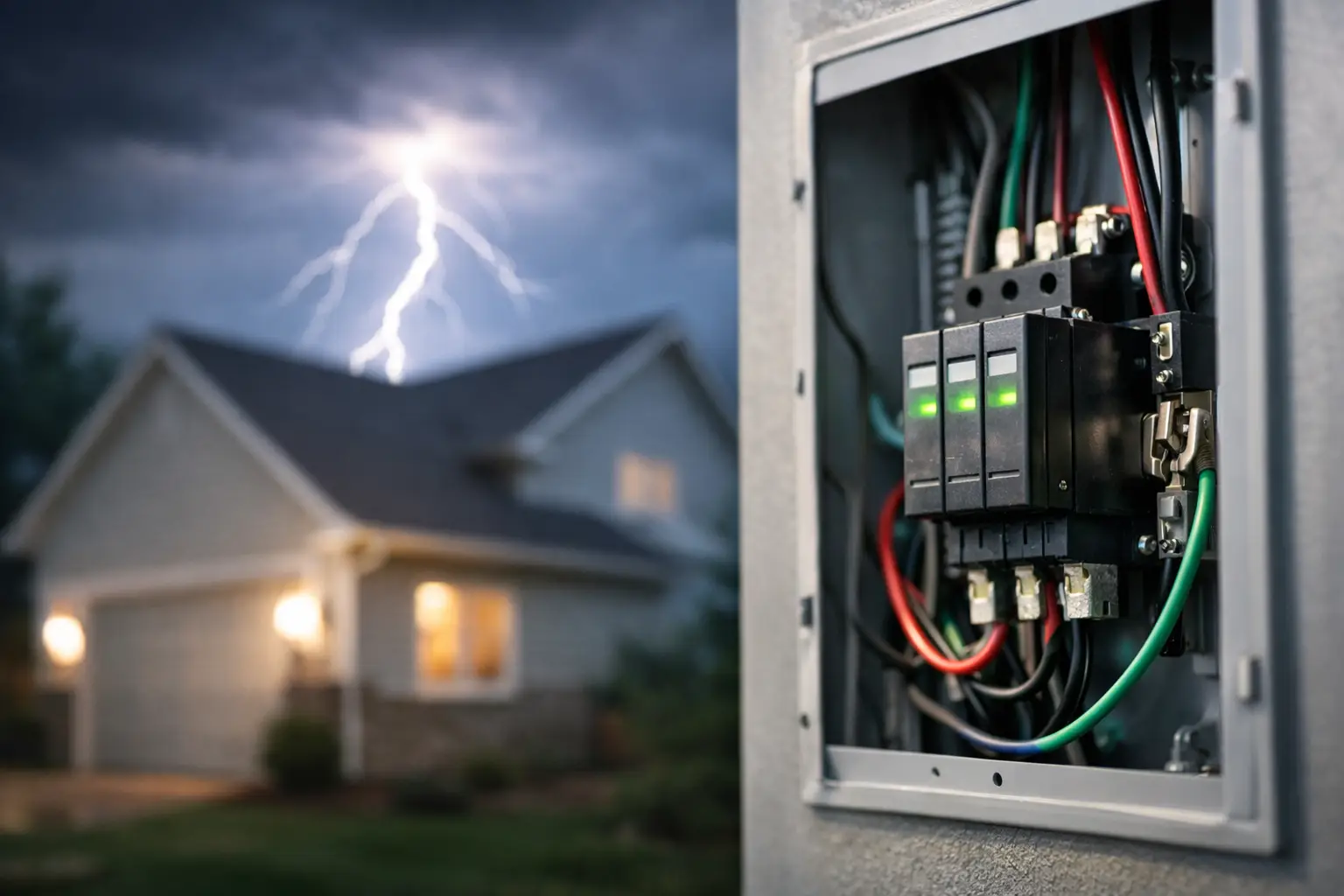
That question usually comes up right after something expensive stops working. A TV won’t turn on after a storm. The garage door opener acts strange. An HVAC board fails sooner than expected. If you’re asking, do I need whole house surge protection, the short answer is yes for many homes and small businesses – especially if you rely on modern electronics, major appliances, or sensitive equipment every day.
Whole house surge protection is one of those upgrades people rarely think about until they have a problem. It is not flashy, and it does not change how your home looks. What it does is help protect the electrical system and the equipment connected to it from sudden voltage spikes that can shorten lifespan or cause immediate damage.
What whole house surge protection actually does
A power surge is a brief spike in voltage. That spike can come from lightning activity nearby, utility grid switching, downed lines, large equipment cycling on and off, or even appliances inside your own home. Most surges are small and happen fast, but that does not make them harmless. Over time, repeated small surges can wear down electronics and appliance control boards.
A whole house surge protector is typically installed at the electrical panel. Its job is to divert excess voltage away from your home’s circuits before that surge reaches the devices plugged in throughout the building. It helps cover the entire electrical system at the source, which is very different from relying only on plug-in surge strips in a few rooms.
That matters because today’s homes have far more sensitive electronics than they did years ago. Refrigerators, ovens, washing machines, dryers, HVAC systems, internet equipment, TVs, security systems, EV chargers, and smart home devices all contain electronics that can be affected by unstable power.
Do I need whole house surge protection if I already use power strips?
Maybe, and in most cases the answer is still yes.
Power strips with surge protection can help at the outlet level, but they do not replace a properly installed whole house device. A plug-in strip only protects what is plugged into that one location. It also does nothing for hardwired equipment like your air conditioner, furnace, water heater, garage door system, or electrical panel itself.
A whole house surge protector works as the first line of defense. Point-of-use surge strips can still be useful as a second layer for especially sensitive electronics like computers, gaming systems, or entertainment equipment. The strongest approach is usually both, not one or the other.
When whole house surge protection makes the most sense
Some properties benefit from this upgrade more than others, but there are clear signs that it is worth serious consideration.
If your area gets frequent thunderstorms, your risk is higher. Kentucky weather can bring heavy storm activity, and nearby lightning events can create surge conditions even without a direct strike to your home. If the power flickers often, that is another clue that your electrical system may be seeing unstable conditions.
You should also take it seriously if your home has newer appliances or smart devices. Modern equipment is efficient and convenient, but it depends on delicate internal boards. Replacing one refrigerator control board or one HVAC board can cost far more than installing surge protection.
It also makes sense if you have invested in higher-demand electrical equipment. EV chargers, generators, pool equipment, hot tubs, saunas, and newer HVAC systems all represent a bigger investment in your electrical infrastructure. If your panel has been upgraded or your home is taking on more electrical load than it used to, surge protection becomes a smarter part of the overall setup.
For small businesses and rental properties, the case can be even stronger. Downtime matters. Damage to networking equipment, office systems, security hardware, refrigeration, or tenant appliances can create bigger operational problems than the cost of prevention.
What whole house surge protection does not do
This is where a lot of confusion happens.
Whole house surge protection helps reduce damage from transient voltage spikes, but it is not a cure-all for every electrical issue. It does not fix bad wiring, overloaded circuits, loose connections, outdated panels, or improper grounding. It also does not replace the role of a generator during a power outage.
And while surge protection is very helpful, no device can promise absolute protection from every event, especially a direct lightning strike or severe electrical fault. Good protection is about reducing risk and limiting damage, not making a property immune to every possible problem.
That is why professional installation matters. The surge protective device needs to be matched to the electrical system, installed correctly at the panel, and supported by proper grounding and bonding. If there are underlying panel or wiring issues, those should be addressed too.
Do I need whole house surge protection in an older home?
Often, yes – but the answer depends on the condition of the electrical system.
Older homes can actually have more to gain from surge protection because they were not built around today’s electronics. At the same time, older electrical systems may need upgrades before surge protection can perform the way it should. If the panel is outdated, the grounding is weak, or there are code and safety concerns, those problems need attention first.
This is also why homeowners should not assume a surge protector is just a simple add-on. In some homes, it is straightforward. In others, it makes sense to inspect the panel, service size, grounding, and overall condition before recommending the right solution.
A professional electrician can tell you whether surge protection should be installed now or as part of a larger electrical upgrade.
The cost question most people are really asking
When customers ask if they need whole house surge protection, they are often asking whether it is worth the money.
For most property owners, it comes down to what is connected to the electrical system and how expensive those items are to replace. A surge protector may help protect thousands of dollars in appliances and electronics. That includes obvious items like TVs and computers, but also the equipment people forget about until it fails – HVAC systems, kitchen appliances, openers, controls, routers, and smart devices.
There is also the issue of nuisance failures. Not every surge causes dramatic damage right away. Sometimes it shortens the life of equipment, and the failure shows up months later. That can make the real cause easy to miss.
If your home has one old refrigerator and not much else electronic, the value may look different than it does in a house with two HVAC systems, a home office, smart devices, and an EV charger. It depends on the property, but for many homes today, the answer is simple: there is enough worth protecting to justify the upgrade.
Who should seriously consider it right now
If any of this sounds familiar, whole house surge protection is probably worth discussing with a licensed electrician.
You have frequent storms or power flickers. You have replaced electronics or appliance boards after outages. You are installing an EV charger, generator, hot tub, sauna, or pool equipment. Your home has a newer panel or recently added circuits. You run a business from home or manage a rental or commercial property where electrical interruptions cost time and money.
Those are not edge cases anymore. They are common situations, and they are exactly why surge protection has become a practical upgrade instead of an optional extra.
Why professional installation matters
This is panel work, not a DIY project.
A properly installed whole house surge protector needs to be compatible with the panel and installed according to code. Placement matters. Grounding matters. The overall condition of the electrical system matters. If the panel is crowded, outdated, or already showing signs of trouble, that should be part of the conversation.
A trained electrician can also help you look at the bigger picture. Sometimes surge protection is the right standalone upgrade. Other times it should be paired with a panel upgrade, generator planning, or corrections to existing electrical issues. At M Power Electric LLC, that is the kind of practical, professional guidance customers are looking for – not guesswork, and not a one-size-fits-all answer.
If you are asking whether this is necessary, the better question may be how much of your home depends on reliable power now. For most homes and businesses, that number keeps growing, and protecting that investment makes more sense every year.