

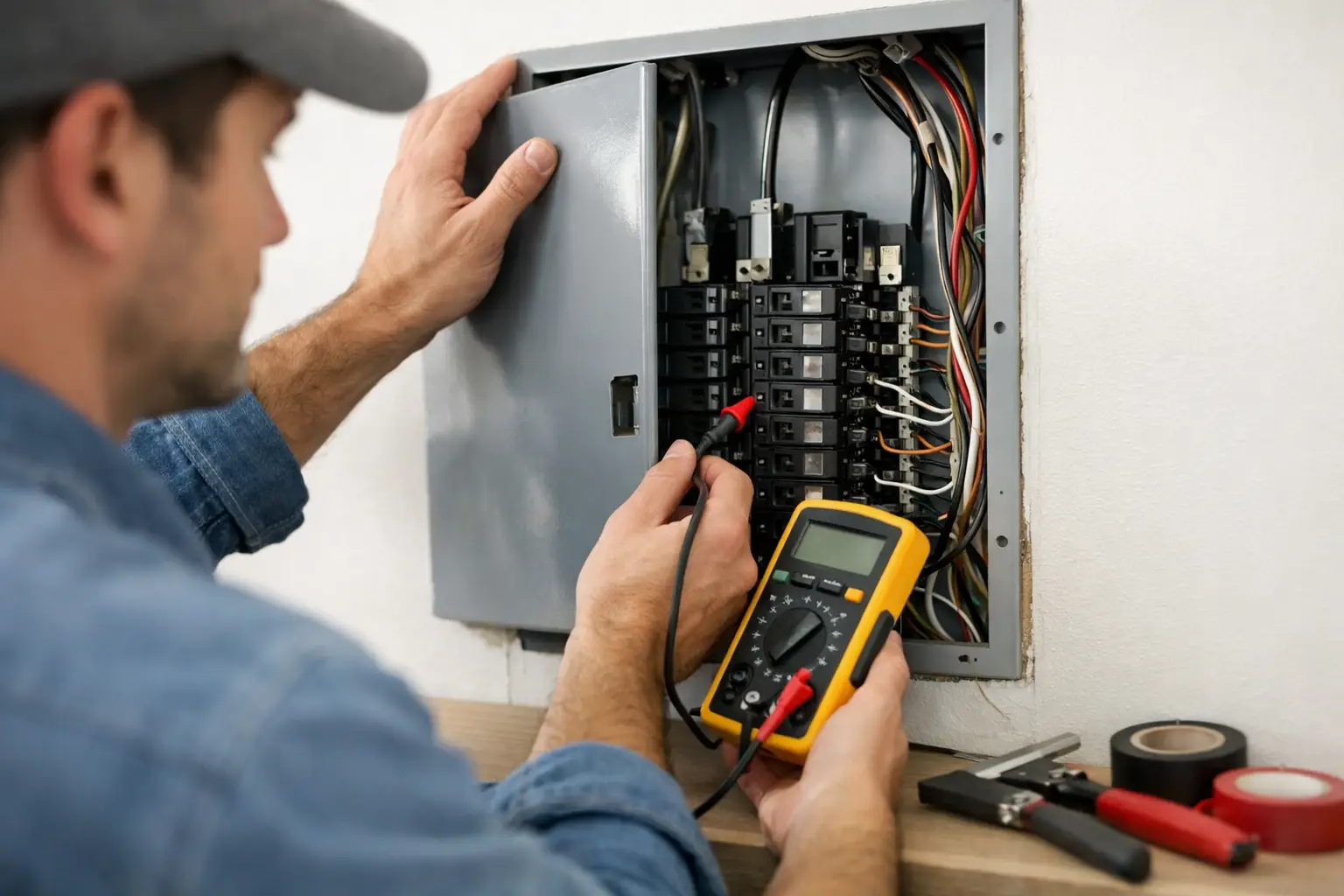
If you are asking, can you upgrade your own electrical panel, you are probably already dealing with a real problem – breakers that trip, a home that still runs on an older service, or new plans for an EV charger, hot tub, workshop, or addition. That question makes sense. A panel upgrade looks straightforward from the outside. Open the cover, swap some parts, hook up the wires, and move on. In reality, this is one of the highest-risk jobs in residential electrical work.
The short answer is yes, a homeowner may be allowed to do their own panel work in some places. But whether you can legally do it, safely do it, pass inspection, and get the utility side coordinated are four different questions. For most homeowners, a panel upgrade is not a smart DIY project.
Can you upgrade your own electrical panel legally?
That depends on where you live, what kind of property it is, and how the local building department handles permits. Some jurisdictions allow owner-occupants to pull permits and do certain electrical work on their primary residence. Others restrict major service equipment work to licensed electricians. Rental properties, commercial buildings, and multi-family properties usually have tighter rules.
Even when a homeowner is allowed to do the work, the project still has to meet current code, pass inspection, and often involve coordination with the power company. That matters because a panel upgrade is not just replacing a metal box. It can involve service entrance conductors, grounding and bonding, meter equipment, main disconnect requirements, arc fault and ground fault protection, load calculations, and clearances.
If you skip the permit or do work that does not pass, you may create problems when selling the property, filing an insurance claim, or trying to reconnect utility service after an outage or future repair.
Why this job is more serious than it looks
A panel is the control point for your whole electrical system. Inside it are energized parts that can seriously injure or kill you. Even with the main breaker off, portions of the system may still be live. That is one reason panel work is different from swapping a switch or replacing a receptacle.
There is also the issue of fault current. A service panel can release tremendous energy during a short circuit or arc flash event. This is not just a shock hazard. It is a burn, fire, and blast hazard.
Then there is the workmanship side. A panel upgrade has to be mechanically solid and electrically correct. Wire sizing, lug torque, breaker compatibility, grounding electrode connections, neutral isolation in the right locations, panel labeling, and circuit organization all matter. One small mistake can create nuisance tripping at best and an unsafe system at worst.
What a panel upgrade actually involves
Homeowners often think of a panel upgrade as simply moving circuits from an old panel into a new one. Sometimes it is that simple, but often it is not.
A true upgrade may include increasing service amperage from 100 to 200 amps, replacing the meter base, updating the service mast or service conductors, adding or correcting grounding electrodes, installing a new main disconnect, and bringing certain parts of the system up to current code. If the existing wiring is crowded, damaged, doubled up incorrectly, or poorly labeled, cleanup takes time and experience.
In older homes, the project can uncover more issues. You may find undersized conductors, obsolete breaker brands, corrosion, overheated terminations, or circuits that have been extended and altered over decades. Once the panel is open, those problems do not go away on their own.
The permit and utility side can stop a DIY project fast
One of the biggest reasons homeowners underestimate this job is that they focus only on the panel itself. A service upgrade usually involves the local inspector and the utility company. Power may need to be disconnected and re-energized on a schedule. The utility may have its own requirements for meter sockets, service entrance setups, and inspection approval before reconnecting.
That means timing matters. If something is not ready for inspection, your home or building may sit without power longer than expected. For a homeowner trying to do the work nights or weekends, that can turn into a real problem quickly.
A licensed electrician handles these moving parts every day. That experience saves time, avoids failed inspections, and helps prevent a one-day job from becoming a week of disruption.
Can you upgrade your own electrical panel safely?
For most people, no.
This is not a question of being handy. Plenty of capable homeowners can frame a wall, install flooring, or replace fixtures. Electrical service equipment is different because the consequences are immediate and severe. It takes training to recognize hazards, understand code intent, and complete the work in a way that is safe under load, not just safe enough to look tidy when the cover goes back on.
There is also a difference between getting the lights back on and having a panel that will perform correctly for years. A proper installation accounts for heat, conductor fill, breaker loading, grounding paths, surge protection options, future circuits, and the demands of modern equipment like EV chargers and generators.
When people ask this question
Usually, they are not trying to become electricians. They are trying to solve one of three problems.
The first is cost. A panel upgrade is an investment, and homeowners naturally want to know if they can save labor. The second is urgency. Maybe the current panel is full, the breakers are tripping, or a project is stalled until the service is updated. The third is confidence. Some people have done smaller electrical jobs and wonder if this is the next step.
Those are fair reasons to ask. But this is one place where saving money up front can cost more later. A failed inspection, damaged equipment, utility reconnection delays, or hidden code violations can wipe out any DIY savings fast.
Signs you may need a panel upgrade
If your home still has an older 100-amp service and you are adding major loads, it may be time to upgrade. The same goes for panels that are out of space, breakers that trip regularly, lights that flicker under normal use, or equipment that cannot be installed because the service capacity is too limited.
This comes up often with EV chargers, generator connections, hot tubs, HVAC replacements, kitchen remodels, and garage or shop additions. Modern homes ask more from the electrical system than many older panels were built to handle.
A proper evaluation starts with a load calculation and a look at the condition of the existing equipment. Sometimes the answer is a full service upgrade. Sometimes it is a subpanel, circuit rework, or better load management. That is why a one-size-fits-all answer does not work.
What hiring a professional really buys you
When you hire a qualified electrician for a panel upgrade, you are paying for more than installation labor. You are paying for hazard recognition, code knowledge, permit handling, utility coordination, proper material selection, and a finished system that is built to carry your home safely.
You are also paying for judgment. An experienced electrician can spot when an older grounding system needs correction, when feeder conductors are not right, when breakers are mismatched, or when another part of the system needs attention before a new panel goes in. That kind of field knowledge matters.
For homeowners and property owners in Bowling Green and surrounding counties, this is exactly the kind of work where local experience helps. M Power Electric LLC handles panel upgrades and related service work with the kind of practical, safety-first approach these jobs require.
So, can you upgrade your own electrical panel?
Maybe in a legal sense, depending on your local rules. In a practical sense, it is rarely the right call.
A panel upgrade is not a cosmetic project and not a good place to test your limits. It affects the whole property, involves serious safety risks, and has to satisfy code and utility requirements, not just personal confidence. If your current panel is outdated, overloaded, or standing in the way of an EV charger, generator, renovation, or other upgrade, the smarter move is to have it evaluated by a professional and get the job done right the first time.
When it comes to your electrical service, peace of mind is worth more than a shortcut.