

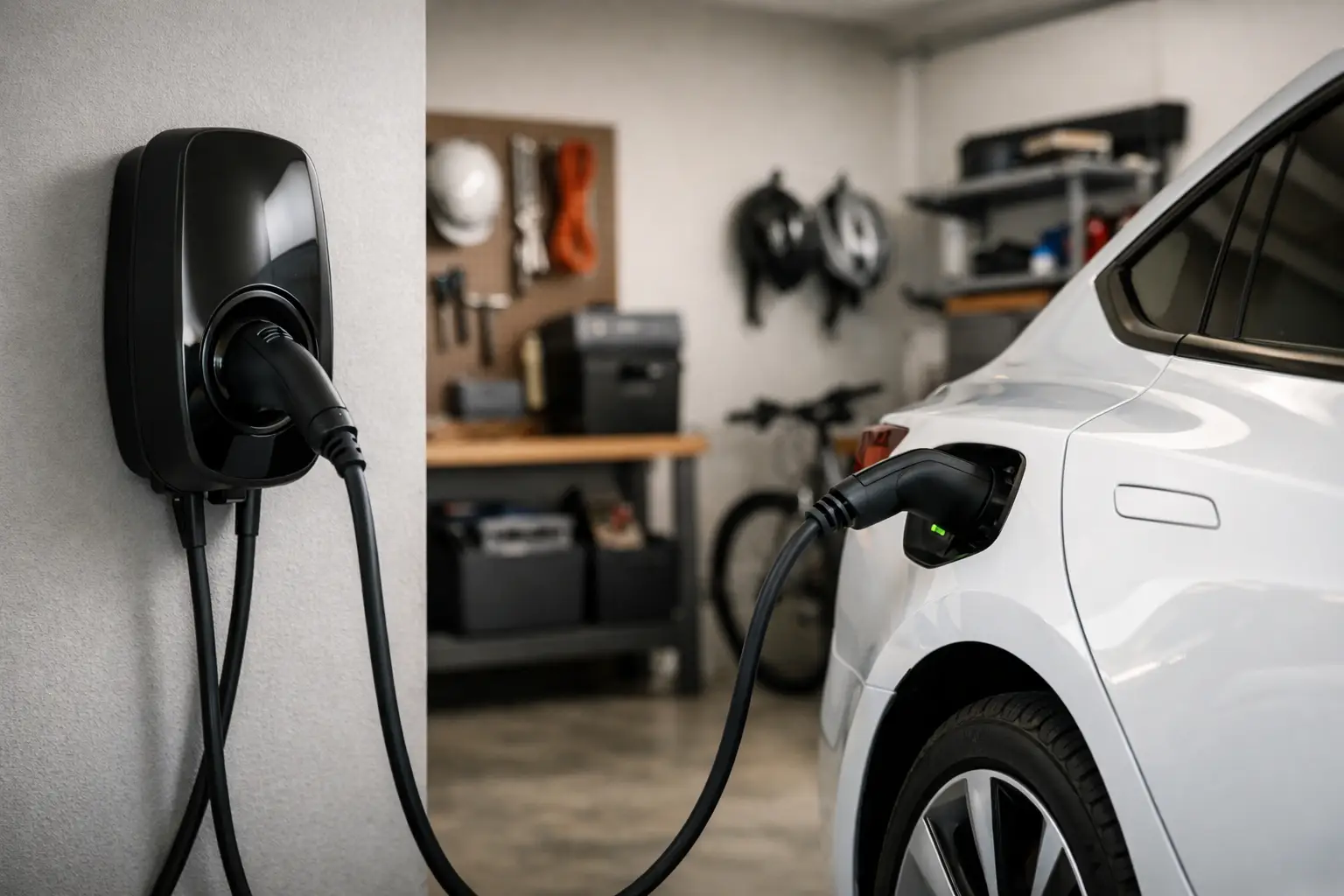
A charger mounted in the wrong spot can turn a simple overnight charge into a daily hassle. A cable that barely reaches, a blocked walkway, or a location exposed to repeated vehicle contact will get old fast. The best EV charger placement is one that makes charging easy while protecting your home, vehicle, electrical system, and the people using the space.
For most Bowling Green homeowners, that means looking beyond the nearest wall outlet. A properly installed Level 2 charger needs a dedicated circuit, adequate panel capacity, a practical cable route, and a location that works in real life – not just on installation day.
Start Where Your Vehicle Actually Parks
The first question is simple: where does the charging port sit when your vehicle is parked normally? EV charge ports are not all in the same place. Some are on the front fender, others are at the rear, and a few are positioned near the center of the vehicle.
Park the vehicle where it will usually sit, then measure from the proposed charger location to the charge port. Do not measure only in a straight line. Account for the path the charging cable will take around the vehicle. The cable should reach comfortably without being stretched tight, dragged across a walking path, or wrapped around a tire.
A charger installed on a side wall often works well when the vehicle parks close to that wall. A front wall may be the better choice for a vehicle with a front-mounted charge port. In a two-car garage, a centrally located charger can serve either bay, but only if the cable can reach both vehicles without creating a trip hazard. A longer cable may help, but it does not fix a poor location.
The Best EV Charger Placement Protects the Cable
Your charging equipment is built for regular use, but the cable should not be treated like an extension cord. It should not lie in a driveway, cross a sidewalk, hang where it can be snagged, or rest where a vehicle may roll over it.
Mount the charger where the connector can be returned to its holster after each use. This keeps the plug off the floor and helps protect it from dirt, moisture, and accidental damage. It also gives the garage a cleaner, more organized setup.
Think through how your household uses the space. If bikes, lawn equipment, tools, or storage bins move through the same area, leave enough room to connect and disconnect the vehicle without fighting clutter. The best location is not necessarily the closest wall. It is the wall that stays accessible year-round.
Avoid Doors, Corners, and Vehicle Impact Zones
Garage doors, service doors, and tight corners can cause problems. A charger beside a door may interfere with the door swing or force someone to step over the cable. A charger mounted near the front of the garage can be exposed to a vehicle pulling in too far. A post, bollard, or wheel stop may be worth considering when there is a real chance of impact.
The same applies outdoors. If the charger is placed near a driveway, keep it out of the vehicle travel path. A charger can be weather-rated and still be damaged by a bumper, trailer, mower, or delivery vehicle.
Check Panel Capacity Before Choosing the Wall
The closest location to your electrical panel can often reduce installation labor and limit the amount of wiring needed. That can make it a smart choice, but distance from the panel is only one part of the job.
A Level 2 EV charger adds a significant continuous electrical load. Before installation, a qualified electrician should evaluate your existing service, panel rating, available breaker space, and household load. Homes with electric heat, electric water heaters, hot tubs, dryers, workshops, or multiple large appliances may need more planning than a home with lighter electrical demand.
In some cases, the best charger location is farther from the panel because it is safer and more convenient for the vehicle. In others, a panel upgrade, subpanel, load-management equipment, or a different charger setting may be the practical answer. The right solution depends on the home and how much power it is already using.
Do not assume an open breaker space means the panel has enough capacity. Breaker space and electrical capacity are not the same thing. This is where a professional load calculation matters.
Garage, Carport, or Driveway?
A garage is usually the easiest location for EV charging because it keeps the equipment protected from weather and puts the cable out of public view. It also gives you more control over where the vehicle parks and how the charger is used.
A carport can work very well when the equipment is rated for the environment and mounted in a protected spot. The installer must consider rain, humidity, physical damage, and the proper routing of conduit and wiring. In Kentucky, outdoor equipment needs to handle hot summers, cold snaps, heavy rain, and changing conditions throughout the year.
Driveway charging can be the right choice for homes without a garage or carport, but it requires more careful planning. The charger should be rated for outdoor use, mounted securely, and positioned so the cable stays on your property and out of pedestrian paths. If a charging cable would need to cross a public sidewalk or lie in the street, that location is not a good fit.
For rental homes, duplexes, and small commercial properties, placement also needs to account for who will use the charger. A shared charger should be easy to access without blocking parking, entrances, dumpsters, loading areas, or other daily operations.
Height and Mounting Matter
The charger should be installed at a height that makes the controls and connector easy to reach. Mounting it too low can put the cable and plug closer to dirt, water, and accidental damage. Mounting it too high can make daily use inconvenient, especially for family members who are shorter or have mobility limitations.
Manufacturer instructions and applicable electrical requirements guide the final mounting height. A professional installation also makes sure the unit is properly secured to the wall or mounting structure. Drywall alone is not a reliable mounting surface for every charger. The equipment needs a solid backing and a wiring method suited to the location.
If the charger is mounted outside, plan for the connector holster, cable management, and any necessary weather protection. A neat installation is not just about appearance. It reduces wear and helps prevent avoidable problems later.
Plan for the Vehicle You Have and the One You May Buy
Many homeowners install a charger for one specific EV, then change vehicles a few years later. A location that works perfectly for a rear-port vehicle may be awkward for a front-port model. If you expect to own more than one EV or replace your vehicle in the near future, choose a placement with some flexibility.
A central garage wall, a pedestal between parking spaces, or a location that allows the cable to reach either side may be worth the added planning. This is especially useful in households where two drivers may eventually need charging.
You also do not have to install the highest-powered charger available. Faster charging can be useful, but the best setup matches your driving habits, vehicle capability, electrical service, and budget. For many drivers, overnight Level 2 charging provides more than enough range for daily commuting.
Permit, Code, and Safety Requirements Are Part of Placement
EV charger installation is not a do-it-yourself outlet swap. The charger needs a properly sized dedicated circuit, correctly selected wiring, suitable overcurrent protection, and installation practices that meet current electrical requirements. Depending on the project and local jurisdiction, permits and inspection may be required.
These details directly affect placement. A wall that looks convenient may require a difficult wiring route. An outdoor location may need different equipment and protection than an interior garage wall. A detached garage may require trenching, a feeder, or panel work before charging equipment can be added safely.
An experienced electrician can look at the full picture before holes are drilled or equipment is purchased. That helps prevent common mistakes such as buying a charger that exceeds the home’s practical capacity, placing it where the cable will not reach, or installing it in an area vulnerable to damage.
Make Charging the Easiest Part of Coming Home
Before selecting a charger location, stand where you park, open the door, walk to the charge port, and picture the routine at the end of a long day. You should be able to pull in, plug in, and walk inside without moving vehicles, stretching cable, or navigating obstacles.
For homeowners in Bowling Green and surrounding counties, M Power Electric LLC can evaluate your panel, parking layout, and charging needs to help identify a safe, practical installation location. A well-placed EV charger should feel like it has always belonged there – ready when you need it and out of the way when you do not.