

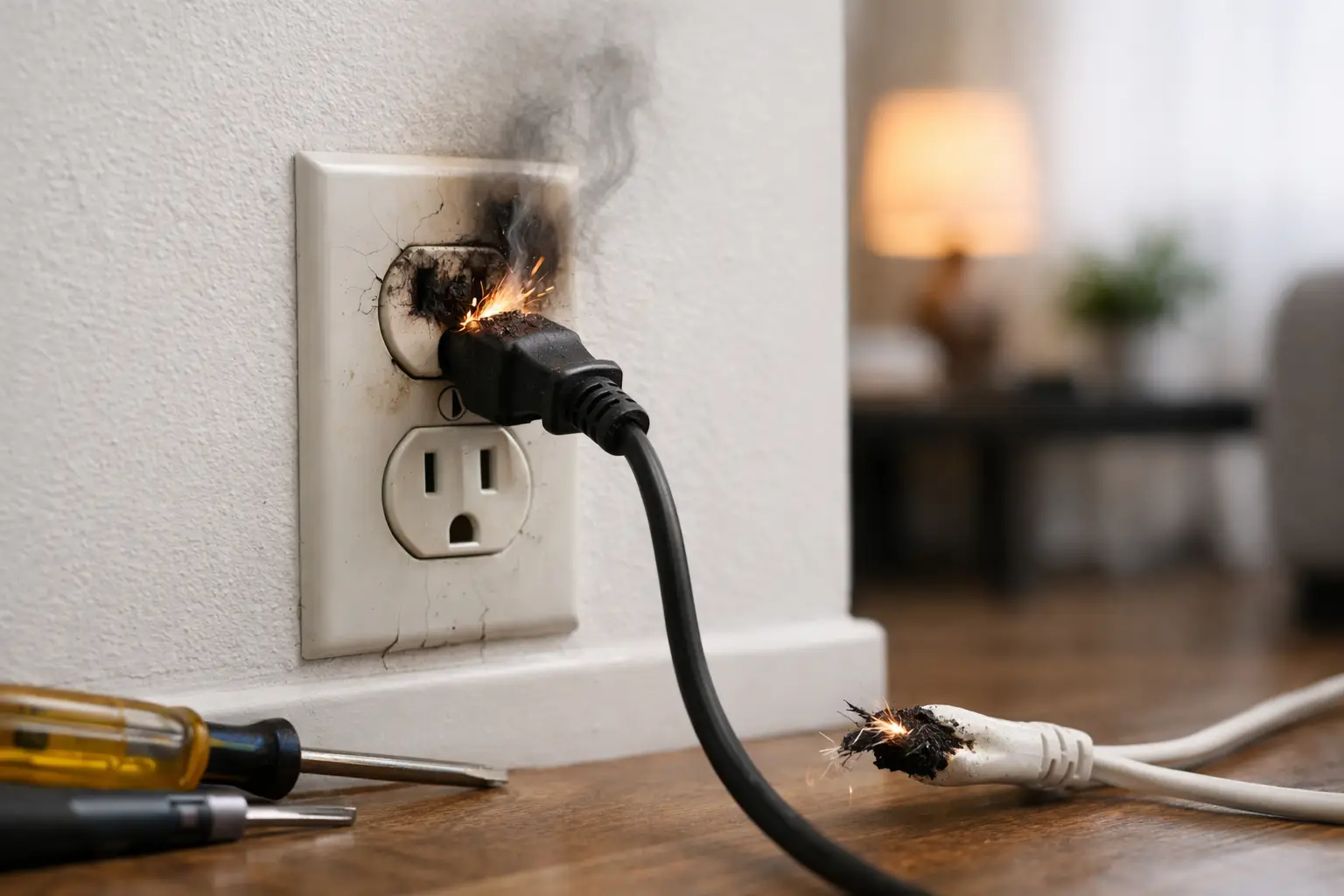
A phone charger that only works when the cord is held at a certain angle may seem like a minor annoyance. A warm receptacle or a spark when you plug something in is different. Those are warning signs of a bad outlet that should not be ignored, especially in older homes, rental properties, garages, kitchens, and outdoor areas.
An outlet can fail because of worn internal contacts, a loose wire connection, water exposure, overloaded circuits, damage from a plug, or a problem farther back in the circuit. The outlet itself may be the issue, but it can also be the first visible sign of a wiring or panel problem. Knowing what to watch for helps you make the right call before a small electrical issue turns into damaged equipment, a shock hazard, or a fire risk.
Warning Signs of a Bad Outlet You Should Not Ignore
The outlet feels warm or hot
A receptacle should not feel noticeably warm during normal use. A little warmth from a large power adapter can be misleading, so remove the adapter and carefully check the outlet cover itself. If the cover, plug, or wall around the outlet feels warm, stop using it.
Heat often points to resistance at a loose connection, worn outlet contacts, or an overloaded circuit. That resistance creates heat where electricity is trying to pass through, and it can worsen over time. Do not cover the outlet, keep using it with a lower-powered device, or assume it will cool down for good. Turn off the breaker if it is safe to identify, and have it inspected.
You see discoloration, melting, or scorch marks
Brown or black marks on the outlet face, a yellowed cover, melted plastic, or a darkened plug are clear signs of overheating or arcing. Arcing occurs when electricity jumps through a gap instead of traveling along its intended path. It can produce intense heat even when the breaker does not trip immediately.
A scorched outlet needs more than a new plastic cover. An electrician needs to check the receptacle, wiring connections, box, and circuit protection to find out what caused the damage. Replacing only the visible part can leave the original problem in place.
Plugs fit loosely or fall out
When a plug droops, slips out, or needs to be positioned just right to work, the outlet’s internal contacts may be worn out. Those contacts are designed to grip the plug blades firmly. Once they lose tension, the connection can become unstable and create heat.
Loose outlets are common in high-use locations such as living rooms, kitchens, bedrooms, and commercial workspaces. It is tempting to keep using one with a power strip or a heavy adapter, but that extra weight can make the problem worse. A loose plug is a good reason to schedule receptacle replacement before damage develops.
The outlet sparks, buzzes, or makes a crackling sound
A very small, brief spark can sometimes occur when a device is switched on as it is plugged in. A large spark, a repeating spark, a spark that travels outside the outlet, or any sparking paired with heat or odor is not normal.
Buzzing, sizzling, clicking, and crackling are also red flags. Electrical connections should not make noise. Shut off power to that circuit if you can do so safely, avoid touching the outlet or plug again, and call a qualified electrician. Noise can indicate a loose wire, damaged receptacle, or active arcing inside the box.
There is a burning smell
A fishy, burning plastic, or smoky odor near an outlet requires immediate attention. Sometimes the smell comes from a failed appliance or charger rather than the outlet. Unplug the device only if the plug and outlet are cool and there is no visible damage. If anything is hot, smoking, or actively sparking, leave it alone, shut off power if safe, and treat it as an urgent electrical issue.
Never mask the odor with air freshener or wait to see if it returns. Electrical burning smells can come and go as the circuit is used, but the underlying fault remains.
Power cuts in and out
Lights flickering when something is plugged in, a lamp shutting off when the cord moves, or a device repeatedly losing power can point to a failing outlet or loose connection. This is especially concerning when several outlets in the same room act up, since the problem may be in a shared connection upstream.
Intermittent power is not always an outlet issue. A damaged appliance cord, overloaded power strip, failing switch, or circuit problem can produce similar symptoms. That is why troubleshooting should go beyond swapping the receptacle. A professional can test the circuit and identify whether the fault is local or part of a larger wiring concern.
The breaker trips or the GFCI keeps resetting
A breaker is designed to trip when it detects an overload, short circuit, or other fault. A GFCI outlet or breaker protects against ground faults, which are particularly dangerous around water. One trip after running too many high-demand appliances may simply mean the circuit was overloaded. Repeated trips are a warning.
Do not keep resetting a breaker or GFCI outlet just to get power back. First unplug the devices on that circuit. If the protection trips again, or if it will not reset, stop using the circuit until it has been checked. Kitchens, bathrooms, garages, basements, outdoor receptacles, pool equipment, hot tubs, and saunas deserve particular attention because moisture changes the risk level.
The outlet is cracked, loose in the wall, or exposed to moisture
A cracked faceplate may look cosmetic, but damage can expose energized parts or allow debris into the box. An outlet that moves when you insert a plug may have a loose mounting strap, a damaged box, or loose wiring behind it. Neither condition should be ignored.
Water exposure raises the stakes. Outdoor outlets need proper weather-resistant equipment and protective covers. Indoor outlets near sinks, laundry areas, and other damp locations need the right type of protection as well. If an outlet has been wet from a leak, flooding, a spill, or weather, do not use it until it has been evaluated.
When an Outlet Problem Is an Emergency
Call for urgent help when there is smoke, visible flame, active sparking, a strong burning smell, or a hot outlet. If it is safe to do so, turn off power at the electrical panel. Keep people away from the area, and contact emergency services if there is a fire or immediate danger.
For less dramatic symptoms such as a loose plug, dead outlet, or occasional tripping, schedule service promptly rather than adding it to a long home repair list. Electrical problems rarely improve with use. They usually become more noticeable once the connection has deteriorated further.
Why Replacing the Outlet Is Not Always the Full Fix
A new receptacle can solve a worn-contact problem, but an outlet is only one point on a circuit. The real cause may be a loose connection in another box, incorrect wiring, overloaded branch circuit, failed GFCI device, damaged cable, or insufficient electrical capacity for modern loads.
This matters in homes that rely heavily on space heaters, window units, countertop appliances, workshop tools, EV charging equipment, or multiple power strips. The outlet may be telling you that the circuit is being asked to do more than it was built to handle. In that case, adding a dedicated circuit, upgrading wiring, or evaluating the panel may be the safer long-term repair.
M Power Electric LLC helps homeowners, landlords, and local businesses in Bowling Green and surrounding counties identify outlet problems, replace damaged receptacles, and correct the electrical issue behind them. The goal is not just to restore power. It is to make sure the circuit is safe for the way you actually use the space.
If an outlet looks damaged, feels warm, makes noise, or cannot hold a plug securely, stop treating it like a small inconvenience. Taking it out of service and having it checked is a practical step that protects your property, your equipment, and the people inside.
Leave a Reply