

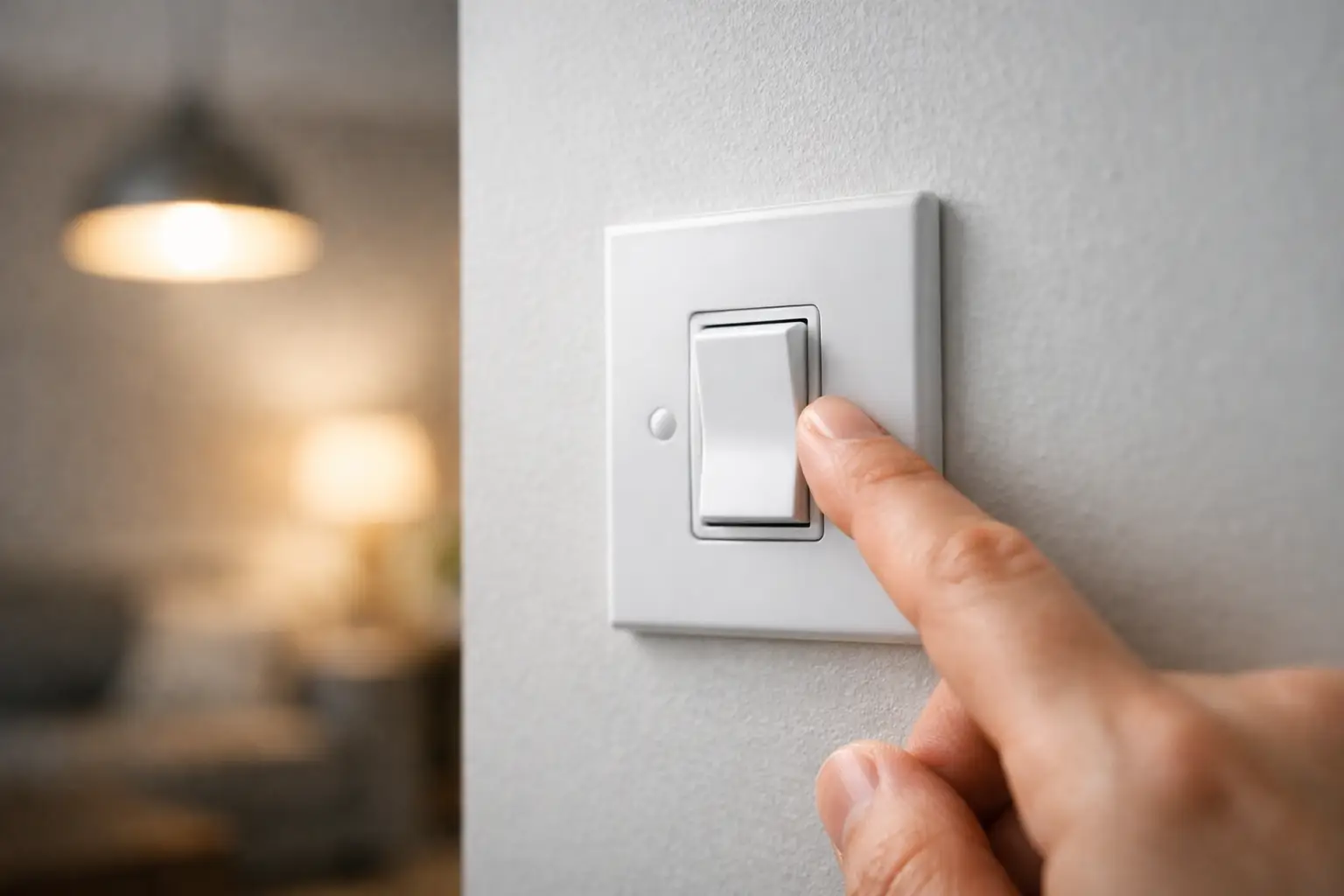
A light switch should do one simple job: turn power on and off without calling attention to itself. If you hear a buzz, hum, crackle, or vibration when you use it, do not write it off as an ordinary house sound. What causes buzzing light switches can range from a harmless dimmer-related hum to a loose connection or overloaded circuit that needs prompt electrical service.
The key is knowing what kind of switch you have, when the noise occurs, and whether other warning signs are present. A buzzing switch that has always made a faint sound while dimming LED lights is different from a standard wall switch that suddenly starts humming, feels hot, or smells burnt.
What Causes Buzzing Light Switches?
Most buzzing comes from vibration, loose electrical components, or a mismatch between the switch and the load it controls. Electricity moves through the switch, and under the wrong conditions, internal parts or connected wiring can vibrate enough to create an audible sound.
A switch is not the only possible source. The sound may come from the light fixture, bulb, electrical box, or wiring behind the wall. That is why a proper diagnosis matters. Replacing a switch without checking the circuit can hide the real problem instead of fixing it.
Dimmer switches and incompatible bulbs
Dimmer switches are one of the most common reasons for a low humming sound. Dimmers regulate light output by rapidly controlling the flow of electricity. That process can create a slight vibration in the switch or fixture, especially at certain dimming levels.
Older dimmers were designed for incandescent bulbs. When they are paired with non-dimmable LEDs, low-quality LED bulbs, or LEDs that are not compatible with that dimmer model, buzzing is common. The lights may also flicker, fail to dim smoothly, or turn off at lower settings.
A faint, consistent hum from a dimmer may not be an emergency, but it should not be ignored if it becomes louder or changes over time. Installing a properly rated LED-compatible dimmer and compatible bulbs usually solves the issue. The dimmer must also be rated for the total wattage of the fixtures it controls.
Loose wiring connections
Loose wires are a more serious cause of a buzzing switch. A connection can loosen over years of use, from repeated switching, improper installation, heat cycles, or movement inside the electrical box. When current passes through a weak connection, it can create resistance, heat, and vibration.
This is where a simple buzz can become a fire risk. Loose connections may cause intermittent power, flickering lights, a switch that works only sometimes, or a warm faceplate. In some cases, you may hear a faint crackling sound rather than a steady hum.
Do not remove the switch cover and tighten wires unless you are trained to work safely on electrical equipment. Turning off a breaker is necessary, but it does not guarantee a box is wired correctly or that every conductor inside is de-energized. An electrician can test the circuit, inspect the connections, and replace damaged components as needed.
A worn or failing switch
Standard toggle switches and rocker switches wear out. Their internal contacts can degrade after years of daily use, particularly in busy areas such as kitchens, bathrooms, garages, offices, and rental properties. When contacts no longer make a clean connection, the switch may buzz, spark internally, or feel loose.
A failing switch may also make a popping sound when turned on or off. Sometimes the faceplate becomes discolored from heat. These are not signs to monitor for another month. The switch should be inspected and replaced before the problem damages wiring or the electrical box.
An overloaded switch or circuit
A switch must be rated for the load it controls. Problems can happen when a switch is asked to handle more lighting, fans, or equipment than it was designed for. This is especially possible after a remodel, lighting upgrade, garage conversion, or commercial build-out where circuits have been extended without a full load evaluation.
The circuit itself can also be overloaded. If lights dim when an appliance starts, breakers trip, or multiple devices on the same circuit cause buzzing, the issue may go beyond the switch. Older homes may have limited circuits supporting far more modern electrical demand than they were built to handle.
An electrician can determine whether the answer is a new switch, a dedicated circuit, updated wiring, or a panel upgrade. The right repair depends on the actual load and condition of the electrical system, not guesswork.
Poor-quality fixtures, bulbs, or transformers
Sometimes the switch is innocent. LED drivers, recessed-light transformers, fluorescent ballasts, and low-cost bulbs can all make noise when energized. The sound can travel through the fixture, wall, or electrical box and seem like it is coming from the switch.
If the noise only happens with one fixture, try turning off power at the breaker and having the fixture, bulb type, and connections professionally checked. Swapping in a known compatible, quality bulb may help with a dimmer issue, but do not keep experimenting if there is heat, odor, flickering, or visible damage.
When a Buzzing Light Switch Is a Safety Concern
Any new electrical noise deserves attention, but some signs mean you should stop using the switch and schedule service right away. Turn off the circuit breaker if you can do so safely when you notice a burning smell, smoke, scorch marks, or a switch plate that feels hot to the touch.
You should also treat repeated breaker trips, sparks from the switch, crackling sounds, flickering across more than one light, or a buzzing noise from a standard non-dimmer switch as warning signs. These symptoms can point to arcing, a failing component, damaged wiring, or a circuit problem that should not be handled with a quick hardware-store replacement.
For commercial properties, buzzing switches deserve the same attention. Office lighting, retail displays, warehouse fixtures, and exterior lighting may be connected to controls, contactors, or higher-demand circuits. An interruption can affect operations, and an overheated connection can create a serious safety issue.
What to Do Before the Electrician Arrives
Start by paying attention to the pattern. Does the switch buzz only when the lights are dimmed? Does it happen with one bulb, one fixture, or every light on the circuit? Is the sound constant, or does it occur when a large appliance starts? Those details help narrow down the cause.
Avoid repeatedly flipping a noisy switch to test it. If the switch is warm, crackling, visibly damaged, or giving off an odor, leave it off and turn off the breaker serving that circuit. Do not cover the noise with a louder fan or assume it will go away on its own.
If you know the circuit breaker that controls the switch, label the issue for the electrician. A clear description of the room, switch type, fixtures involved, and symptoms can speed up diagnosis and repair.
A Proper Repair Is More Than a New Faceplate
A buzzing switch may need only a compatible dimmer or a quality bulb. It may also reveal loose wiring, a failing fixture, an overloaded circuit, or outdated equipment that needs a larger correction. The difference matters because electrical problems do not always stay small.
M Power Electric LLC provides practical troubleshooting, switch replacement, lighting service, circuit repairs, and electrical upgrades for homeowners and businesses in Bowling Green and nearby counties. A trained electrician can identify where the sound is actually coming from and make the repair safely.
Your home or business should be quiet when the lights are on. If a switch has started buzzing, get it checked before a minor noise turns into heat, damage, or an unexpected outage.
Leave a Reply