

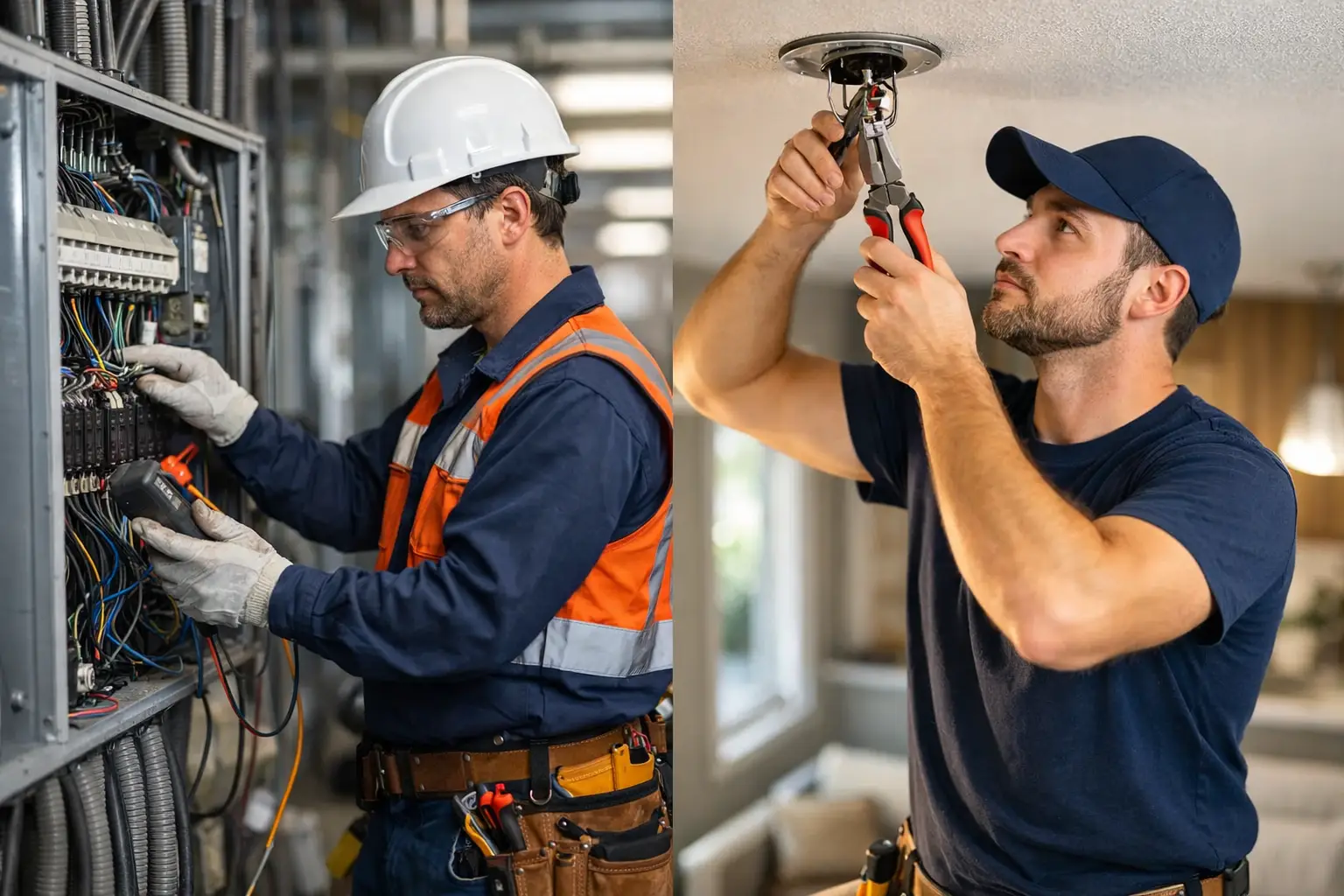
A flickering office light and a tripping breaker at home may look like similar problems. The repair process can be very different. When comparing a commercial vs residential electrician, the biggest differences come down to system size, power demand, building use, code requirements, and the cost of downtime.
For homeowners, property owners, landlords, and business operators in Bowling Green, choosing the right electrical contractor is not about picking a label. It is about making sure the electrician has the experience and equipment to handle the actual conditions of the job safely.
What Residential Electricians Handle
Residential electricians work on the electrical systems that power houses, apartments, condos, garages, and other living spaces. Most homes use single-phase power and have a main service panel that distributes electricity to lighting, outlets, appliances, heating and cooling equipment, and specialty circuits.
That does not mean residential work is simple. A modern home can place serious demands on an electrical system. An older panel may not have room or capacity for an EV charger, electric range, heat pump, hot tub, sauna, workshop equipment, or standby generator. Adding one new major load without reviewing the full system can create nuisance tripping, overloaded circuits, or a safety concern.
Common residential electrical work includes panel upgrades, circuit additions, troubleshooting, ceiling fan installation, lighting replacement, switch and receptacle repairs, and dedicated circuits for appliances. Electricians also handle outdoor and specialty work for pools, hot tubs, and generators, where grounding, bonding, weather protection, and GFCI protection matter just as much as getting power to the equipment.
Residential jobs often involve working around occupied spaces. The electrician needs to protect finished walls, communicate clearly with the homeowner, identify the source of a problem without unnecessary disruption, and leave the work area clean. A good repair should solve the immediate issue while also pointing out safety concerns that could affect the rest of the home.
Residential Work Is Often Personal and Time-Sensitive
When a bedroom circuit fails, a kitchen outlet quits, or a panel starts making noise, the customer is dealing with a problem in the middle of daily life. The work may need to fit around family schedules, tenants, pets, furniture, and access limitations.
That calls for careful troubleshooting and straightforward explanations. Sometimes the solution is a simple device replacement. Other times, the symptom points to a damaged connection, an overloaded circuit, outdated wiring, or a panel that is no longer suited to the home’s electrical needs.
What Commercial Electricians Handle
Commercial electricians work in places such as offices, retail stores, restaurants, warehouses, medical offices, churches, multifamily properties, and light industrial spaces. These systems are usually larger, more complex, and designed for a different type of use than a home.
Commercial buildings may use three-phase power, higher-voltage equipment, larger service entrances, multiple electrical panels, distribution equipment, transformers, motor loads, emergency lighting, and extensive lighting controls. The electrical system may need to support refrigeration, commercial kitchen equipment, point-of-sale systems, servers, HVAC units, signage, pumps, and machinery at the same time.
The work also tends to involve more coordination. An electrician may need to work with a general contractor, property manager, business owner, equipment installer, inspector, or other trades. The timing matters. Shutting down a circuit in a retail store, restaurant, or office can interrupt sales, customer service, security systems, or normal operations.
For that reason, commercial electrical work requires planning before tools come out. The electrician needs to understand what equipment is fed by the circuit, whether a shutdown is possible, what temporary power may be needed, and how the work will affect employees and customers.
Commercial Systems Have Higher Operational Stakes
A failed receptacle at a home is inconvenient. A failed circuit in a business can shut down a register, spoil refrigerated inventory, stop production, or leave an exit path without proper lighting. The labor may be similar in a narrow sense, but the consequences are not.
Commercial work also often requires stronger attention to documentation, load calculations, equipment specifications, labeling, and code requirements based on occupancy. A space open to the public has different safety responsibilities than a private home. That is why commercial electrical projects should be handled by electricians who understand how the building operates, not just how to make the power come back on.
Commercial vs Residential Electrician: The Main Differences
The line between commercial and residential work is not always sharp. A skilled contractor may perform both, especially on smaller commercial properties and complex homes. Still, several practical differences should guide your decision.
Power systems and load demands are usually the first difference. Homes commonly have single-phase service, while commercial facilities may rely on three-phase service for more efficient operation of larger equipment. A commercial electrician needs to understand distribution equipment, phase balancing, larger conductors, and the requirements of business equipment.
Code and building use are another major factor. All electrical work must follow applicable codes, but commercial spaces can have additional requirements for emergency systems, accessible controls, occupancy classifications, fire-rated assemblies, and equipment clearances. A restaurant, office, warehouse, and retail store may each present different installation requirements.
Project scale and planning also vary. Residential service calls are often focused on a specific room, circuit, or improvement. Commercial work may involve a build-out, equipment upgrade, lighting retrofit, tenant turnover, or system expansion that requires scheduling around business hours and other trades.
Safety procedures become more involved as system size and energy exposure increase. Proper lockout procedures, identification of energized equipment, safe work practices, and controlled shutdowns are essential in any setting. They are especially critical around commercial distribution equipment and high-demand loads.
When You Need Residential Experience
Call a residential-focused electrician when the work is centered on a home, rental unit, detached garage, or other living space. This includes service panel concerns, breaker issues, new lights or ceiling fans, outlet replacements, EV charger installations, generator connections, and hot tub or pool electrical work.
Experience matters most when the home has older wiring or has been added onto over the years. Many local houses were built before today’s electrical demands became normal. A proper evaluation looks beyond the requested installation and checks whether the service, panel, grounding, and available circuit capacity can support it.
For landlords, the right electrician can also help separate a quick maintenance repair from a condition that should be addressed before it becomes a repeat tenant complaint or a larger safety issue.
When You Need Commercial Experience
Commercial experience is the right fit for business spaces, tenant improvements, retail locations, offices, restaurants, warehouses, and other properties where electrical work affects operations, employees, or customers.
Look for an electrician who asks practical questions before quoting the job. What equipment is connected? Can the circuit be shut down during business hours? Does the existing panel have capacity? Is the work part of a renovation? Are emergency lights, signage, HVAC, or refrigeration on the affected system?
Those questions are not unnecessary delays. They are how a contractor avoids installing a fix that creates a new problem somewhere else. A dependable commercial electrician plans for the building as a working system, not just a collection of wires and breakers.
Choosing the Right Electrician for Your Project
Do not assume every electrician handles every type of work at the same level. Ask whether the contractor regularly performs projects like yours, whether they can assess panel capacity and load requirements, and how they will manage required permits or inspections. For commercial work, ask how they will minimize disruption to your operation.
It also helps to be clear about your end goal. If you are adding an EV charger, say whether you expect to add a second vehicle later. If you are renovating a business, identify the equipment, lighting, and technology the space will need after the build-out. Good electrical planning is less expensive when it happens before walls are closed or equipment is installed.
M Power Electric LLC serves Bowling Green and surrounding counties with residential and commercial electrical work built around safe installations, clear communication, and practical solutions. Whether the job is a faulty outlet or a larger power upgrade, the right move is to have the system evaluated before a small electrical issue turns into an interruption you cannot afford.
Leave a Reply