

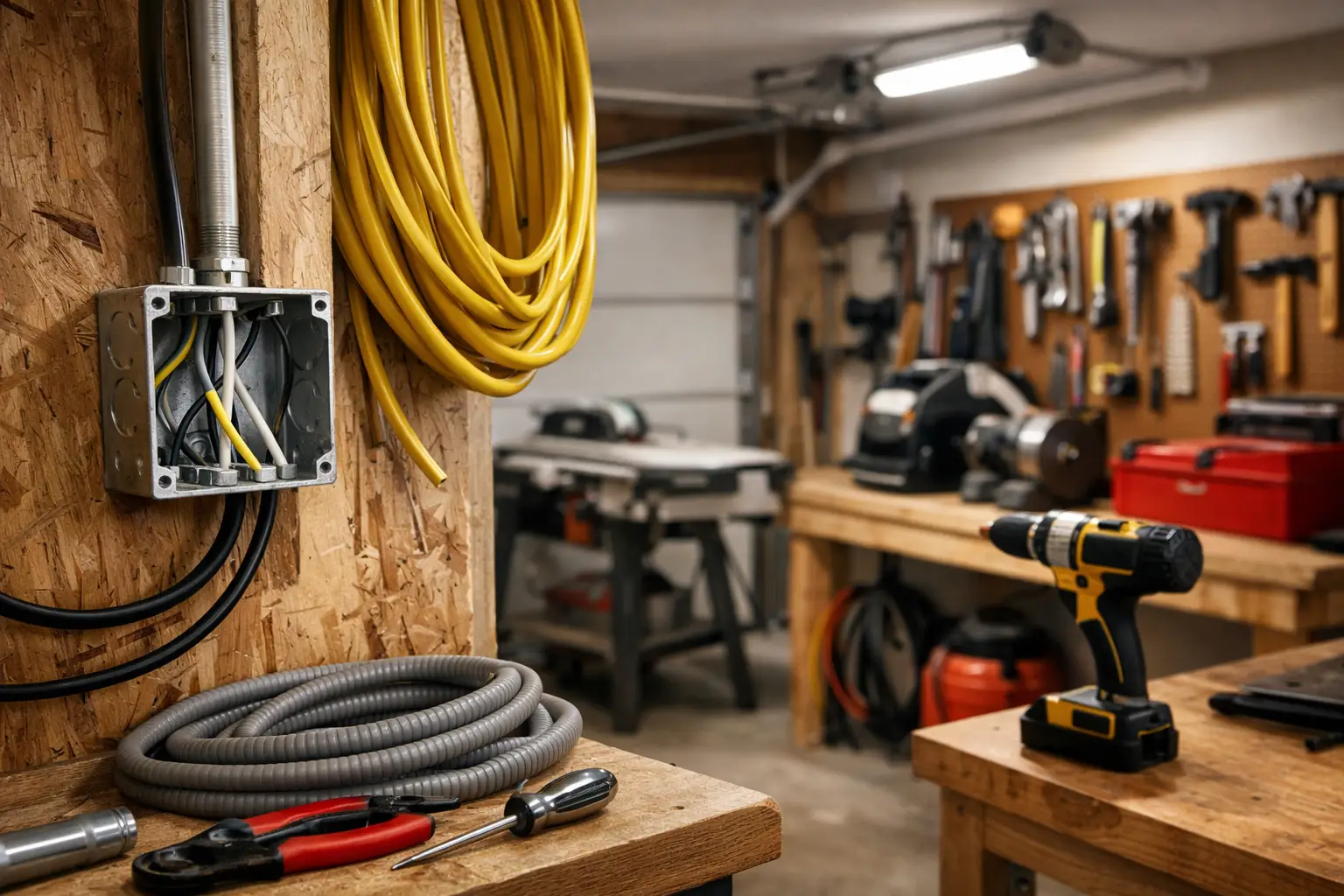
A workshop can outgrow a standard garage electrical setup fast. One outlet near the door and a single overhead fixture might be enough for a parked vehicle, but not for a compressor, welder, table saw, battery chargers, task lighting, and the tools that keep a property running. Proper garage wiring for workshop use starts with an honest look at how you work, what equipment you own, and how much power the building can safely supply.
For homeowners, landlords, and small business owners around Bowling Green, the goal is not to fill every wall with outlets just because it looks good. The goal is a safe, practical electrical system that supports the work being done now without forcing another major upgrade when the next tool or vehicle comes along.
Start With the Workshop Load, Not the Outlet Count
The first question is not, “How many receptacles do I need?” It is, “What will be running at the same time?” A garage workshop may have several small hand tools, but its real demand often comes from a few high-draw pieces of equipment.
A 120-volt miter saw, shop vacuum, air compressor, portable heater, and dust collector can overload a shared circuit quickly. Equipment such as welders, large compressors, lifts, and some woodworking machinery may require 240 volts. An EV charger can add another substantial continuous load if the garage also serves as a charging location.
That is why a qualified electrician begins with a load calculation and an inspection of the existing service and panel. A 100-amp service that already carries central air, an electric range, water heater, dryer, and normal household use may not have room for a workshop addition without changes. In other homes, there may be enough service capacity, but the panel is full or outdated. The right answer depends on the equipment, the house, and the condition of the electrical system.
Planning for future use matters. If you expect to add a welder, vehicle lift, mini-split, EV charger, or larger tools within the next few years, say so before wiring begins. Installing capacity and conduit during the first project is usually cleaner and more cost-effective than reopening finished walls later.
Dedicated Circuits Keep Work Moving
A workshop should not depend on one general-purpose circuit for everything. Dedicated circuits separate major loads so a tripped breaker does not shut down the lights while you are working with a power tool.
In many garage workshops, 20-amp 120-volt circuits are a practical starting point for wall receptacles and portable tools. Larger fixed equipment may need its own correctly sized circuit. The voltage, breaker size, wire size, receptacle type, and disconnect requirements all need to match the equipment manufacturer’s specifications and applicable electrical code.
A sensible layout may include separate circuits for general receptacles, workbench receptacles, lighting, a garage door opener, and high-demand equipment. If you use a dust collection system or compressor that runs while another machine is operating, separating those loads is especially helpful.
GFCI protection is commonly required for garage receptacles because garages are subject to moisture, concrete floors, and changing conditions. GFCI protection helps reduce shock risk, but it is not a substitute for sound wiring, proper grounding, undamaged cords, and dry work practices. An electrician can determine where GFCI and other protection are required for your specific installation.
120 Volts or 240 Volts?
Many everyday shop tools use 120 volts, but 240-volt equipment is common in serious home shops and commercial work areas. A 240-volt circuit is not automatically “better.” It is necessary only when the equipment calls for it, and its size must be based on the actual load.
A 240-volt circuit for a welder is different from one for a compressor, heater, or EV charger. Some equipment requires a receptacle, while hardwired equipment may require a disconnecting means nearby. Do not rely on a plug style or breaker size alone to decide what is needed. The nameplate information and manufacturer instructions matter.
Garage Wiring for Workshop Lighting and Receptacles
Lighting is where many garage workshops fall short. A single center-mounted fixture creates shadows at workbenches, under raised garage doors, and around machinery. Good lighting improves accuracy and helps prevent accidents involving blades, bits, fasteners, cords, and uneven flooring.
Bright, evenly spaced LED fixtures are a dependable choice for general shop lighting. Then add task lighting where detail work happens: over a bench, at a tool station, or near a finishing area. Put lighting on a circuit separate from receptacles when possible. If a tool trips a breaker, you should not be left working in the dark.
Receptacle placement should follow the way the room is actually used. Outlets along the perimeter reduce extension-cord clutter, while additional receptacles near benches and fixed tools prevent cords from crossing walkways. Ceiling-mounted receptacles can be useful for retractable cord reels or garage door openers, but they must be installed correctly and positioned for the intended equipment.
Consider height as well as location. Standard outlet height may work around open walls, but elevated receptacles can be more convenient above a workbench and less exposed to moisture, impact, or stored items on the floor. In a garage that doubles as a workshop, a good layout also accounts for shelving, cabinets, pegboards, vehicles, and door travel.
Avoid treating power strips and extension cords as permanent wiring. They are useful for temporary tasks, not for supplying a fixed workshop setup day after day. Frequent use of extension cords is usually a sign that the shop needs more properly installed receptacles.
Does Your Garage Need a Subpanel?
A subpanel can be a strong solution when a detached garage, large attached garage, or expanded workshop needs several circuits. It gives the area a local distribution point for lighting, receptacles, equipment, and future additions.
For a detached garage, a feeder from the main service panel may supply the subpanel. The installation must account for feeder sizing, grounding and bonding rules, burial method if wiring is underground, panel location, and available capacity at the home’s main service. These details are not interchangeable from one property to another.
A subpanel is not required for every workshop. A smaller garage with modest tool use may only need a few added circuits from the main panel. But when the run is long, the equipment list is growing, or the garage needs several 120- and 240-volt circuits, a subpanel can make the system more organized and easier to expand.
Do Not Ignore Heat, Moisture, and Physical Damage
Garages are rougher environments than finished living spaces. Temperature swings, vehicle exhaust, dust, humidity, water intrusion, and accidental impact all affect electrical planning.
Surface-mounted conduit may be a practical choice in an unfinished garage because it protects conductors and allows additions without opening walls. In finished areas, wiring may be concealed, but it still needs proper protection where it could be damaged. Receptacle covers, box types, and fixture ratings should fit the location, especially near exterior doors, sinks, utility areas, or damp conditions.
Portable electric heaters deserve special attention. They draw significant power, run for long periods, and are often plugged into already-busy circuits. If heat is needed regularly, discuss a permanent heating solution and the required electrical capacity instead of building the workshop around portable heaters.
Warning Signs Your Existing Garage Wiring Is Not Enough
Breakers that trip during normal tool use, lights that dim when a compressor starts, warm receptacles, buzzing panels, damaged cords, and outlets that do not hold plugs tightly are all signs worth addressing. So are two-prong outlets, missing GFCI protection where required, exposed splices, and wiring that has been altered over the years without a clear plan.
Do not keep resetting a breaker and hoping it holds. A breaker that trips is responding to a condition that needs to be understood. The cause may be an overloaded circuit, a failing tool, a damaged cord, a loose connection, or a larger wiring issue.
M Power Electric LLC helps property owners in Bowling Green and surrounding counties plan workshop circuits, subpanels, lighting, panel upgrades, and equipment connections with the same focus used for every electrical project: safe work, correct installation, and power that is ready when you need it.
A well-wired garage makes the workshop easier to use from the first day. Before buying the next major tool or starting a renovation, have the electrical capacity checked and build the power plan around the work you intend to do.
Leave a Reply