

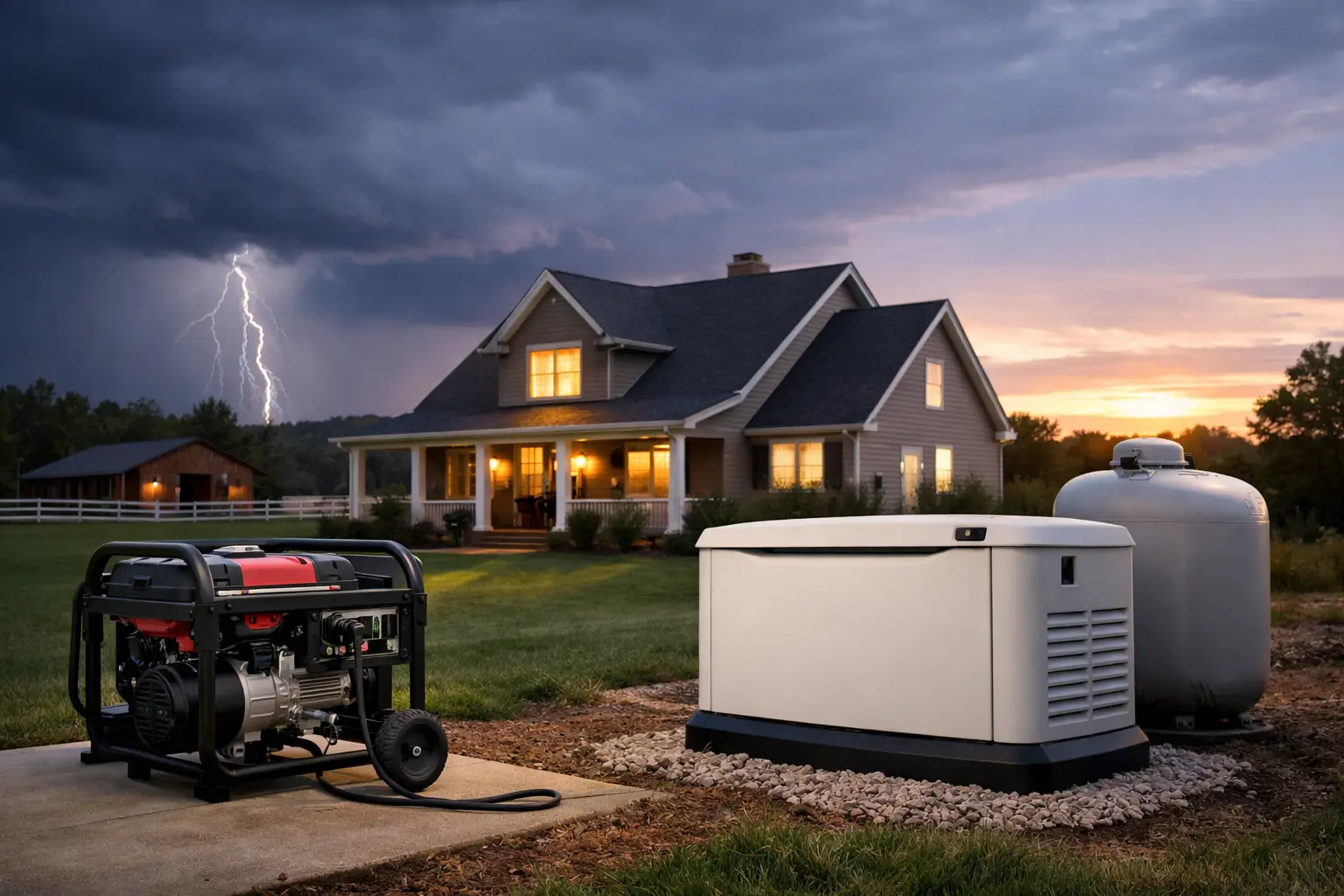
When the power goes out, the question is not whether every appliance in the house can run. It is whether your refrigerator stays cold, your sump pump keeps working, your family has light, and your heating or cooling system can operate safely. This backup power planning guide helps Bowling Green-area property owners make those decisions before an outage turns into a scramble.
Backup power is not a one-size-fits-all purchase. The right setup depends on what must stay on, how long you need it to run, the capacity of your electrical system, and whether you want a manual or automatic solution. A good plan starts with the loads you actually need, not the biggest generator you can find.
Start With the Circuits That Matter
Most homes do not need to power the entire house during an outage. Choosing critical circuits keeps the system more affordable, reduces generator size requirements, and makes fuel management easier.
For many households, critical power includes the refrigerator, freezer, a few kitchen receptacles, internet equipment, selected lighting, garage door opener, and the furnace or boiler. Homes with basements may put the sump pump at the top of the list. If someone relies on medical equipment, that circuit should be treated as a priority and planned with extra care.
Air conditioning is where planning gets more specific. A central AC system can require significant starting power, especially older equipment. Running it on backup power may be possible, but it changes the generator size, equipment selection, and installation cost. The same is true for electric ranges, electric dryers, water heaters, hot tubs, and EV chargers. These are high-demand loads that are usually left off a critical-load backup system.
Walk through your property room by room and write down what you cannot reasonably lose for several hours or several days. Be honest about convenience versus necessity. That list gives an electrician the information needed to design a practical system.
Choose the Right Type of Backup Power
Portable generators and permanently installed standby generators solve different problems. Neither is automatically better. The right choice comes down to outage frequency, budget, property needs, and how hands-on you want the process to be.
Portable generators
A portable generator can be a good fit for homeowners who want basic emergency power at a lower upfront cost. It can support selected appliances or circuits when paired with the proper inlet connection and transfer equipment. It also requires more involvement: you need to place it outdoors, start it, manage fuel, and connect it safely when an outage occurs.
The biggest safety issue with portable generators is improper use. They must stay outside, well away from doors, windows, vents, and enclosed spaces. Carbon monoxide is a serious hazard. Extension cords running through open windows or doors are not a dependable long-term plan, and plugging a generator directly into a wall outlet is dangerous and can energize utility lines.
Standby generators
A standby generator is permanently installed outside and is designed to start automatically when utility power fails. It is usually connected to a natural gas or propane fuel source and works with an automatic transfer switch. That means the system can restore selected power even if no one is home.
This option is often a strong choice for homes with frequent outages, medical needs, sump pump concerns, refrigerated inventory, or owners who travel regularly. It costs more upfront, but it provides greater convenience and can protect more of the electrical system. For small businesses, a standby system may prevent losses from spoiled products, disrupted operations, or security and communication downtime.
Size the Generator Based on Real Electrical Demand
Generator sizing is not guesswork. It requires looking at running wattage, starting wattage, and the way loads operate together. Motors in refrigerators, well pumps, sump pumps, and HVAC equipment often draw more power at startup than during normal operation.
A small generator may handle lights, a refrigerator, and internet service without trouble. Add a sump pump or furnace blower at the wrong time, and the system may overload. On the other hand, oversizing equipment without a plan can add unnecessary cost and fuel use.
An electrical professional can calculate the expected load and help determine whether you need a critical-circuit panel, a service-rated transfer switch, load-management equipment, or a whole-home approach. This review also reveals problems that may affect the project, such as an outdated panel, limited service capacity, damaged wiring, or circuits that are not labeled clearly.
Do not assume a generator can support every breaker in your panel simply because the panel has room. Your generator, transfer equipment, fuel supply, and service setup all have to work together.
Use Transfer Equipment That Protects People and Property
The transfer switch is one of the most important parts of a backup power installation. It separates generator power from utility power so electricity cannot backfeed onto the utility system. Backfeeding can put line workers at risk, damage equipment, and create a fire hazard.
For a portable generator, this may mean a manual transfer switch or an interlock setup installed at the electrical panel, along with a properly rated power inlet. For a standby generator, the system typically uses an automatic transfer switch that detects an outage and shifts power to the generator.
The equipment must be selected and installed for the property’s electrical service, generator capacity, and intended loads. This is not a place to cut corners or rely on improvised cords. A clean, professionally installed connection is safer, easier to use, and easier to maintain when the weather is bad and the lights are out.
Plan for Fuel, Location, and Local Conditions
A generator is only useful if it can run as long as you need it. Portable units commonly use gasoline, while standby systems may use natural gas or propane. Each fuel option has trade-offs.
Gasoline is readily available, but storing enough of it safely for extended outages requires planning. Fuel also has a limited shelf life and should be managed carefully. Propane can provide long runtime when the tank is properly sized, but you need to account for the generator’s consumption and other propane appliances at the property. Natural gas can be highly convenient where available, though severe regional events can still affect utility service.
Location matters just as much. Generators need proper outdoor clearance for exhaust, airflow, service access, and noise control. Placement should also consider windows, outdoor living areas, property lines, drainage, and the route for electrical and fuel connections. A generator sitting in a low area that collects water is not a good setup, even if it looks convenient on installation day.
Commercial properties should also consider access after hours, noise near customers or tenants, and which systems must remain operational. Emergency lighting, refrigeration, communication equipment, security systems, and select office or point-of-sale loads may have very different priorities.
Do Not Skip Maintenance and Testing
Backup power equipment is supposed to sit quietly until the day it is needed. That is exactly why maintenance matters. A generator that has not been exercised, fueled, or inspected may fail when the outage begins.
Portable generators should be run periodically according to the manufacturer’s instructions. Check oil, fuel condition, battery status if equipped, cords, inlet connections, and the condition of the transfer equipment. Store fuel safely and use a carbon monoxide detector inside the home as an added layer of protection.
Standby generators generally run scheduled self-tests, but those tests do not replace routine service. Batteries, filters, oil, fuel connections, control settings, and transfer switch operation all need attention. After any major electrical change, test the system under expected loads rather than waiting for the next storm to find a problem.
When an Electrical Upgrade Should Come First
Some properties need panel work before backup power makes sense. If your existing panel is full, undersized, corroded, poorly labeled, or showing signs of damage, a generator connection may expose issues that have been building for years. The same applies to homes adding EV chargers, central air, finished basements, hot tubs, or other large electrical loads.
A backup power project can be a good opportunity to organize the electrical system. Critical circuits can be clearly identified, outdated equipment can be addressed, and future needs can be considered at the same time. That may cost more than a quick generator hookup, but it provides a safer foundation and fewer surprises later.
M Power Electric LLC can evaluate your panel, critical loads, transfer equipment, and generator installation needs so the system fits your property instead of forcing your property to fit the system. The goal is simple: when utility power fails, the circuits you depend on should be ready to do their job.
Leave a Reply