

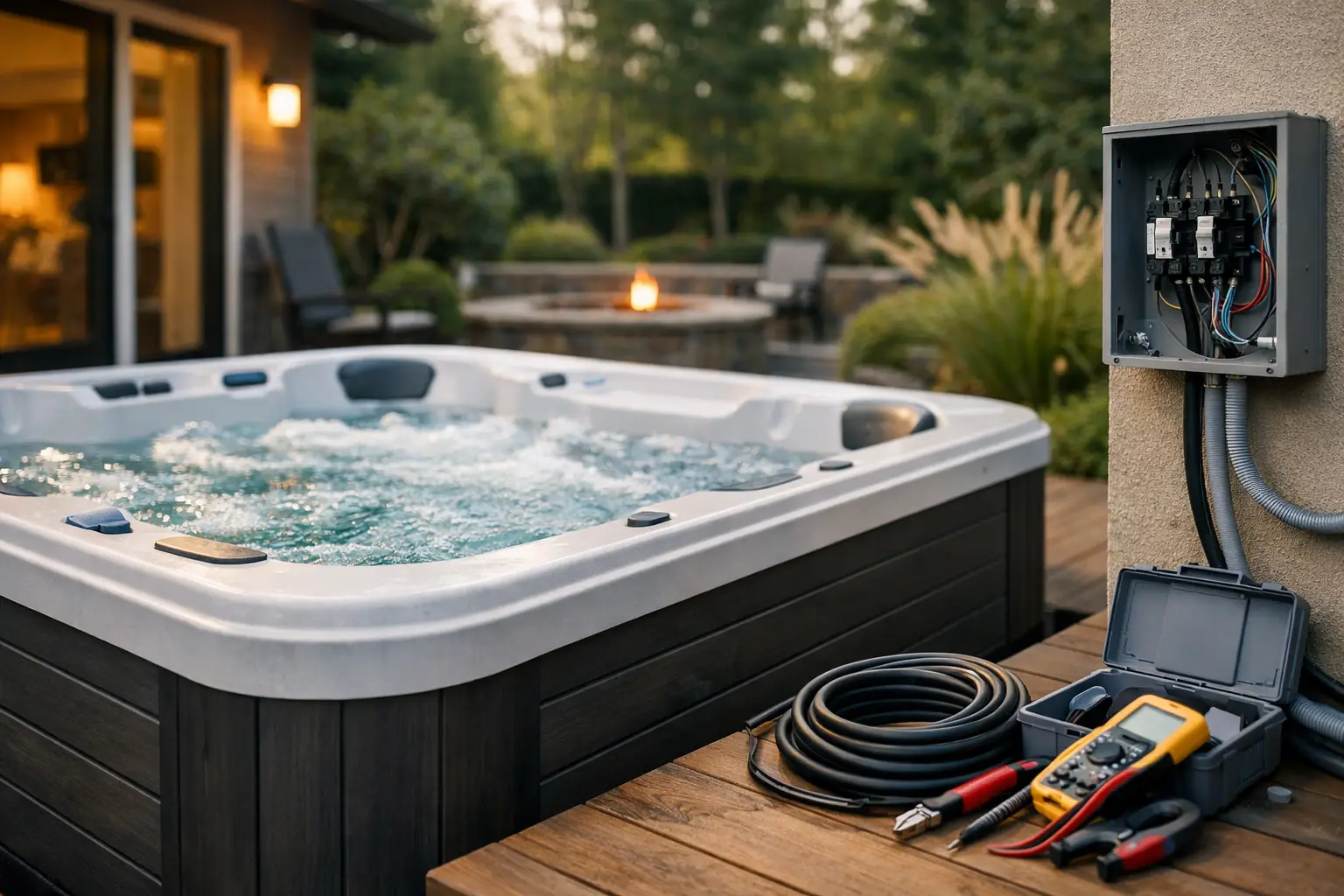
A hot tub can turn a backyard into the place everyone wants to be. It can also put a serious demand on your electrical system. The best hot tub electrical setup is not a one-size-fits-all wiring package. It is a properly sized, code-compliant installation built around your specific spa, your home’s panel capacity, and where the tub will sit.
For most homeowners, the right answer starts with a dedicated circuit, GFCI protection, a correctly located disconnect, and proper bonding. Skipping any one of those items can create safety issues, nuisance tripping, failed inspections, or expensive rework after the patio is already finished.
Start With the Hot Tub Nameplate
Before anyone selects a breaker or runs conduit, check the manufacturer’s installation manual and electrical data label. The spa’s voltage, amperage, wire requirements, and required overcurrent protection are determined by the equipment manufacturer, not by a guess based on the tub’s size.
Many full-size hot tubs use a 240-volt dedicated circuit, commonly in the 50- to 60-amp range. That does not mean every hot tub needs a 50- or 60-amp circuit. Some compact models can run on a 120-volt, 15- or 20-amp GFCI-protected circuit. Others have separate power requirements for heaters, pumps, blowers, or accessories.
The nameplate matters because the electrical installation has to match the load. Installing a larger breaker than the manufacturer allows does not give the tub more power. It can remove a layer of protection and create a dangerous condition. On the other hand, undersizing the circuit can lead to repeated breaker trips and poor performance when the heater and pumps operate together.
The Best Hot Tub Electrical Setup Uses a Dedicated Circuit
A permanent hot tub should have its own dedicated branch circuit. In plain terms, the hot tub circuit should not also feed patio outlets, garage lights, a refrigerator, or another major appliance.
A dedicated circuit gives the spa the power it needs without competing with other equipment. It also makes troubleshooting simpler. If the hot tub develops a fault, the electrician can isolate that circuit without affecting unrelated areas of the home.
The circuit typically begins at the main electrical panel or a properly supplied subpanel. From there, the electrician installs correctly sized conductors and wiring methods based on the circuit rating, the equipment instructions, the route of the run, and applicable electrical code requirements. Outdoor portions of the installation need materials rated for the environment, not indoor cable exposed to weather, sun, moisture, or physical damage.
Avoid extension cords, temporary wiring, and improvised connections. A plug-in spa may be designed for a receptacle, but that receptacle still needs to be properly located, GFCI protected, and supplied by an adequate circuit. A full-size hardwired spa is not a do-it-yourself extension-cord project.
Panel Capacity Comes Before New Wiring
The question is not just whether there is an empty breaker space in the panel. The panel must have enough electrical capacity for the added hot tub load.
Older homes may have panels that are already carrying central HVAC equipment, electric ranges, dryers, water heaters, workshop tools, or newer loads such as EV chargers. An electrician should perform a load calculation and inspect the existing panel, service equipment, grounding system, and available breaker space before planning the installation.
Sometimes the panel is ready for the new circuit. Sometimes the better move is a panel upgrade, a subpanel, or other service work before the hot tub is connected. Finding that out early prevents an installation from stalling when the spa delivery date is already on the calendar.
GFCI Protection Is Not Optional
Water and electricity are a serious combination. Ground-fault circuit-interrupter protection, commonly called GFCI protection, is required for hot tubs and spas because it is designed to shut off power quickly when it detects a dangerous ground fault.
For many hardwired hot tubs, the GFCI protection is provided by a GFCI breaker in the electrical panel or spa panel. The exact equipment and layout depend on the manufacturer’s instructions and the installation design. The goal is the same: reliable protection for people using equipment near water.
A GFCI breaker that trips repeatedly is not something to ignore or bypass. The issue could be moisture intrusion, a damaged wire, a failed heating element, a pump problem, incorrect wiring, or another equipment fault. Replacing a GFCI breaker with a standard breaker to stop the tripping creates a real shock hazard. The cause needs to be found and corrected.
Install the Spa Disconnect in the Right Location
A hot tub disconnect gives users and service technicians a way to shut off power at the spa. It must be readily accessible and within sight of the hot tub, while still being positioned far enough away to prevent someone from operating it while in the water.
This is why many installations use an outdoor-rated spa disconnect mounted on a nearby wall, post, or other suitable location. It should be easy to reach for maintenance but protected from direct water exposure and physical damage. The exact placement must meet current code requirements and local inspection standards.
Do not treat the disconnect as an afterthought. Planning its location early affects conduit routing, landscaping, fencing, decks, and the final appearance of the backyard. A clean installation is safer and easier to service later.
Grounding and Bonding Do Different Jobs
Homeowners often hear these terms used together, but grounding and bonding are not the same thing.
Grounding provides a path connected to the electrical system grounding arrangement. Bonding connects conductive parts together so they remain at the same electrical potential. Around a hot tub, proper bonding can involve the spa equipment, metal components, nearby conductive surfaces, and other items identified by code and the manufacturer.
This work is especially important when a hot tub is installed near concrete, metal fencing, handrails, decks, pools, or other outdoor features. The details vary by site. That is one reason hot tub electrical work should be planned by a qualified electrician rather than treated like a standard outlet installation.
Plan the Route Before the Patio Is Finished
The cleanest hot tub installations are planned before concrete is poured, a deck is built, or landscaping is completed. The circuit may need to travel through the attic, crawl space, basement, garage, exterior wall, or underground conduit to reach the spa disconnect.
Underground wiring requires proper conduit, depth, protection, and routing. Burial depth depends on the wiring method and site conditions. A shallow trench or unprotected cable may look fine when the job is finished, but it can become a hazard the first time someone installs a fence post, plants a tree, or digs for drainage work.
Think through access as well. Pumps, control packs, disconnects, and junction points may need service years from now. Do not block the electrical connection behind permanent masonry, inaccessible decking, or a structure that cannot be safely removed.
Common Setup Mistakes That Cost Homeowners Later
Most hot tub electrical problems begin with rushed planning. A few recurring mistakes are worth avoiding:
- Choosing a breaker size based on what another homeowner used instead of following the spa nameplate.
- Assuming an open panel slot means the home has enough electrical capacity.
- Using non-weather-rated materials outdoors or failing to protect exposed wiring from damage.
- Placing the disconnect too close, too far away, or where it cannot be easily accessed.
- Ignoring bonding requirements around metal, concrete, and nearby outdoor structures.
- Covering service areas with decking, stonework, or landscaping before the electrical inspection is complete.
These are not cosmetic details. They affect safety, inspection results, equipment reliability, and the cost of future repairs.
A Professional Installation Keeps the Project Moving
A proper hot tub electrical installation usually begins with a site visit. The electrician reviews the spa specifications, panel capacity, distance from the panel to the tub, equipment location, and the best route for the new circuit. From there, the work can be planned around permits, inspection requirements, trenching, concrete work, deck construction, and the delivery schedule.
For Bowling Green homeowners and nearby property owners, M Power Electric LLC can evaluate the electrical side before the hot tub arrives. That gives you time to address panel limitations, select a practical disconnect location, and avoid last-minute changes when the installation crew is on site.
The best time to solve a hot tub power issue is before the tub is full of water and ready for its first use. Get the electrical system checked early, follow the manufacturer’s requirements, and give the installation the same attention you would give the hot tub itself.