
A standby generator is supposed to take stress off your plate when the power goes out. The wrong permit process can do the opposite. A missed electrical permit, an overlooked gas requirement, or an installation that fails inspection can delay startup when you need backup power most. This generator installation permit guide explains what homeowners and property managers in Bowling Green, Kentucky, should expect before a generator is installed.
A generator project is not just a matter of setting equipment on a pad and connecting it to a panel. It affects your electrical service, transfer equipment, fuel supply, outdoor clearances, and sometimes local zoning rules. The right permit path protects the property, supports a safe installation, and helps prevent expensive corrections later.
Why Generator Permits Matter
A permanently installed standby generator connects to a building’s electrical system through a transfer switch or approved interlock arrangement. That connection must prevent generator power from feeding back into utility lines. Backfeeding is dangerous for utility workers, can damage equipment, and creates a serious fire and shock hazard.
Permits give the local authority having jurisdiction a chance to review key parts of the work. The inspector is generally looking for safe equipment selection, proper wire sizing, grounding and bonding, acceptable generator placement, correctly rated overcurrent protection, and a transfer method that isolates utility power from generator power.
For homeowners, a permit also creates a record that the work was completed through the proper process. That matters when selling a house, filing an insurance claim, managing a rental property, or responding to questions during a later renovation. For commercial properties, documented permits and inspections can be even more important because outages, liability, and operational downtime carry higher stakes.
Which Permits May Apply to a Generator Installation?
The exact requirements depend on the property location, generator type, fuel source, and the authority that serves that address. Bowling Green, Warren County, and nearby counties may not all handle permits the same way. An electrician should confirm the requirements for the specific project instead of assuming that one jurisdiction’s rules apply everywhere.
Electrical Permit
An electrical permit is commonly required for a standby generator because the project involves new circuits, a transfer switch, modifications to the service equipment, or changes to the main electrical panel. The scope may include a service-rated automatic transfer switch, load-management equipment, a generator breaker, grounding connections, and feeder conductors.
The permit application may ask for the property address, owner information, contractor details, a description of the work, generator size, and electrical equipment specifications. If the existing panel is outdated, overloaded, or undersized, the project may also require a panel upgrade before the generator can be connected safely.
Building, Zoning, or Placement Approval
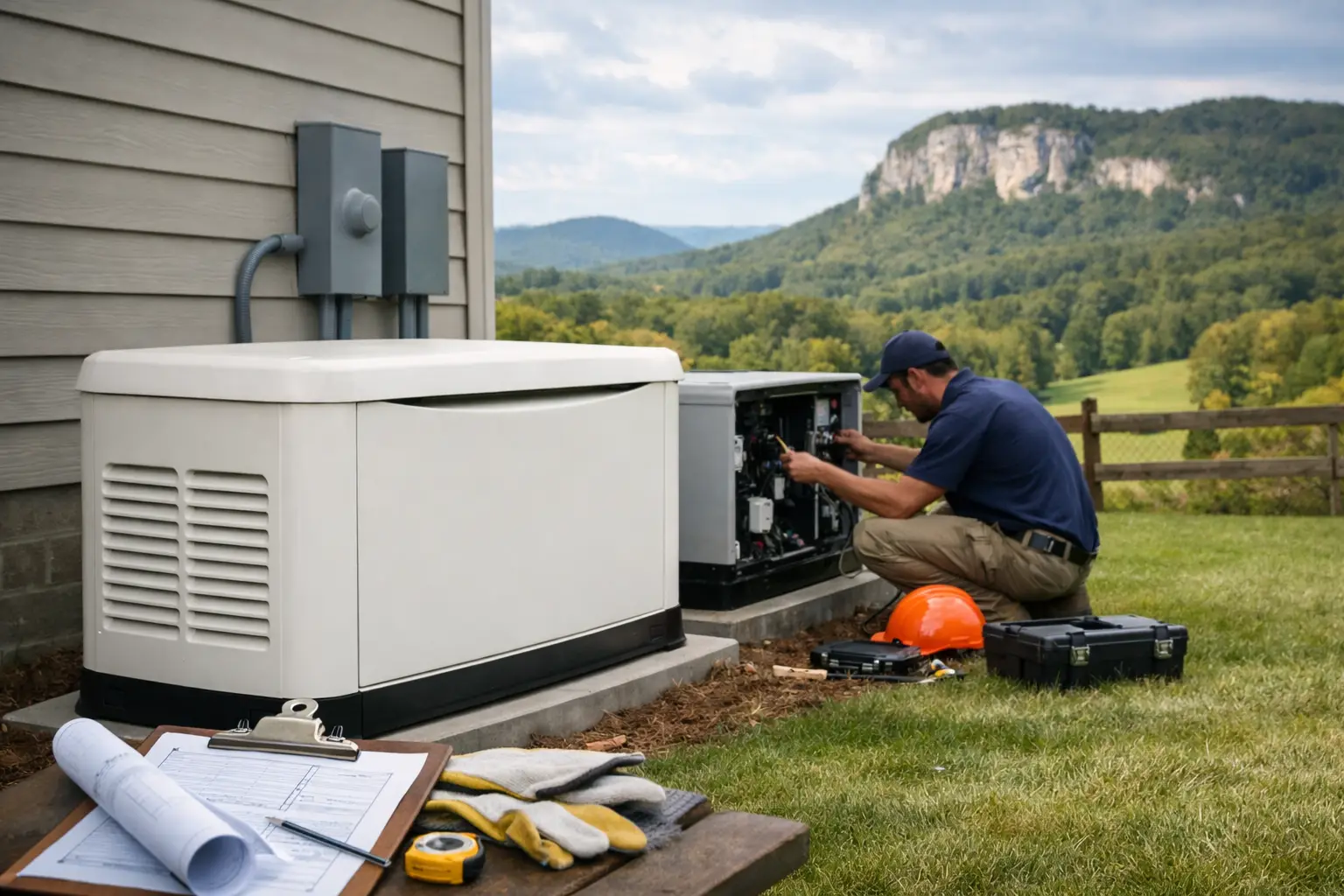
Generator location is not a casual decision. Standby units need clearance from doors, windows, vents, combustible materials, property lines, and other equipment. Local zoning or building rules may address setbacks, noise, concrete pads, screening, and placement in flood-prone areas.
A location that looks convenient can cause trouble if generator exhaust is too close to a window or fresh-air intake. It can also create access problems for service technicians. The manufacturer installation instructions matter here as much as local requirements. A qualified installer checks both before the pad is placed.
Fuel Gas or Propane Permit
Natural gas and propane generators often require separate work by a licensed and qualified fuel contractor. Depending on the scope and local rules, gas piping, pipe sizing, regulator changes, shutoff valves, and propane tank connections may need a separate permit and inspection.
This step is easy to underestimate. A generator can be electrically installed correctly but still fail to run properly if the gas line is undersized or the fuel supply cannot support the generator’s demand. Fuel planning should happen early, not after electrical work is complete.
Utility Coordination
Some projects need coordination with the electric utility, especially when service equipment is being replaced, upgraded, relocated, or modified. The utility may have requirements for meter access, disconnect locations, and service shutoffs. Utility rules are separate from electrical code, so meeting one does not automatically satisfy the other.
Start With the Load, Not the Generator Size
Many permit delays begin with a generator that was selected before anyone looked closely at the loads it will serve. A whole-home backup system and an essential-load system are very different projects.
A properly planned installation starts with a load calculation and a clear conversation about what must stay on during an outage. For one home, that may mean refrigeration, well or sump equipment, a furnace, selected lighting, and internet service. Another home may need central air conditioning, an electric range, a larger water heater, or a full-house backup solution.
The generator, transfer switch, panel capacity, and fuel supply must work together. Bigger is not always better. An oversized unit costs more, may require more fuel infrastructure, and does not solve an overloaded service panel. A smaller generator paired with intelligent load management can be the better fit for many properties.
What an Inspector Will Typically Look For
Inspection details vary by jurisdiction, but the goal is consistent: verify that the generator system is installed safely and according to the approved scope. A professional installation should be ready for inspection rather than treated as something to correct afterward.
Inspectors commonly review these areas:
- The transfer switch or interlock is properly listed, rated, and installed for the electrical system.
- Conductors, breakers, disconnects, and overcurrent protection are sized correctly for the equipment.
- Grounding and bonding meet the applicable requirements for the generator configuration.
- The generator is accessible and meets manufacturer and code clearances.
- Outdoor wiring methods, conduit, fittings, and weatherproof equipment are suitable for the location.
- Required labels identify the generator disconnect, transfer equipment, and power sources.
The final inspection may occur after the electrical work is complete and before the system is placed into normal service. Fuel-related inspection timing can be separate. Do not assume the project is finished simply because the generator starts. It needs to operate safely, transfer power correctly, and meet the requirements that apply to the property.
Common Permit Problems That Cost Time
The most common issue is starting work before the permit is approved. It may feel faster at first, but it can lead to stop-work orders, additional fees, exposed wiring that must be revisited, or a generator pad placed in the wrong location.
Another problem is treating the existing electrical panel as an afterthought. Older panels may have no room for the required equipment, damaged components, capacity limitations, or labeling issues. If a panel upgrade is needed, it is better to identify that before ordering equipment and scheduling installation.
Poor documentation also causes delays. Keep the generator model information, transfer switch details, electrical drawings when required, and manufacturer specifications available. If the project includes gas work, make sure the electrical and fuel contractors are working from the same plan. The generator cannot be placed where the electrician needs it if that location will not work for the gas installer or the local setback rules.
Finally, do not use a portable generator connection as a substitute for a permitted standby installation. Portable generators have their place, but they require a separate safe-use plan. They must remain outdoors, away from openings, and never be connected through an unsafe improvised cord or backfed outlet. If you want a generator that starts automatically and powers selected circuits or the whole building, install the right transfer equipment and permit the work.
How a Licensed Electrician Helps With the Process
A qualified electrical contractor can evaluate the service, calculate loads, identify equipment needs, and explain whether the project requires an electrical permit, a panel upgrade, utility coordination, or separate fuel approvals. In many cases, the contractor can obtain the electrical permit and schedule the required inspections as part of the installation process. The owner may still need to provide property information or approve related work, but they should not have to guess at code requirements.
For properties in Bowling Green and surrounding counties, M Power Electric LLC can help plan the electrical side of a generator installation with safety, capacity, and local requirements in mind. The best time to address permits is before the generator is delivered, the pad is poured, or the first wire is run. That approach keeps the project moving and leaves you with backup power you can depend on when the lights go out.