

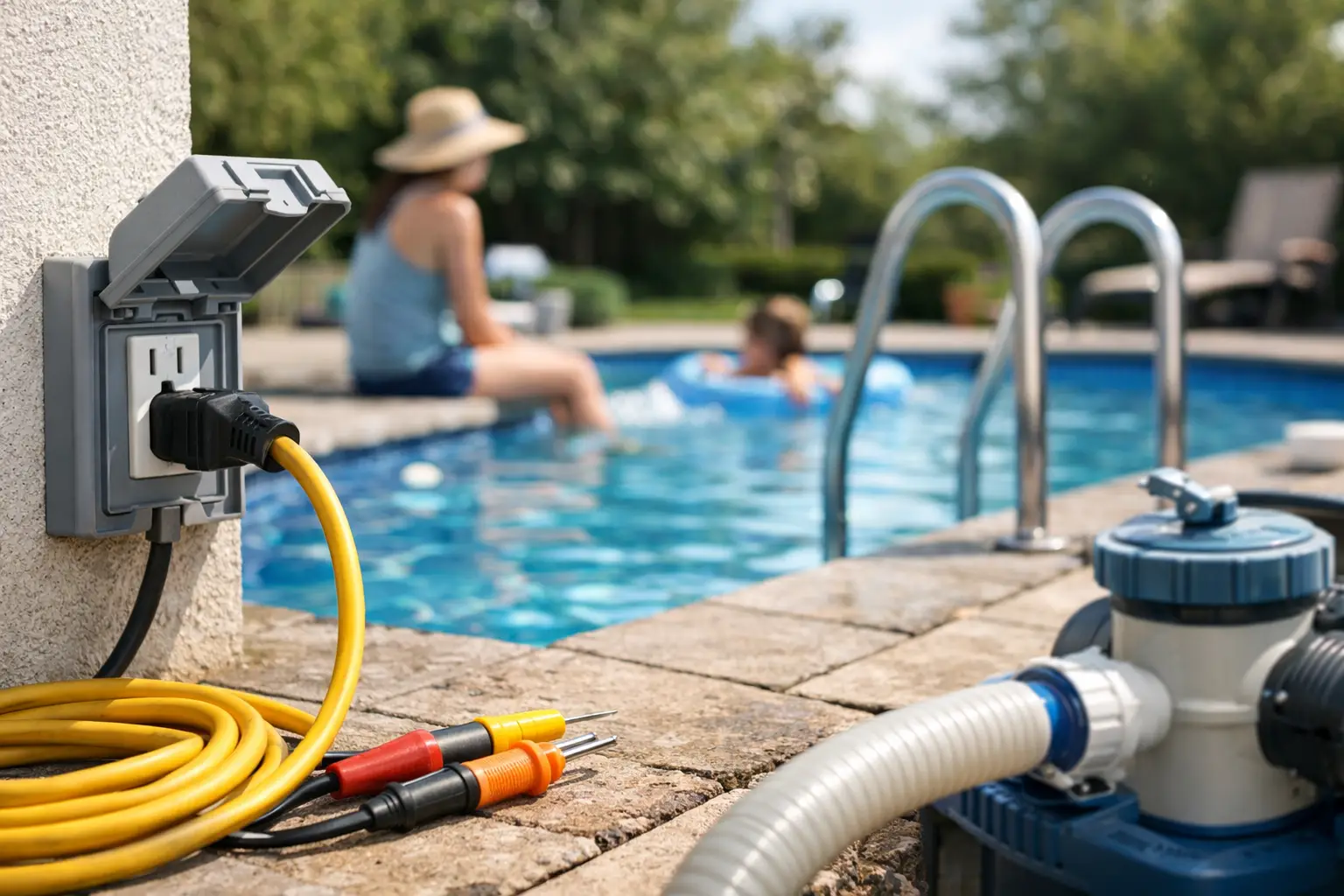
A pool should be where your family cools off, not where an electrical problem puts someone at risk. This pool electrical safety guide covers the systems around your water that deserve professional attention: pumps, lights, outlets, heaters, automation controls, and the wiring that serves them.
Water does not cause electrical failures. It makes failures more dangerous. A damaged cord, poor connection, missing protective device, or improperly bonded metal part can create a shock hazard before anyone sees smoke, hears a breaker trip, or notices a light flicker. That is why pool electrical work is not a place for shortcuts, borrowed extension cords, or guesswork.
Pool Electrical Safety Guide: Start With the Right Protection
Every pool installation is different, but the electrical system must be designed for a wet location and the equipment it serves. That starts at the panel and continues all the way to the pump motor, pool light, control box, and nearby receptacles.
Ground-fault circuit interrupter protection, commonly called GFCI protection, is one of the most important layers of safety. A GFCI monitors the electrical current on a circuit and can shut off power quickly when it detects an imbalance that may indicate current is escaping where it should not. Pool pumps, lights, receptacles near the pool, and other applicable equipment often require this type of protection.
A GFCI is not a substitute for correct wiring. It is a backup safety device. If it trips repeatedly, do not keep resetting it and hope the problem goes away. A tripping GFCI may point to moisture in a connection, a deteriorating motor, damaged insulation, a wiring fault, or equipment that is no longer safe to operate.
Proper grounding and bonding matter just as much. These terms are often used together, but they do different jobs. Grounding provides a path for fault current back to the electrical system so protective devices can operate. Bonding connects conductive parts together to help keep them at the same electrical potential. Around a pool, metal components such as rails, ladders, pump equipment, and certain structural elements may need to be bonded according to the installation requirements.
Bonding is technical work. It is not simply attaching a wire to a piece of metal. The correct materials, connection points, conductor sizing, and continuity all matter. An electrician should inspect any pool where bonding is missing, damaged, altered during a remodel, or unknown.
Keep Power Sources Away From the Water
The space around a pool changes how electrical equipment must be selected and installed. Ordinary indoor devices do not belong outdoors near splashing water, rain, pool chemicals, and direct sun.
Receptacles near the pool need to be properly located, protected, and covered for outdoor use. Weather-resistant devices and covers rated for use while a cord is plugged in help protect the receptacle from moisture. The exact requirements depend on the pool type, equipment layout, and local code rules, so placement should be handled by a qualified electrician rather than estimated during a backyard project.
Never run an extension cord to power a pump, light, speaker, refrigerator, phone charger, or other item near the pool. Extension cords are not permanent wiring, can be damaged by foot traffic and weather, and create a direct hazard when used around water. If you need power where none exists, install a properly designed outdoor circuit and receptacle.
Portable electrical devices should stay well away from the water. That includes radios, fans, televisions, power tools, battery chargers, and decorative lighting not specifically listed for pool-area use. A product being marketed for outdoor use does not automatically mean it is suitable beside a pool.
Watch for These Warning Signs
Pool equipment usually gives notice when something is wrong. Treat these signs as a reason to stop using the affected equipment and arrange an inspection, especially if the issue involves a pool light, pump, or metal component near the water.
- A GFCI outlet or breaker trips more than once.
- The pool light flickers, will not turn on, or trips a breaker.
- You feel tingling, shocks, or unusual vibration near equipment, rails, ladders, or water.
- A pump cord is cracked, spliced, hot to the touch, or routed across the ground.
- Equipment boxes have corrosion, missing covers, water inside, or loose wiring.
- Breakers trip, lights dim, or equipment starts and stops unexpectedly.
If anyone feels a tingling sensation in the water, get everyone out of the pool immediately. Do not enter the water yourself to investigate. Shut off power from a safe location if you can do so without approaching the water or touching suspect equipment, then call for qualified help. Electrical current in water can disable a person quickly, making a rescue attempt dangerous for the rescuer as well.
Pool Lights Need Special Attention
Underwater pool lights are one of the most specialized parts of a pool electrical system. The fixture, niche, conduit, junction point, transformer where applicable, wiring method, and GFCI protection all have to work together. A light that appears simple from the pool deck may have connections that are hidden behind finishes or located in a box near the equipment area.
Do not replace an underwater light with a random fixture or alter its wiring because the old one stopped working. Pool lights must be listed and installed for their intended use. Low-voltage lighting can reduce certain risks when installed correctly, but low voltage does not make improper installation acceptable. Water intrusion, damaged conductors, incorrect transformers, and poor connections can still create major problems.
If a pool light is out, a professional inspection can determine whether the issue is the lamp or LED assembly, GFCI device, transformer, switch, wiring, or a failing fixture. That diagnosis matters because replacing the visible part may not fix the actual cause.
Do Not Ignore the Pump and Equipment Pad
The equipment pad is where many pool electrical problems begin. Pumps, heaters, salt systems, timers, automation controls, and blowers all operate in a harsh environment. Heat, vibration, chlorine exposure, rain, insects, and seasonal use take a toll on wiring and connections.
A pump should be served by wiring and disconnecting means appropriate for the equipment. The disconnect lets power be shut off for service without relying on someone to find the right breaker inside the house. It also needs to remain accessible. Covering it with storage, landscaping, or equipment clutter can delay a safe shutdown when it is needed.
Corrosion deserves attention. Green or white buildup at terminals, rusted enclosures, brittle conduit, and cracked seals can all allow moisture into places it does not belong. A new pump installed on old, damaged wiring is not a complete repair. Likewise, upgrading to a variable-speed pump may change electrical requirements and should be evaluated before installation.
Renovations Can Create Electrical Problems
New decks, patios, fences, landscaping, outdoor kitchens, and pool upgrades can affect existing electrical safety. Contractors may relocate equipment, bury or expose wiring, remove rails, add metal structures, or change how people access the pool area. What was compliant and functional before a renovation may no longer be protected or properly bonded afterward.
This is especially common with older pools. The equipment may still run, but the electrical system may not match current safety expectations. An inspection is a practical way to identify missing GFCI protection, outdated panels, improper receptacles, deteriorated wiring, or bonding concerns before a small issue becomes an emergency.
Homeowners should also consider the home’s electrical capacity. Adding a pool heater, larger pump, outdoor entertainment area, or hot tub can increase demand on the service and panel. An overloaded or outdated panel can cause nuisance tripping and unreliable operation, but the bigger concern is whether the system is sized and protected correctly for the added load.
What Homeowners Can Do Safely
There are useful checks you can make without opening an electrical box or taking equipment apart. Keep the pool area clean and dry around the equipment pad. Make sure outlet covers close properly, cords are not damaged, and access to disconnects and panels remains clear. Test GFCI devices only according to the manufacturer instructions, and restore power only if the device resets normally.
You can also keep a simple record of when breakers trip, when a pump changes sound, or when a light begins flickering. That information helps an electrician diagnose an intermittent issue faster. Do not remove panel covers, bypass a GFCI, replace breakers with a larger size, splice pump cords, or work on underwater lighting yourself.
For homeowners in Bowling Green and nearby counties, M Power Electric LLC can inspect pool-related electrical equipment, troubleshoot faults, and help bring unsafe installations back to a professional standard. A working pool is good. A pool with electrical protection you can trust is better when family and guests are in the water.