

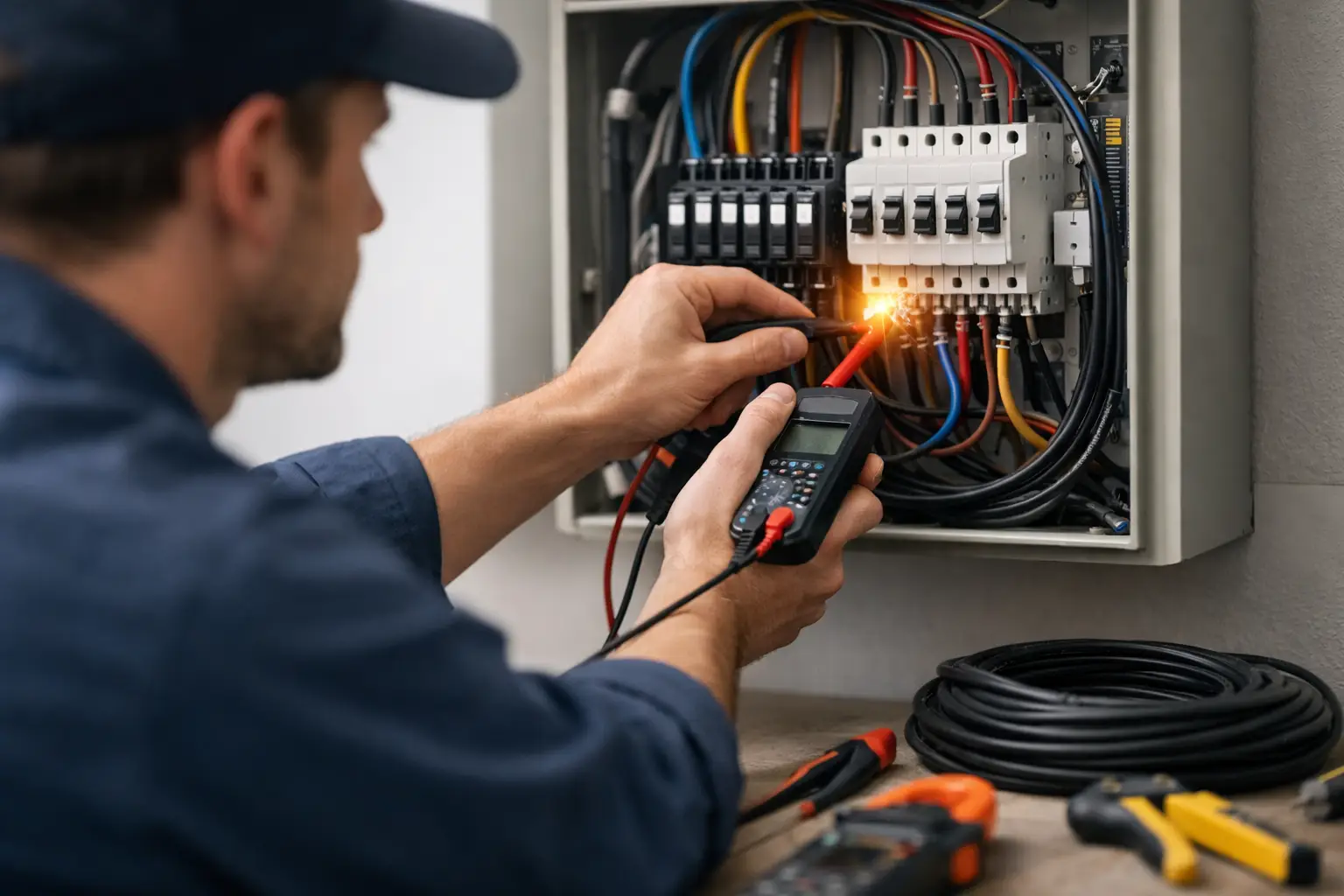
A breaker that keeps tripping, an outlet that suddenly quits, or lights that flicker when an appliance starts are not problems to ignore. This electrical troubleshooting process explained shows how a trained electrician narrows down the cause without guessing, protects the property, and makes the right repair instead of a temporary fix.
Electrical problems can look simple from the outside, but the same symptom may have several possible causes. A dead receptacle could be a tripped GFCI outlet, a loose connection, a damaged wire, an overloaded circuit, or a problem at the electrical panel. Finding the real cause is what separates safe electrical service from trial-and-error repairs.
Start With Safety, Not the Symptom
Before testing anything, an electrician considers the risk. Electricity can cause shock, arc faults, equipment damage, and fire. That risk is higher around wet areas, older wiring, overloaded circuits, damaged cords, pools, hot tubs, and service panels.
For homeowners and business owners, the first step is simple: pay attention to what happened and when. Did the problem begin after a storm? Does it happen only when the microwave, space heater, air conditioner, or other large appliance runs? Is there a burning smell, buzzing sound, warm switch plate, or discoloration around an outlet?
If you smell burning insulation, see sparks, hear loud buzzing from a panel, or have a breaker that will not stay on, stop using that circuit. Do not keep resetting the breaker to force power back on. Turn off power if it can be done safely and call a qualified electrician.
Electrical Troubleshooting Process Explained Step by Step
Professional troubleshooting follows a logical order. The goal is to rule out simple causes first, then test the electrical system in a controlled way until the fault is located.
1. Identify the exact problem
The electrician begins by asking targeted questions and inspecting the affected area. Is one outlet dead, or is an entire room without power? Are the lights dimming, flickering, or completely off? Does the breaker trip immediately, or only after a particular device is plugged in?
These details matter. A single nonworking outlet may point to a failed receptacle or loose connection upstream. Several dead outlets may indicate a tripped GFCI, an open connection, or a circuit issue. Flickering throughout a home or commercial space can point to a larger concern, including a service or panel connection that needs prompt attention.
2. Check the panel and protective devices
Circuit breakers and GFCI devices are designed to shut off power when they detect an overload, short circuit, ground fault, or another unsafe condition. An electrician checks whether a breaker has tripped and verifies that it is reset properly. Some breakers move only slightly when tripped, so they must be switched fully off before being turned back on.
GFCI outlets are also checked, especially in bathrooms, kitchens, garages, basements, exterior locations, and near water. One tripped GFCI can disable other outlets farther down the circuit. Resetting it may restore power, but it does not always explain why it tripped in the first place.
A breaker that trips once after a clear overload may not signal a major failure. A breaker that trips repeatedly is doing its job by warning of a problem. The cause could be too much load on the circuit, a faulty appliance, damaged wiring, a loose connection, or a failing breaker. Those causes require different repairs.
3. Test voltage, continuity, and circuit condition
After making the area safe, the electrician uses proper test equipment to check whether power is arriving where it should. This may include a multimeter, voltage tester, receptacle tester, clamp meter, or specialized diagnostic equipment.
Voltage testing helps determine whether the issue is at the panel, along the circuit, or at the device itself. Continuity testing, performed with power off, can help locate an open conductor, failed switch, damaged cable, or loose splice. Load testing can reveal whether a circuit is struggling when equipment starts or when multiple devices operate at once.
This is where experience makes a difference. A basic plug-in outlet tester can identify some common wiring conditions, but it cannot diagnose every fault. It also cannot tell you whether a connection behind the wall is overheating, whether a neutral conductor is loose, or whether a panel has a capacity issue.
4. Inspect connections and equipment
Loose electrical connections are a common source of intermittent power, flickering lights, heat buildup, and damaged devices. An electrician may inspect switches, receptacles, fixtures, junction boxes, panel terminations, and equipment connections to find signs of wear or failure.
Warning signs include melted insulation, scorched terminals, cracked receptacles, corroded outdoor connections, aluminum wiring concerns, or wires that were improperly spliced during a previous repair. In commercial settings, the inspection may also include disconnects, dedicated equipment circuits, lighting controls, and branch circuits serving high-use areas.
The repair should match the cause. Replacing an outlet will not solve a loose connection in a junction box. Installing a larger breaker will not solve an overloaded circuit and can create a serious fire risk if the wiring is not rated for that breaker size.
5. Repair, verify, and check for the underlying cause
Once the fault is found, the electrician makes the appropriate repair, whether that means replacing a damaged device, repairing a connection, correcting wiring, adding a dedicated circuit, upgrading a breaker, or addressing an issue in the panel.
Then comes the verification. The circuit is tested again under normal operating conditions. Breakers, GFCIs, outlets, switches, lighting, and connected equipment should operate correctly before the job is considered complete.
A good troubleshooting visit also looks beyond the immediate failure. If a garage outlet is overloaded because it now serves tools, a freezer, and an EV charger, the long-term answer may be a dedicated circuit or panel upgrade. If lights flicker when an HVAC unit starts, the issue may involve load demand, connections, or service capacity. The right solution depends on the system, the equipment, and how the property is being used.
Common Electrical Problems and What They May Mean
Some symptoms call for faster action than others. Frequent breaker trips usually mean overload, a short, or ground fault. A warm outlet or switch can signal a loose or failing connection. Lights that dim when a major appliance runs may indicate a circuit or capacity concern. An outlet that works only sometimes often points to a worn device or loose wiring connection.
Outdoor and wet-location issues deserve special attention. Moisture can damage receptacles, covers, connections, and underground wiring. Electrical systems serving pools, hot tubs, saunas, and exterior equipment must be installed and maintained correctly because water raises the risk of shock.
Older homes can present another set of challenges. Previous additions, outdated panels, undersized circuits, and ungrounded outlets may have worked for years but may not support modern electrical demand. New appliances, EV chargers, generators, and home office equipment can expose limits that were not obvious before.
What You Can Check and What to Leave Alone
Property owners can safely check a few basic items: confirm whether a breaker or GFCI has tripped, unplug a suspect appliance, and note which rooms or devices are affected. That information gives the electrician a head start.
Do not remove panel covers, open energized junction boxes, replace breakers without proper knowledge, or continue using equipment that causes heat, sparks, or repeated trips. Electrical work is not the place to test a hunch. A wrong repair can hide the original problem while creating a more dangerous one behind the wall or inside the panel.
For Bowling Green property owners, M Power Electric LLC can diagnose problems from everyday outlet and lighting issues to panel concerns, dedicated circuits, generators, and high-demand equipment. The focus is straightforward: find the fault, explain the repair, and get the electrical system working safely again.
When something electrical changes in your home or business, treat it as useful information rather than an inconvenience to work around. The sooner the cause is identified, the easier it is to protect your property, your equipment, and the people who use the space.