

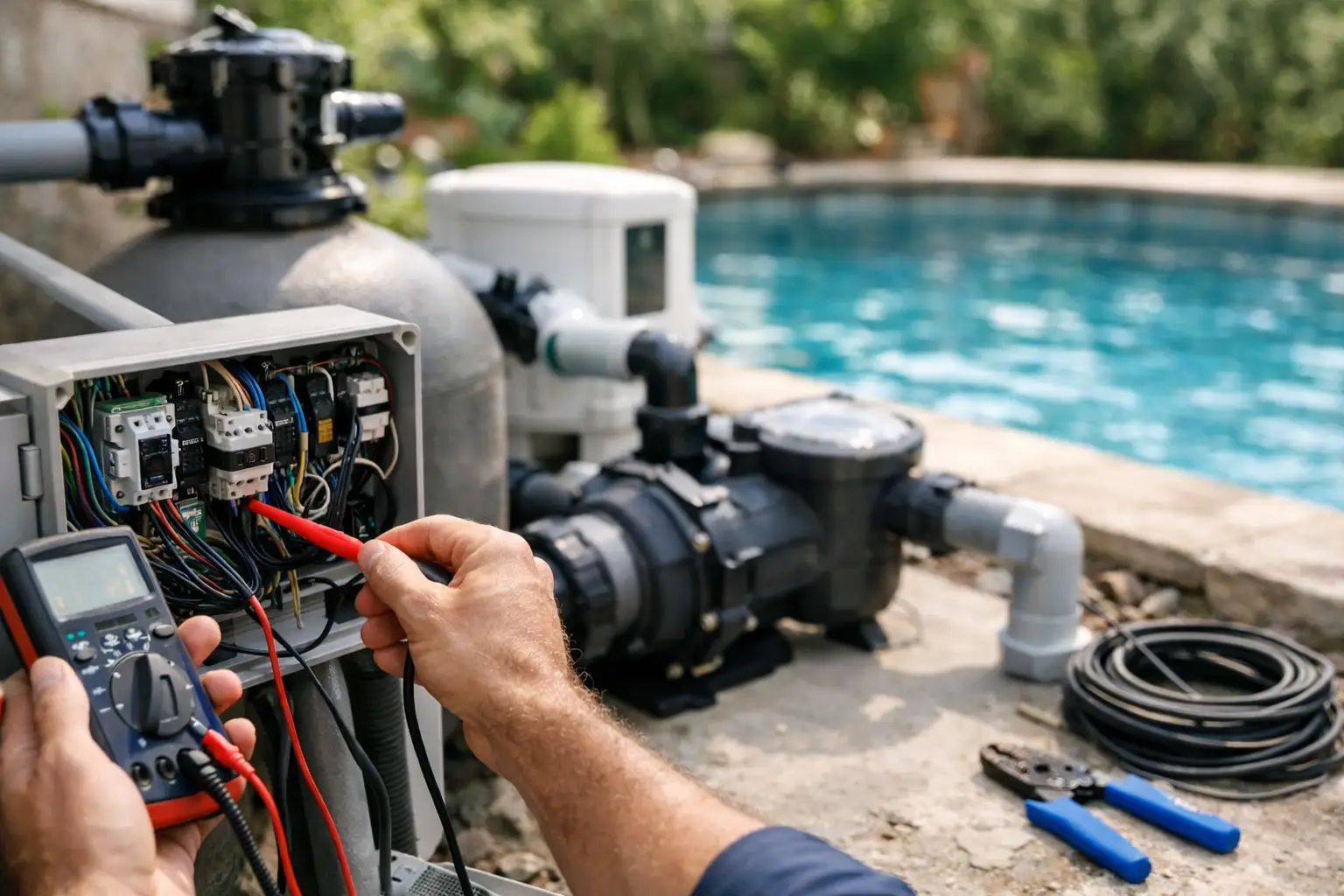
Pool equipment fails for a few predictable reasons – undersized circuits, bad grounding and bonding, weather exposure, and DIY wiring that looked fine until the pump kicked on. A good pool equipment wiring guide starts with one fact: pool electrical work is not regular backyard wiring. Water, metal parts, motors, heaters, timers, and code requirements all come together in one place, and mistakes can become dangerous fast.
If you are planning a new pool, replacing equipment, or trying to sort out an older setup, the goal is simple. You want the system powered correctly, protected correctly, and inspected with safety in mind. That means understanding what equipment needs dedicated power, where GFCI protection comes into play, and why bonding matters just as much as the wire itself.
What pool equipment usually needs power
Most pool pads include more than just a pump. A basic setup may have a circulation pump, filter controls, pool light transformer, timer, and convenience receptacle. A more advanced system may also include a heater, automation panel, salt system, booster pump, spa blower, and landscape lighting tied into the same area.
Each piece of equipment has its own electrical demand. A pool pump may need either 120V or 240V depending on the model. Heaters often require larger 240V circuits and draw serious amperage. Automation systems need clean, organized wiring that separates line voltage from low voltage control wiring. Pool lights often involve transformers and niche-specific safety rules. You cannot assume one breaker or one feed will cover everything.
That is where a lot of property owners get into trouble. They replace a pump with a larger model, add a heater later, or install a salt system without checking panel capacity or existing wire size. What worked for an older setup may not be safe or code-compliant now.
Pool equipment wiring guide basics that matter most
The first issue is circuit sizing. Pool equipment should be matched to the manufacturer requirements for voltage, breaker size, conductor size, and disconnecting means. Guessing here is expensive. Best case, the equipment trips or underperforms. Worst case, conductors overheat or internal components get damaged.
The second issue is GFCI protection. Around pools, this is not optional in the places code requires it. Pumps, receptacles, lights, and some other equipment may all have GFCI-related requirements depending on the installation. The exact setup depends on the equipment type, voltage, and current code rules in force. This is one of those areas where close enough is not good enough.
The third issue is bonding. Homeowners often confuse bonding with grounding, but they are not the same. Grounding helps direct fault current safely. Bonding connects metal parts together to reduce voltage differences between components people can touch. Pool water, ladders, rails, pump motors, metal housings, and reinforcing steel may all be part of that conversation. If bonding is skipped or done wrong, a system can look normal and still be unsafe.
Then there is the environment itself. Pool equipment wiring has to hold up outdoors. That affects conduit type, fittings, wire insulation, disconnect placement, corrosion resistance, and weatherproof enclosures. Sun, rain, lawn chemicals, and normal seasonal wear all take a toll.
Why pool pumps and heaters need special attention
The pump is the heart of the system, and it is often the piece most likely to be swapped out over time. Variable-speed pumps are now common, and they usually bring different wiring and control requirements than older single-speed models. Some need dedicated 240V feeds. Some integrate with automation. Some require careful setup so breaker sizing and manufacturer instructions line up properly.
Heaters are less forgiving. Gas pool heaters still need electrical connections for controls, ignition, and blowers. Electric heaters and heat pumps can require much more power and may trigger a larger conversation about panel capacity or service upgrades. If the main panel is already full or marginal, adding a heater may not be a simple add-on. It may require load calculations and a cleaner equipment layout.
This is why equipment upgrades should never be treated like plug-and-play replacements. The new unit may fit on the pad, but that does not mean it belongs on the existing wiring.
The common mistakes that cause problems later
A lot of pool electrical issues do not show up on day one. They show up after the first heavy rain, after the first service call, or after a replacement part gets installed.
One common mistake is mixing old and new equipment without reworking the wiring plan. Another is relying on extension cords, temporary power, or outdoor-rated parts in places where permanent wiring methods are required. Some systems also end up with crowded subpanels, mislabeled breakers, and no clear disconnects near the equipment.
Another major problem is poor layout. Pool pads need room for service access, and electrical equipment should be mounted and routed in a way that stays dry, readable, and accessible. If wiring is packed behind equipment or run too close to areas prone to splash and corrosion, future maintenance gets harder and the chance of damage goes up.
Then there is the inspection issue. If work was done without permits or by someone unfamiliar with pool code requirements, the installation may not pass when the property is sold, renovated, or repaired after a failure. Fixing a bad install usually costs more than wiring it right the first time.
New pool, replacement, or repair – the wiring approach changes
A new pool build gives the electrician the best chance to design the system correctly from the start. That includes feeder sizing, equipment circuits, bonding layout, disconnects, subpanel placement if needed, and room for future additions. If a heater, automation system, or spa function may be added later, planning ahead matters.
A replacement job is different. The challenge there is evaluating what can stay and what cannot. Sometimes the existing conduit is usable. Sometimes the breaker is properly sized but the disconnect is not. Sometimes the equipment pad needs a full rework because the original installation was pieced together over time.
A repair call is different again. If a breaker keeps tripping, a pump will not start, or a heater loses power intermittently, the answer is not always the obvious part. The issue may be voltage drop, moisture intrusion, a failing breaker, corroded terminations, or a bonding defect that got missed years ago. Good troubleshooting saves time because it treats the system as a whole, not just the symptom.
What homeowners should check before calling for work
You do not need to diagnose the whole system, but a few details help move the job faster. Know which equipment is giving trouble, whether anything was recently replaced, and whether the main panel has had prior issues. If you have model numbers or photos of the pool pad and panel, that helps too.
It also helps to know whether this is a new installation, remodel, or insurance-related repair. Those details affect scope, permitting, and whether the electrician should expect hidden problems behind an older setup.
If you are in Bowling Green or the surrounding counties, this is the kind of work M Power Electric LLC handles with the right level of caution. Pool systems are not the place for shortcuts, and they are not the place for trial-and-error wiring.
When to stop and bring in a licensed electrician
If the job involves a new circuit, panel work, GFCI breaker installation, bonding, underground wiring, pool lights, heaters, or automation controls, it is time to bring in a professional. The same goes for anything that requires permit and inspection coordination. A handyperson may be able to swap basic parts, but pool electrical work has too many safety and code layers to treat casually.
There is also the liability side. Property owners and landlords have every reason to want this work documented and done properly. If someone gets hurt around a pool, bad electrical work becomes a serious issue fast. Hiring a licensed electrician protects more than the equipment.
A solid pool equipment wiring guide is not really about teaching people to wire their own pool pad. It is about helping them spot what matters so they can make better decisions. The right setup gives you dependable equipment, cleaner service access, and fewer surprises when it is time to repair, upgrade, or sell the property.
If your pool equipment is being added, replaced, or acting up, treat the wiring as part of the system, not an afterthought. That decision usually saves money, trouble, and risk down the line.