
When the power drops out in the middle of a storm, most people stop caring about electrical theory and start caring about two things – keeping the fridge cold and getting the heat or air moving again. That is where the generator transfer switch vs interlock question becomes real. Both options can let you connect a portable generator to your home safely, but they do not work the same way, and the better choice depends on your panel, your budget, and how you want to use backup power.
Generator transfer switch vs interlock: the basic difference
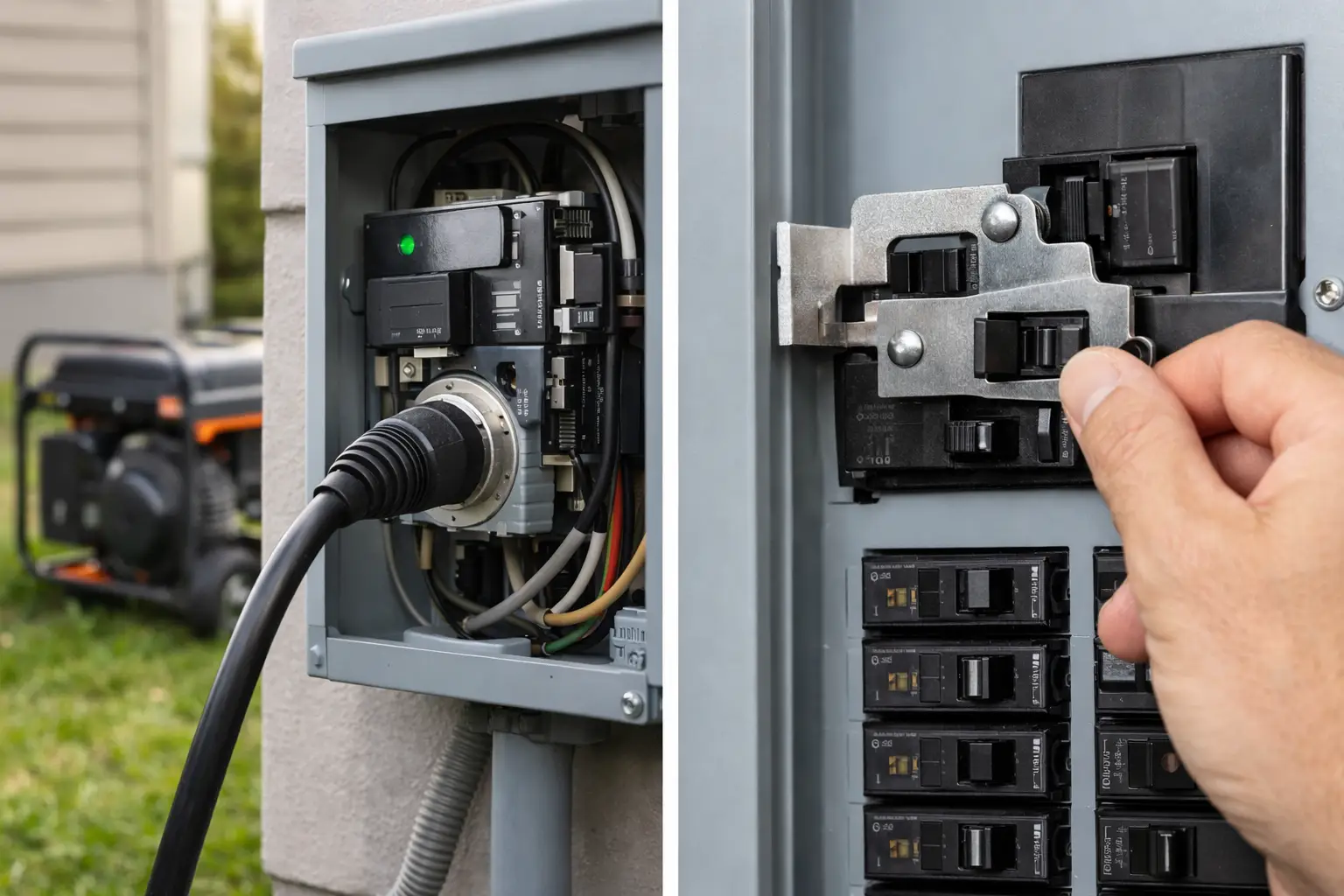
A transfer switch is a separate switching device installed near your electrical panel. It lets you move selected circuits in your home from utility power to generator power. In plain terms, you choose the handful of circuits that matter most, such as your refrigerator, furnace, sump pump, kitchen outlets, garage door, or a few lights.
An interlock is a mechanical device installed on the main panel. It prevents the main breaker and the generator backfeed breaker from being on at the same time. That matters because your generator must never send power back onto utility lines. With an interlock, you usually have access to more circuits in the panel, but you still have to manage the generator load carefully.
Both methods can be code-compliant and safe when installed correctly by a qualified electrician. Neither is a shortcut job. The wrong setup can damage equipment, create shock hazards, or put lineworkers at risk.
How a transfer switch works
A transfer switch gives you a more controlled backup setup. During an outage, you start the generator, connect it properly, and flip the transfer switch to move the selected circuits from utility power to generator power.
The biggest advantage is organization. The circuits are already chosen ahead of time. You are not standing in a dark garage trying to remember which breakers you can turn on without overloading the generator. For homeowners who want a simple routine during a storm, that can be a major benefit.
Transfer switches are often a strong fit when the goal is to power only the essentials. If your portable generator is modest in size, that approach usually makes sense. You are building a backup system around priority loads instead of trying to feed the whole panel.
There is a trade-off, though. A transfer switch typically limits you to the circuits wired into it. If you want to add more later, that may require additional work. It can also be a less flexible option if your power needs change seasonally, like running different equipment in winter than you do in summer.
Where transfer switches make sense
Transfer switches are often a good choice for homeowners who want a predictable, easy-to-use backup plan. They also make sense when panel space is limited or when a specific generator setup has already been planned around a set number of critical circuits.
If you are the type of property owner who wants clear labels, a repeatable process, and less guesswork during an outage, a transfer switch is hard to argue with.
How an interlock works
An interlock works at the main service panel. It is designed so the main breaker and the generator breaker cannot be on at the same time. That mechanical block is what makes it safe when installed correctly.
The biggest advantage of an interlock is flexibility. Instead of feeding only a small, preselected group of circuits, you can generally control any circuit in the panel, as long as the generator has enough capacity. That means you can choose what to power based on the situation. One outage might call for the refrigerator, a few lights, and the internet. Another might call for the well pump, microwave, and furnace.
That flexibility is why many homeowners ask about interlocks. They can be a practical and cost-effective option, especially when the main panel is compatible and the customer wants to make the most of a portable generator.
The trade-off is that interlocks require more judgment from the user. Just because a circuit is available does not mean the generator can handle it at the same time as everything else. Large electric water heaters, ranges, dryers, and central air systems can exceed portable generator capacity fast. You have to actively manage the load.
Where interlocks make sense
An interlock can be a smart fit for homeowners who want more control over which loads get powered during an outage. It also works well when the electrical panel supports an approved interlock kit and the customer wants a cleaner, more budget-conscious way to connect a portable generator.
If you are comfortable managing breakers and understanding what your generator can handle, an interlock can be a very practical solution.
Safety matters more than convenience
This is not the place for improvised wiring, double-male cords, or anything that someone online calls a hack. Safe generator connection requires proper equipment, proper installation, and a setup that prevents backfeeding.
That is one reason the generator transfer switch vs interlock decision should start with the panel and the service, not just with price. Not every panel accepts every interlock. Not every home is best served by a transfer switch. Grounding, bonding, inlet placement, breaker sizing, generator wattage, and local code requirements all matter.
A correct installation should also account for how the generator will actually be used. Cord length, outdoor placement, weather exposure, startup procedure, and the circuits you depend on most all affect what makes sense.
Cost differences
In many cases, an interlock setup costs less than a transfer switch setup, but there is no flat answer that applies to every property. The price depends on panel compatibility, labor, permit requirements, inlet installation, breaker work, and whether any upgrades are needed first.
A transfer switch can cost more because it adds another device and often more wiring labor. That added cost may be worth it if you want a cleaner operating process with dedicated essential circuits.
An interlock can be more economical, but only if the panel can accept a proper listed kit and the installation does not uncover other problems. If the panel is outdated, overcrowded, damaged, or not compatible, the lower-price idea can disappear fast.
This is where a real site evaluation matters. The right answer is based on your house, not a forum comment from someone with a different panel and a different generator.
Which one is better for your home?
The honest answer is that neither is automatically better. It depends on how you want to live with backup power.
If you want a straightforward system that powers a fixed group of important circuits and keeps operation simple during an outage, a transfer switch is often the better choice. It is especially useful for households that want less decision-making in a stressful moment.
If you want more flexibility and your panel is compatible, an interlock may be the better fit. It lets you choose from more circuits as needed, which can be valuable when outage conditions change.
For some homes, the deciding factor is generator size. Smaller portable generators pair well with transfer switches because they force discipline around essential loads. Larger portable generators can make interlocks more attractive because there is enough capacity to feed more of the panel, as long as loads are managed correctly.
For other homes, the deciding factor is the panel itself. A quality electrician can inspect the panel, verify compatibility, and explain what is safe, legal, and practical without guessing.
A few common misunderstandings
One common misunderstanding is that an interlock powers the whole house automatically. It does not. It gives you access to the panel through the generator connection, but your generator still has limits.
Another misunderstanding is that a transfer switch is always safer than an interlock. A properly installed, code-compliant interlock is designed for safe operation too. The key phrase is properly installed.
A third misunderstanding is that either option is a small DIY project. Backup power work ties directly into your main electrical system. It needs to be done right the first time.
What to ask before choosing
Before you decide, think about what you actually need during an outage. Are you trying to keep a few essential circuits alive, or do you want the flexibility to choose different loads as needed? Is your generator sized for the basics, or is it large enough to support broader use? Is your panel in good condition and compatible with an interlock kit?
Those answers usually point in the right direction quickly. A good electrician should be able to look at your panel, ask how you plan to use the generator, and recommend the option that fits your property instead of forcing one standard answer.
For homeowners and property owners in Bowling Green and nearby counties, that practical approach matters. M Power Electric LLC handles generator-related electrical work with the same mindset we bring to panel upgrades, troubleshooting, and service work – do it safely, do it cleanly, and make sure the setup actually fits the building.
If you are weighing a transfer switch against an interlock, the best next step is not guessing which one sounds better. It is getting the panel checked, the generator matched to the load, and the installation planned around the way you will really use backup power when the lights go out.