

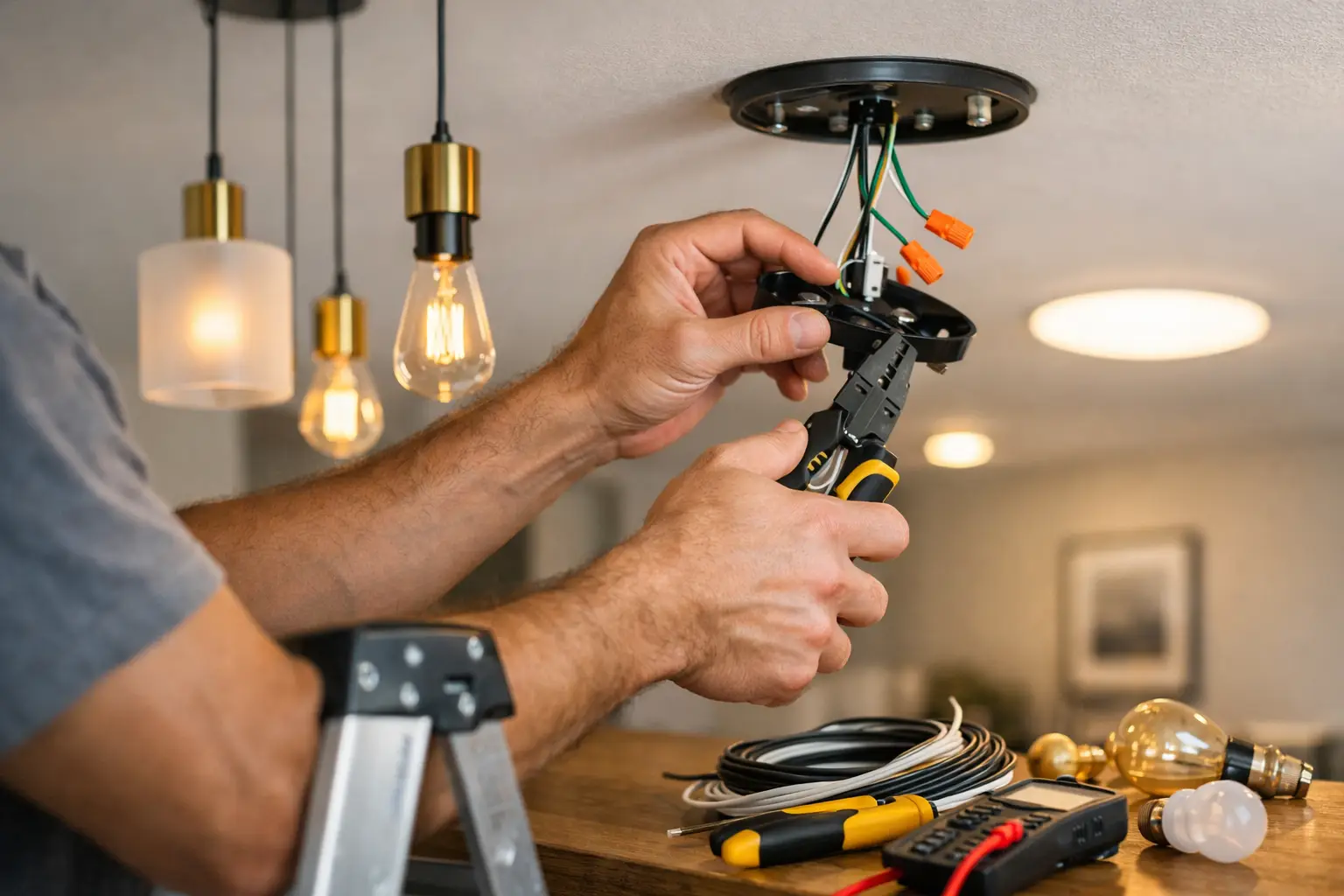
A dining room chandelier that takes one hour to swap out is one price. A foyer fixture on a high ceiling with old wiring is another. That is why light fixture installation cost can vary more than most people expect, even when the fixture itself looks simple.
If you are planning a lighting upgrade in Bowling Green or the surrounding area, the real question is not just what the fixture costs at the store. It is what it takes to install it safely, support it properly, and make sure the circuit and electrical box can handle the job. Good lighting changes a space fast, but the electrical side has to be done right.
What affects light fixture installation cost
The biggest factor is whether this is a straightforward replacement or a more involved installation. Replacing an existing builder-grade light with a similar fixture is usually the lower end of the price range. The wiring is already there, the switch already controls the location, and the electrical box may already be suitable.
Costs go up when the installation requires more labor or materials. That can mean a fixture that is heavier than the existing box can support, a ceiling that is too high for a standard ladder setup, or a switch loop and wiring arrangement that needs correction. If the old wiring is damaged, outdated, or not up to current standards, the electrician has to address that before the fixture goes in.
The fixture itself also matters. Flush mounts and simple pendants are generally faster to install than chandeliers, multi-light assemblies, or oversized decorative fixtures. Ceiling fans with light kits can also take more time than a standard light because they require proper support and balancing, not just electrical connection.
Commercial properties and rental units can bring their own variables. Access above ceilings, occupied spaces, business hours, and code compliance issues can all affect labor time. A property owner may want ten fixtures replaced at once, which can lower the per-fixture labor compared with a one-off call, but only if the existing conditions are consistent.
Typical light fixture installation cost ranges
For a basic replacement in an existing location, many homeowners can expect light fixture installation cost to fall somewhere around a modest service-call range. In practical terms, a simple fixture swap may land around $125 to $300, depending on fixture type, access, and local labor rates.
Mid-range jobs often fall between $300 and $600. This is where you start seeing more installation time, moderate troubleshooting, or minor upgrades to support the fixture properly. A heavier dining room light, a pendant over a stair opening, or a fixture installed where the old box needs to be changed can easily move into this range.
More complex installations can run $600 and up. That may include very high ceilings, large chandeliers, multiple assembly steps, new dimmer installation, switch modifications, or wiring repairs. If the work involves adding a brand-new fixture location rather than replacing one, the cost can rise substantially because now the electrician may be fishing wire, cutting access points, and extending circuitry.
Those numbers are broad on purpose. They help set expectations, but no honest electrician should promise a flat price for every fixture without seeing the setup. There is too much variation from one home or commercial space to the next.
Replacement versus new fixture installation
This is where many estimates separate quickly. Replacing an old light in the same location is often the most efficient option. The wiring path already exists, and the switch leg is already in place. If the box is secure and rated for the fixture, installation is mostly labor and minor materials.
Installing a brand-new fixture where no light exists is a different scope of work. The electrician may need to run cable from an existing power source, install a switch, cut in a box, patch access points, and confirm the circuit has capacity. In finished spaces, labor is usually higher because fishing wire through walls and ceilings takes time.
That means two jobs that both end with a new chandelier can have very different pricing. One is a swap. The other is a partial wiring project.
Why electrical boxes and wiring change the price
A lot of people focus on the visible fixture and forget what is above the ceiling. The electrical box matters because it supports the fixture and contains the connections. If the existing box is loose, undersized, plastic where metal support is needed, or not rated for the load, it should be replaced.
Older homes can also have wiring issues that show up only after the old fixture comes down. Brittle insulation, crowded boxes, loose splices, missing grounding, and nonstandard connections are not unusual in older properties. At that point, the electrician is no longer just hanging a new light. He is correcting a safety issue.
This is one of the biggest reasons online price charts can be misleading. They assume ideal conditions. Real-world electrical work often starts with opening the fixture and finding out what is actually there.
Ceiling height, access, and fixture weight
Height matters. A fixture over a standard eight-foot ceiling is one thing. A light mounted over a two-story foyer or stairwell is another. Special ladders, additional setup time, and in some cases extra manpower can all affect pricing.
Weight matters too. Heavy chandeliers and decorative fixtures may need a properly braced box and secure mounting hardware. If the fixture has dozens of pieces that require assembly on site, labor time increases before the electrician even begins final mounting and wiring.
Access can be just as important as height. Tight attic access, sloped ceilings, fragile finishes, and occupied commercial spaces all make the work slower. Slow is not bad. Slow and careful is often exactly what the job requires.
Add-ons that can raise installation cost
Some upgrades make sense while the electrician is already there. A dimmer switch is a common one, especially for dining rooms, bedrooms, and living spaces. If the fixture is compatible, adding dimming control can improve the room and is often worth doing at the same time.
Other add-ons include replacing an old wall switch, installing a smart switch, updating a worn-out fixture box, or changing bulbs to a specific LED type. None of these are major projects by themselves, but they do affect the final number.
If the light is part of a broader remodel, there may be efficiency in bundling work. Replacing several fixtures, updating switches and receptacles, or handling lighting along with panel or circuit improvements can be more cost-effective than making separate service calls.
Residential and commercial pricing differences
Homeowners usually think in terms of a single fixture or a room-by-room upgrade. Commercial clients often look at lighting in terms of maintenance, tenant turnover, appearance, and reliability. That changes how cost is viewed.
In a home, fixture style and finish often drive the decision. In a commercial setting, the bigger concern may be minimizing downtime and getting consistent, dependable lighting in place. Access above drop ceilings may make one job easier, while work in an active office, retail space, or rental property may require tighter scheduling.
For landlords and property managers, speed and reliability matter as much as price. A low quote does not help if the fixture is crooked, the box is loose, or the tenant calls back a week later because the switch is failing.
How to get a realistic estimate
The best estimates start with a few basic details: what type of fixture is being installed, whether it is replacing an existing fixture, ceiling height, age of the property, and whether there are any known wiring issues. Photos can help, but they do not always show what is inside the box.
A good electrician will usually ask the right questions before giving a range. If the job sounds simple, the estimate may stay close to the lower end. If there are warning signs like high ceilings, older wiring, or a heavy fixture, expect a wider range until the setup is inspected.
For local customers, that straightforward approach matters. M Power Electric LLC works with homeowners, landlords, and commercial clients who need real answers, not guesswork and not bargain pricing that changes the minute the old light comes down.
When cheaper is not better
Lighting looks simple from the floor. From the ceiling side, there is more going on. Loose support, poor connections, overloaded boxes, and ungrounded wiring can turn a basic fixture install into a safety problem.
That is why the lowest number is not always the best value. If the fixture is expensive, oversized, or mounted in a difficult spot, paying for a professional installation protects both the light and the property. More importantly, it protects the people under it.
If you are pricing a new light, think beyond the fixture aisle. The real value is getting the job installed cleanly, safely, and in a way that holds up long after the switch is turned on.