
When the power drops in the middle of a storm, nobody cares about sales talk. They care whether the lights come back on, whether the sump pump keeps running, and whether the business can stay open. That is why so many property owners start with the same search: generator installation near me. It sounds simple, but the right installation is not just about placing a unit outside and flipping a switch. It is about load planning, code compliance, fuel supply, transfer equipment, and making sure the system works when you actually need it.
In Bowling Green and the surrounding counties, backup power is a practical upgrade. Storms, outages, overloaded utility lines, and aging service equipment can all leave a home or commercial property without power at the worst time. A properly installed generator gives you more than convenience. It protects food, climate control, medical devices, security systems, internet service, refrigeration, and critical business operations. The catch is that the system has to be designed around your property, not guessed at.
What to expect from generator installation near me
If you are looking for generator installation near me, the first thing to know is that not every generator setup is the same. A small portable unit feeding a few extension cords is one thing. A permanently installed standby generator tied into your electrical system is another. Most homeowners and commercial clients searching this phrase want a standby system that starts automatically when utility power fails.
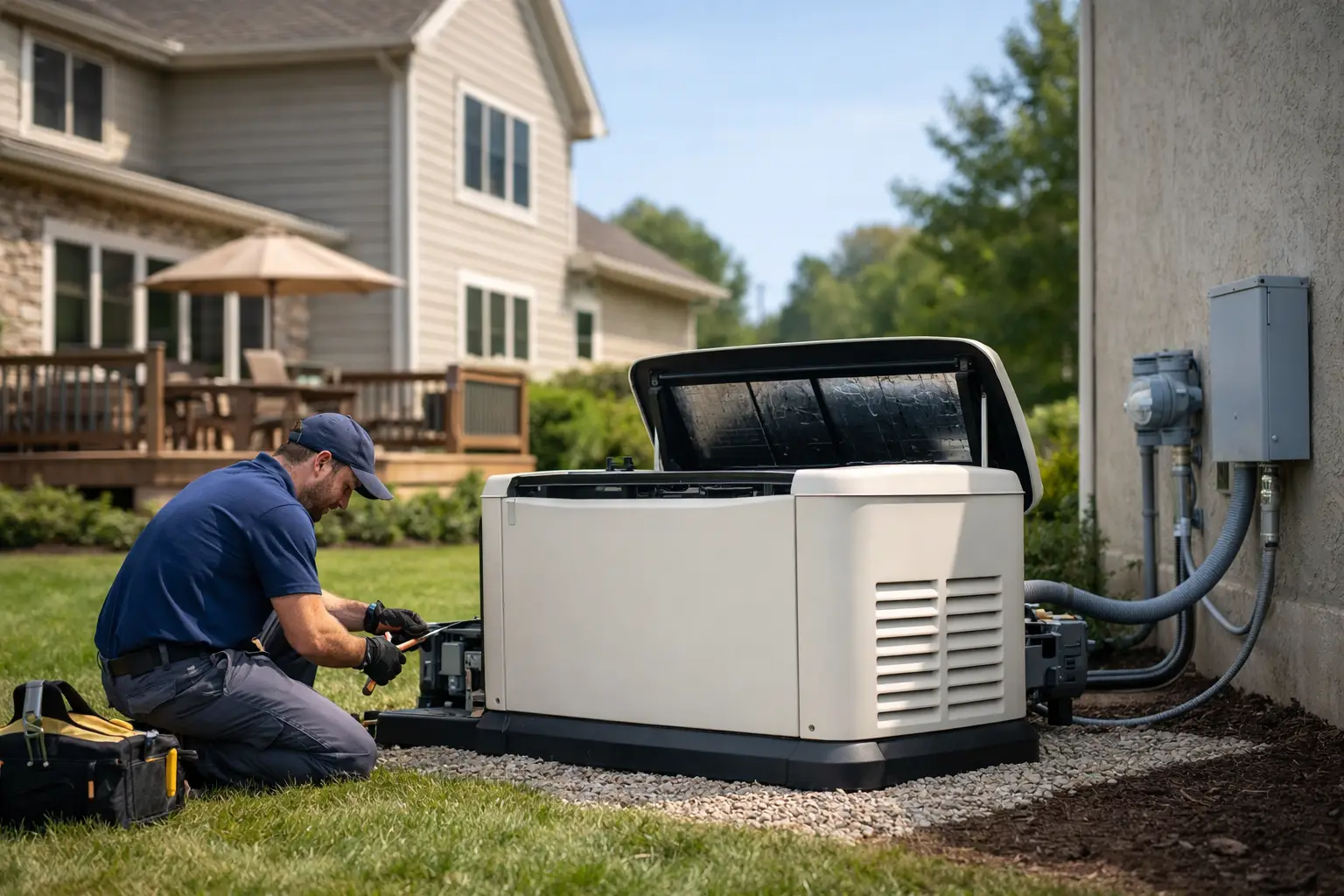
That kind of installation usually includes the generator itself, a transfer switch or automatic transfer switch, electrical connections to the service equipment, and a fuel source such as natural gas or propane. The location matters. The size matters. Even the distance from the panel and gas meter matters, because all of that affects labor, materials, and how cleanly the system can be installed.
A professional electrician should look at your existing panel, confirm available capacity, review the loads you want to back up, and coordinate the generator with the rest of the electrical system. If your panel is outdated or undersized, that may need to be addressed before the generator goes in. That is not upselling. It is what keeps the installation safe and reliable.
How the right generator size gets chosen
One of the biggest mistakes people make is shopping by generator size before they know their actual load. Bigger is not always better. Oversizing can drive up cost without adding much value. Undersizing can leave key circuits offline or cause poor performance when multiple systems start at once.
For a home, the conversation usually starts with priorities. Do you want whole-home backup, or do you want to cover the essentials like HVAC, refrigerator, freezer, lights, internet, garage door, and a few receptacle circuits? If you have electric water heating, an electric range, a well pump, or large HVAC equipment, that changes the calculation fast.
For commercial properties, sizing gets even more specific. A small office has different needs than a retail space, restaurant, or rental property. Refrigeration loads, point-of-sale equipment, security systems, emergency lighting, server equipment, and HVAC all need to be considered. What matters most is not the label on the generator. It is whether the system supports the loads that keep the property functional during an outage.
Installation is about more than the generator
A good generator is only as good as the installation behind it. The transfer equipment is what separates a real backup power system from a risky patch job. This equipment safely disconnects utility power and switches the building to generator power. That prevents dangerous backfeeding, which can damage equipment and create hazards for line workers and occupants.
Placement also matters more than many people realize. The generator needs proper clearance for ventilation, service access, and manufacturer requirements. Noise can be a factor, especially in tighter neighborhoods or near sleeping areas. Fuel line routing has to be handled correctly. The electrical connections need to meet code. Permits and inspections may be required depending on the project and local jurisdiction.
That is why generator work is not a handyman project. It involves serious electrical planning and, in many cases, coordination with other trades. A clean installation should look organized, operate automatically, and give you confidence that the system will respond when utility power goes down.
Cost depends on scope, not just equipment
People naturally want a number when they search for generator installation near me. The hard truth is that cost can vary a lot depending on the property and what you are asking the system to do. A basic installation for essential circuits will cost less than a whole-home or larger commercial standby setup. That part is obvious. What surprises people are the project details that can move the price.
If the panel needs upgrades, the cost changes. If the gas line needs to be extended or upsized, the cost changes. If the generator location requires more trenching, conduit, wire, or site preparation, the cost changes. If permit or inspection requirements add time, that matters too. None of that means the project is too complicated. It just means real pricing comes from a real site evaluation.
That is also why the cheapest quote is not always the best one. If a contractor is not asking about load calculations, transfer equipment, service condition, and fuel supply, they may be leaving out the exact items that determine whether the system works properly.
Why local experience matters
When you hire a local electrical contractor, you are not just hiring someone to connect equipment. You are hiring someone who understands the area, the service demands, and the kind of outages local property owners actually deal with. In and around Bowling Green, customers want straightforward answers, dependable work, and a system that is sized for the way they live or operate their business.
That local factor matters when reviewing panel conditions in older homes, newer power demands like EV chargers and high-draw equipment, and practical placement concerns around existing buildings. It also matters after the installation. If you ever need troubleshooting, maintenance, or support, having a local electrician who stands behind the work makes a difference.
M Power Electric LLC works with homeowners and commercial clients who want backup power done the right way – safely, professionally, and without guesswork.
Signs you are ready to install a generator
Some customers wait until after a bad outage to start planning. Others already know their property cannot afford to be without power. If you have lost refrigeration, gone without heat or air, dealt with a flooded basement because a pump quit, or had business operations stop completely, backup power is no longer a luxury item. It is a practical improvement.
You may also be a good candidate if you are already upgrading your panel, adding major electrical loads, remodeling, or trying to make a property more resilient. Landlords, homeowners, and small business owners often install generators as part of a broader reliability plan. It makes sense to look at the full electrical system while work is already being evaluated.
Questions worth asking before you hire
Before moving forward, ask how the generator will be sized, what loads will be covered, whether your panel is ready, what transfer equipment will be installed, and what maintenance the system will need. You should also ask who handles code compliance and whether the contractor has experience with both residential and commercial installations.
Clear answers matter. You want an electrician who can explain the trade-offs without making the project sound more complicated than it is. For example, whole-home backup sounds great, but many customers are better served by a right-sized system that covers the most important circuits. On the other hand, if you run a business where downtime costs money fast, a larger system may be the smart move.
The right setup depends on your building, your budget, and what has to stay on when the grid goes down. That is the real value in a professional assessment.
A generator should not be an emergency decision made in the dark after the next outage. If you are already searching for generator installation near me, you are at the right point to get answers, evaluate your options, and put a real plan in place before the weather or the utility forces the issue.