

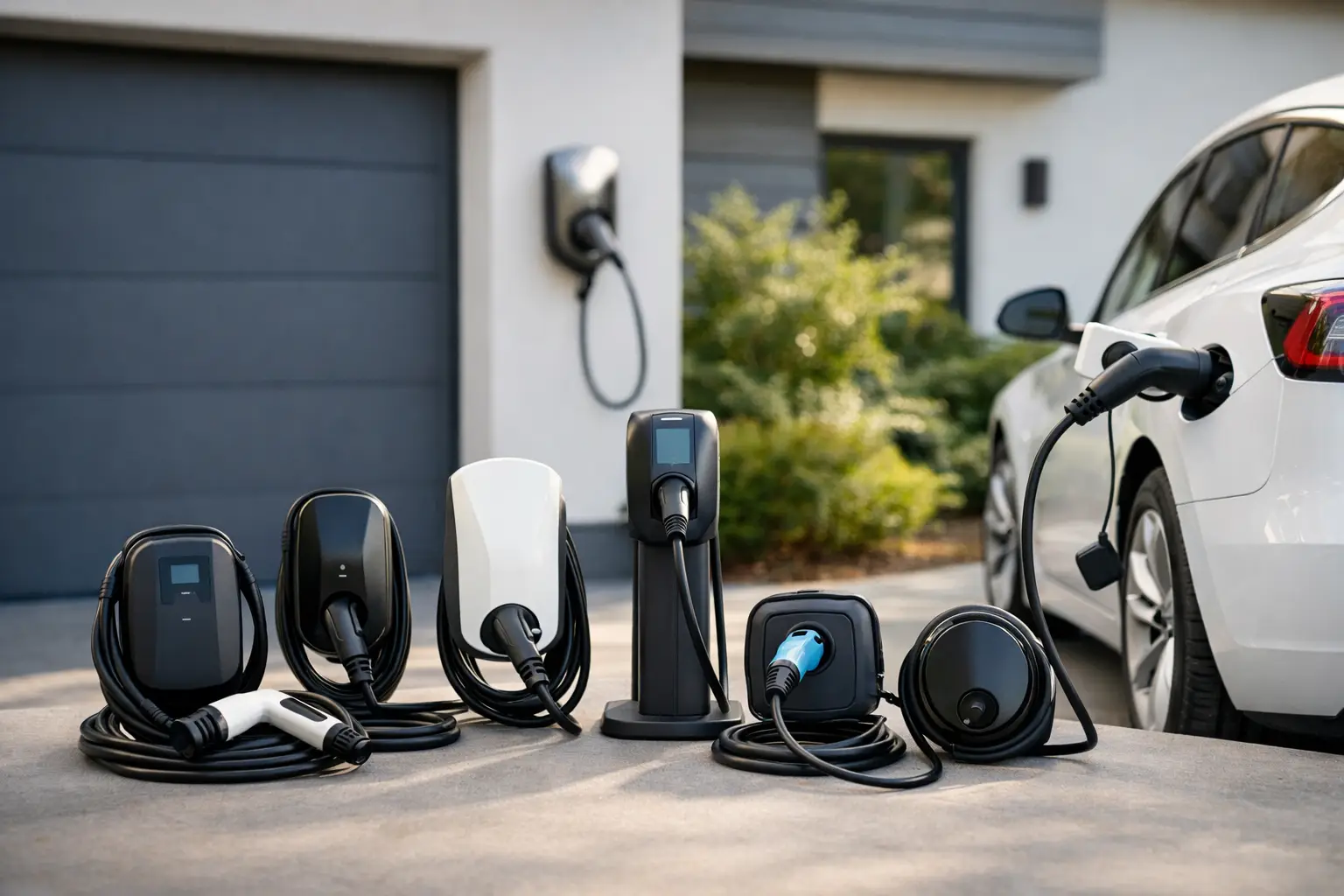
If your garage already has one extension cord too many, adding an electric vehicle is usually the moment that makes charging setup a real project. Homeowners searching for the best EV chargers home buyers can install are usually trying to answer one practical question: what will charge the car reliably, safely, and without creating a bigger electrical problem behind the walls?
That answer depends on more than brand names. The right charger has to match your vehicle, your driving habits, your panel capacity, and the way your home is wired. A charger that looks great on paper can still be the wrong fit if your service panel is full, your garage is detached, or your daily mileage does not justify a higher-amp setup.
What makes the best EV chargers home-ready?
For most homeowners, the best home EV charger is a Level 2 unit. That means 240-volt charging instead of a standard 120-volt wall outlet. Level 1 charging can work in a pinch, but it is slow. If you drive every day, especially for work, school, or regular trips around Bowling Green and the surrounding area, Level 2 is usually the better long-term answer.
The best EV chargers home installations typically share a few traits. They offer dependable charging speeds, solid build quality, straightforward controls, and compatibility with your vehicle. Many also include smart features like app scheduling, energy tracking, and load management. Those can be useful, but they are not mandatory for every household. Sometimes a simpler charger is the smarter buy.
There is also the installation side. A 48-amp charger may sound better than a 32-amp unit, but not every home is set up for that load without upgrades. In some houses, the best value is choosing a charger that fits the existing electrical system instead of forcing a larger project than you actually need.
7 best EV chargers home buyers should consider
1. Tesla Wall Connector
If you drive a Tesla, this is one of the cleanest options available. It charges fast, has a compact design, and works well for homes that want a permanent wall-mounted setup. It is especially appealing if you want the charger and vehicle to communicate smoothly without dealing with adapters every day.
The trade-off is simple. It is best suited for Tesla owners first. If your household may switch vehicle brands later, or if you already have multiple EVs from different manufacturers, you need to think through compatibility before locking in your choice.
2. ChargePoint Home Flex
This unit is popular for a reason. It balances speed, smart features, and broad vehicle compatibility. Homeowners like the app controls, and electricians like that it can be configured for different amperage levels depending on the installation.
That flexibility matters. A charger like this can fit a range of home conditions, which makes it a good option when panel capacity is a concern. It also works well for people who want scheduling tools to take advantage of utility rate changes when available.
3. JuiceBox 40
The JuiceBox 40 is a strong choice for homeowners who want solid charging performance and app-based controls without stepping into the highest-cost tier. It is known for practical smart features and a user-friendly setup once installed.
The main thing to watch is network dependence. If you like connected features, that can be a plus. If you want a charger that stays as simple and stripped-down as possible, it may feel like more technology than you need.
4. Emporia Level 2 Charger
This charger gets attention for delivering good value. It offers strong charging speed, smart controls, and a price point that often lands below some of the more recognized premium brands. For budget-conscious homeowners, that makes it worth a hard look.
Still, lower upfront cost should not be the only factor. The best charger is not automatically the cheapest one. You want long-term reliability, a proper installation, and the right circuit support behind it.
5. Wallbox Pulsar Plus
The Wallbox Pulsar Plus stands out for its smaller footprint and modern control features. If space is tight in your garage or on an exterior wall, that compact design can be a real advantage. It also appeals to homeowners who want more energy-management capability.
This is a good example of a charger that can be excellent in the right setting and unnecessary in another. If you are looking for basic overnight charging and nothing more, you may not use every feature you are paying for.
6. Grizzl-E Classic
This is the straightforward workhorse in the group. The Grizzl-E Classic is known for durable construction and fewer bells and whistles. If your priority is dependable charging in a garage, carport, or exposed weather location, this unit deserves consideration.
For many homeowners, simple is good. You do not always need app controls or detailed reporting. You need the charger to work, hold up, and charge the vehicle safely day after day.
7. Autel MaxiCharger Home
Autel has built a name with a charger that combines strong features with a clean design. It offers smart controls, respectable charging speed, and compatibility with many EV models. It is a practical middle-ground option for buyers who want modern features without getting too specialized.
Like the others, it still has to match the house. A good charger on the wrong circuit is still the wrong setup.
How to choose the right charger for your home
The first question is how much charging speed you really need. If you drive modest daily miles and can charge overnight, a lower-amp Level 2 charger may be plenty. If you have a longer commute or more than one EV at home, a higher-capacity charger may make more sense.
The second question is what your electrical panel can support. This is where many homeowners get tripped up. They shop for the charger first and only later find out the panel is already near capacity, the wiring run is more complicated than expected, or the garage location will require additional work. A charger is only one part of the project. The electrical system has to support it safely.
Mounting location matters too. Indoor garage installations are often more straightforward. Exterior walls, detached garages, and longer distances from the panel can increase labor and material costs. Weather exposure also affects which unit makes the most sense.
Then there is plug-in versus hardwired. Plug-in chargers can offer flexibility, but hardwired installations are often the cleaner and more permanent choice. In many cases, hardwiring is also preferred for higher-amperage charging. That decision should be made with the installation plan in mind, not as an afterthought.
Why installation matters as much as the charger
A lot of the conversation around the best EV chargers home owners buy focuses on apps, speed, and brand reputation. Those things matter, but installation quality matters just as much. An EV charger is a continuous high-load appliance. That means the breaker sizing, wire sizing, panel condition, grounding, and code compliance all need to be right.
This is especially true in older homes. If the service panel is outdated, undersized, or already feeding major loads like HVAC equipment, electric water heaters, or hot tubs, the charger installation may call for a panel upgrade or load calculation first. That is not bad news. It is just the kind of reality that should be addressed upfront instead of after the charger is on the wall.
A proper installation also helps protect your investment. The charger may last for years, but only if the system feeding it is built correctly. That is why homeowners are usually better served by looking at the whole job, not just the product box.
The best choice is the one that fits your house
There is no single charger that wins for every homeowner. Tesla owners may lean toward the Wall Connector. Budget-focused buyers may like Emporia. People who want heavy-duty simplicity may prefer Grizzl-E. Others will want the balance of flexibility and features from ChargePoint, Wallbox, JuiceBox, or Autel.
What matters most is matching the charger to the home, the car, and the electrical system already in place. That is where a lot of bad decisions can be avoided. Buying more charger than you need can waste money. Buying less than your routine requires can become frustrating fast. And skipping the electrical evaluation entirely can turn a simple charging upgrade into a larger correction later.
For homeowners in and around Bowling Green, this is one of those jobs where practical planning beats guesswork every time. A good EV charger should make daily life easier, not create new electrical headaches. Start with how you actually use your vehicle, make sure the house can support the load, and choose a setup that will still make sense a few years from now.