

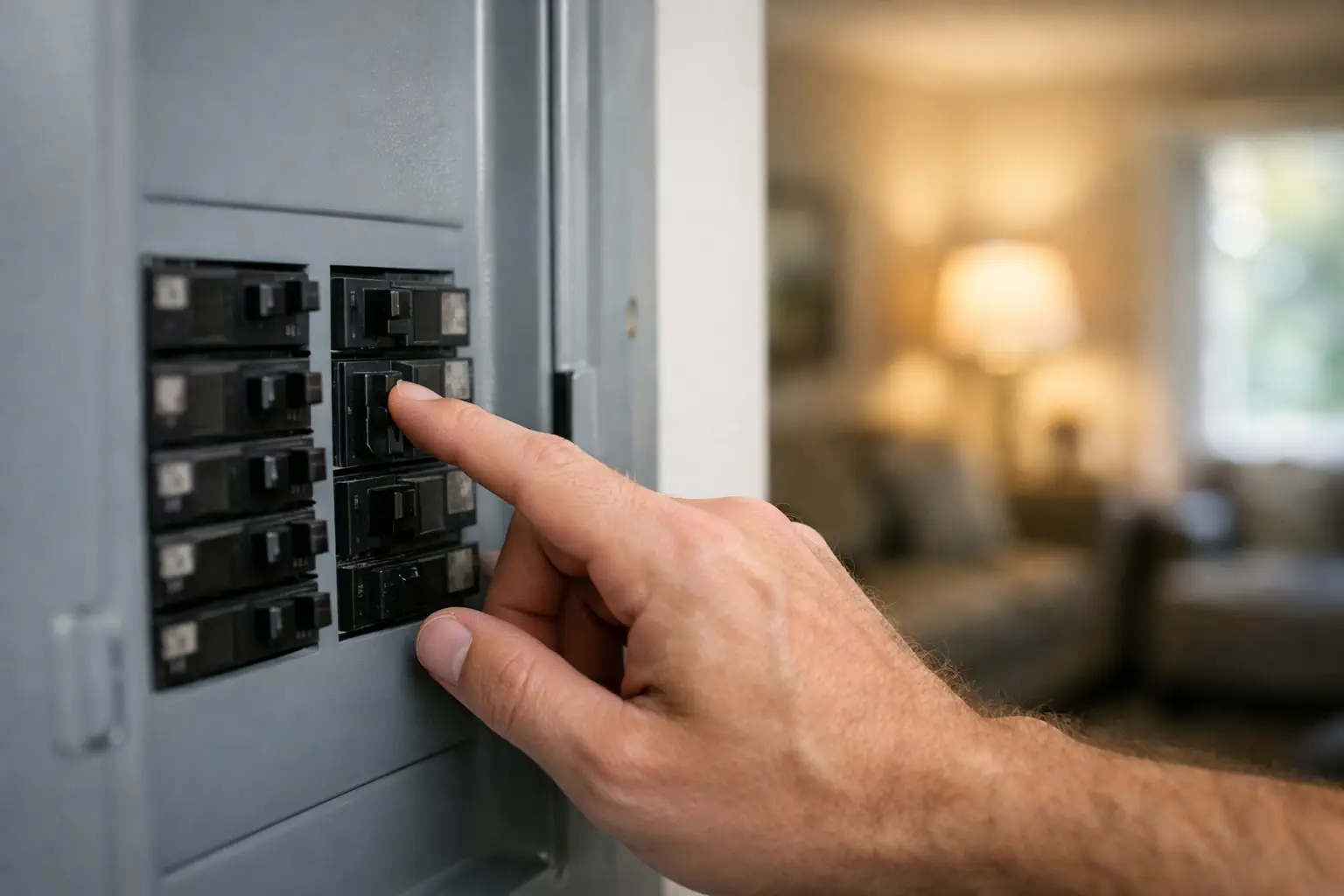
A breaker that trips once after you plug in too much equipment is annoying. A breaker that keeps tripping is your electrical system telling you something is wrong, and it is not a message to ignore. If you are asking why do breakers keep tripping, the short answer is that the circuit is pulling too much current, detecting a fault, or dealing with a wiring issue that needs attention.
Your breaker is a safety device. Its job is to shut power off before wires overheat, equipment is damaged, or a fire starts. That means the tripping itself is not the real problem. The real problem is what is causing it.
Why do breakers keep tripping in the first place?
Most repeated breaker trips come back to three main issues: overloaded circuits, short circuits, and ground faults. There are also cases where the breaker itself is weak or the electrical panel is no longer keeping up with the way the home or building uses power.
An overloaded circuit is the most common and usually the simplest to understand. Every circuit has a limit. When too many lights, appliances, tools, or devices are running on the same line, the breaker trips to protect the wiring. This shows up a lot in older homes where kitchens, garages, or living areas were not designed for modern electrical demand.
A short circuit is more serious. This happens when a hot wire touches a neutral wire or another unintended path. The current spikes fast, and the breaker trips almost immediately. You may notice a pop, a burnt smell, or black marks around an outlet or device. If that happens, stop using that circuit and get it checked.
A ground fault is similar, but in this case the electricity is finding a path to ground. This is especially common in bathrooms, kitchens, garages, exterior outlets, pool equipment, hot tubs, and other damp or wet locations. Ground faults can be dangerous because they increase shock risk, not just damage risk.
Then there is the breaker itself. Breakers do wear out. They are built to trip when needed, but after years of heat cycles and repeated use, some become weak or unreliable. A failing breaker can trip sooner than it should, or it may not hold under a normal load.
The most common causes inside a home
If one breaker keeps tripping and the rest of the panel seems fine, the cause is often tied to what that one circuit serves. In many homes, certain areas are trouble spots because they carry heavier demand.
Kitchens are a good example. Microwaves, coffee makers, toaster ovens, air fryers, and refrigerators all draw meaningful power. If two or three high-load appliances are running on the same circuit, trips can happen even if nothing is technically broken. The same goes for laundry areas where the washer and other equipment share power in a way the circuit was never meant to handle.
Bedrooms and living rooms can also trip breakers, especially in older homes. Space heaters, window AC units, gaming systems, televisions, and power strips can quietly overload a circuit. A lot of people do not realize how much current a portable heater pulls until the breaker reminds them.
Garages and workshops are another common source. Compressors, saws, chargers, freezers, and outdoor equipment can put a lot of strain on a branch circuit. In some cases, the circuit was fine for basic lighting and a few receptacles, but not for modern tool use.
Outside the home, pool pumps, hot tubs, saunas, landscape lighting, and exterior receptacles add another layer of risk because moisture and weather can affect wiring and devices. If a breaker trips when it rains, after heavy humidity, or when outdoor equipment starts up, that points to a fault that needs a proper inspection.
Signs the problem is more than a simple overload
Sometimes the fix is as simple as moving a few devices to a different circuit. Other times, breaker trips are a warning sign of something more serious. The difference matters.
If the breaker trips instantly the moment you reset it, or as soon as a specific switch or appliance is used, there may be a short circuit or ground fault. If you smell burning, hear buzzing, or see discoloration around outlets, switches, or the panel, treat it as a priority. Warm outlets, flickering lights, and intermittent power loss on the same circuit can also point to loose connections or damaged wiring.
Age matters too. Older panels and older branch wiring were not built for the electrical load many homes carry now. If the breaker started tripping after you added a freezer, EV charger, new HVAC equipment, or upgraded kitchen appliances, the system may simply need a dedicated circuit or a panel upgrade.
There is also an it depends factor here. One trip during a heavy-load moment is not the same as repeated trips over several days. A nuisance trip can happen. A pattern should be taken seriously.
Why do breakers keep tripping after you reset them?
If a breaker resets and trips again right away, do not keep forcing it back on. That does not solve the issue, and it can make a dangerous condition worse.
First, unplug or turn off everything on that circuit if you know what it feeds. Then try resetting the breaker once. If it holds, plug items back in one at a time. This can help identify whether one appliance is the trigger. If the breaker trips again with nothing connected, the issue is more likely in the wiring, the breaker, or a hardwired device on that circuit.
For GFCI and AFCI circuits, the cause can be less obvious. These protective devices are designed to trip when they detect certain fault conditions that a standard breaker would not catch. That is a good thing for safety, but it can make troubleshooting more technical. A nuisance trip is possible, but repeated tripping still means something needs to be checked.
When the panel is part of the problem
Not every breaker issue starts at an outlet or appliance. Sometimes the electrical panel itself is outdated, undersized, or showing wear.
If multiple breakers are tripping, if the panel feels warm, if breakers feel loose, or if you have an older panel that has never been updated, the problem may be bigger than one branch circuit. Homes and commercial spaces have changed a lot over the years. More electronics, more appliances, more HVAC demand, more charging equipment. The panel that worked years ago may no longer match the property’s real power needs.
This is especially true when someone adds major equipment without adding proper capacity. EV chargers, generators, hot tubs, and workshop circuits all need careful planning. If those loads are added onto an already full or aging panel, nuisance trips and unsafe conditions become more likely.
What you can check safely
There are a few basic things a property owner can do before calling an electrician, as long as you stay on the safe side and do not open the panel or start taking devices apart.
Pay attention to when the breaker trips. Does it happen when a certain appliance starts? During rain? Only at night when several things are running? If you can connect the trip to a pattern, that helps narrow down the cause.
You can also reduce the load on the circuit by unplugging portable devices and avoiding extension cords or overloaded power strips. If a single high-draw appliance is involved, stop using it until it can be tested. An appliance with an internal fault can trip a breaker just as easily as bad wiring can.
What you should not do is replace a breaker with a larger one, ignore repeated trips, or keep resetting it over and over. The breaker size is matched to the wire size. Oversizing the breaker can let the wire overheat before the breaker reacts.
When to call a professional electrician
If a breaker trips more than once, that is enough reason to pay attention. If it trips repeatedly, trips immediately, or shows any sign of heat, burning, buzzing, or visible damage, it is time to bring in a licensed electrician.
A proper diagnosis may involve checking load calculations, testing the breaker, inspecting receptacles and switches, evaluating GFCI or AFCI protection, and tracing wiring issues that are hidden behind walls or in attics, crawl spaces, and exterior runs. This is where experience matters. Guessing is not a repair plan.
For homeowners and business owners in Bowling Green and surrounding counties, this is the kind of problem that needs a direct, skilled approach. M Power Electric LLC handles troubleshooting, panel work, dedicated circuits, and electrical upgrades built to solve the actual cause instead of masking the symptom.
A breaker that trips is doing its job. Your job is to listen to what it is telling you before a small electrical problem turns into a bigger one.