

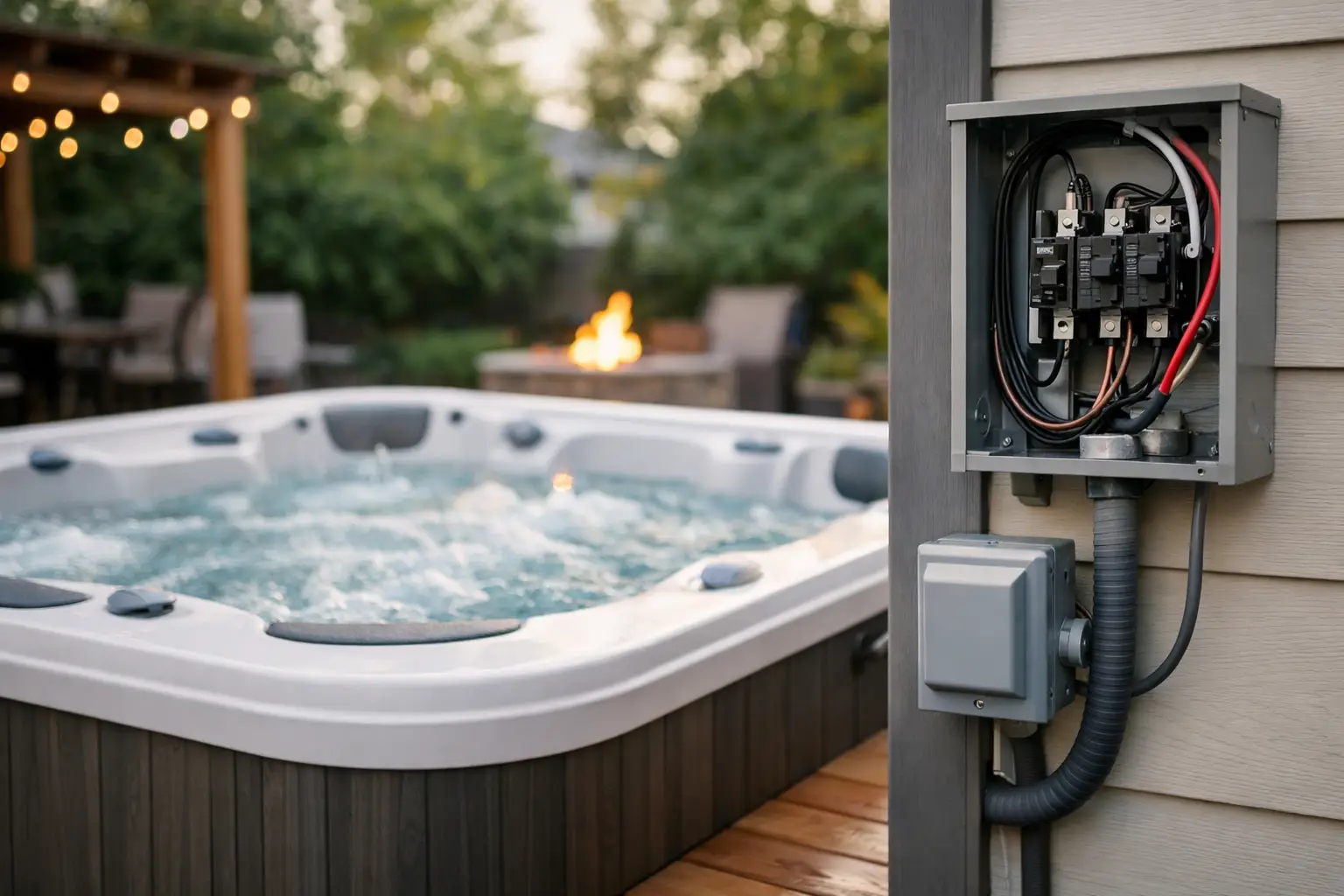
A hot tub is one of those upgrades that feels simple until the electrical work starts. If you are planning a spa install, the dedicated circuit for hot tub power is not a small detail – it is the part that protects your equipment, your home, and the people using it.
Most hot tubs cannot share power with lights, outlets, or other backyard equipment. They draw serious amperage, especially when the heater, pumps, and controls run at the same time. That is why a proper circuit, correct breaker, GFCI protection, and code-compliant wiring matter from day one.
Why a dedicated circuit for hot tub power matters
A dedicated circuit means the hot tub has its own electrical path back to the panel. Nothing else is tied into it. That setup helps prevent overloads, nuisance tripping, voltage drop issues, and heat buildup in the wiring.
For a hot tub, this is not just about performance. It is about safety. Water and electricity are a dangerous mix, and spas are built with strict electrical requirements for a reason. If a tub is wired onto a shared circuit or fed with the wrong breaker size, the problem may not show up right away. You might only notice it when the heater cuts off, the breaker trips during use, or the equipment starts failing earlier than it should.
A dedicated line also helps the manufacturer’s system work the way it was designed. Modern hot tubs often rely on steady power for pumps, electronic controls, circulation systems, and heating elements. Inconsistent power can create frustrating issues that look like equipment failure when the real cause is bad wiring.
What size circuit does a hot tub usually need?
It depends on the model. That is the honest answer. Portable hot tubs often require either a 120-volt 15- or 20-amp circuit or, more commonly, a 240-volt 50- or 60-amp circuit. Larger tubs with stronger pumps, bigger heaters, or added features may need more capacity than a smaller plug-and-play unit.
The manufacturer’s installation instructions should always drive the final circuit size. Guessing is where trouble starts. A tub may physically turn on with the wrong setup, but that does not mean it is safe or code-compliant.
In many residential installs, a 240-volt GFCI-protected circuit is the standard setup. That gives the hot tub enough power to run heating and jet functions without sacrificing performance. A smaller circuit may work on paper for certain units, but it can limit how the system operates. Some tubs on lower-powered setups cannot heat and run jets at full output at the same time.
That trade-off matters if you are paying for a spa experience and ending up with reduced performance because the electrical service was undersized.
GFCI protection is not optional
If there is one part homeowners should not cut corners on, it is GFCI protection. Hot tubs require ground-fault protection because they operate in wet conditions where shock risk is higher. A GFCI breaker or disconnect is designed to trip quickly if it detects current going where it should not.
That protection can save lives. It can also help protect your investment from electrical faults that damage internal components.
Proper placement matters too. The disconnect must be installed in the correct location based on code and manufacturer requirements. Too close can create a hazard. Too far can create service and compliance problems. This is one reason hot tub wiring should be treated as a specialty installation, not a weekend shortcut.
The panel has to be able to support the load
A dedicated circuit for hot tub equipment is only part of the job. The electrical panel has to have enough capacity for that new demand. In some homes, especially older ones, the panel may already be near its limit. Adding a 50- or 60-amp spa circuit without reviewing the full load can create bigger problems than the hot tub itself.
This is where a licensed electrician looks at the real picture. Is there physical space in the panel for the breaker? Is the service sized appropriately for the home’s current demand? Are there existing issues like double-tapped breakers, outdated equipment, or corrosion that need to be addressed before adding a major load?
Sometimes the hot tub install is straightforward. Other times it exposes a panel that is overdue for an upgrade. That is not upselling. That is making sure the system can safely support what you are asking it to do.
Distance and location affect the installation
Not every hot tub wiring job is the same. The distance from the panel to the spa affects wire size, routing, labor, and overall cost. A tub installed just outside the house on a nearby patio is one thing. A tub placed across the yard, near a detached structure, or on a new concrete pad is another.
Outdoor conditions matter too. Wiring methods must match the environment. That can include conduit type, burial depth, weatherproof fittings, disconnect placement, and bonding requirements. If the spa is near a pool, deck structure, metal fencing, or other equipment, the installation may call for added attention to grounding and bonding details.
These details are not extras. They are part of doing the job right so the hot tub operates safely through changing weather and regular use.
Permits and code compliance are worth it
Some property owners are tempted to skip permits or hire whoever offers the lowest price. That can get expensive later. Hot tub wiring is one of those jobs where code compliance matters for safety, inspections, insurance questions, and future home sales.
If the installation is done without proper permitting or to the wrong standard, you may end up paying twice – once for the original work and again to correct it. Improper electrical work around a spa can also create liability issues for landlords and property owners.
A professional installation gives you a clear path. The circuit is sized correctly, the protection is in place, and the work is done to current code requirements. That is the kind of job that holds up.
Common mistakes with hot tub circuits
The most common mistakes are predictable. People assume any outdoor circuit will do the job. They use the wrong breaker size, skip GFCI protection, undersize conductors, install the disconnect in the wrong place, or try to pull power from an already-loaded subpanel.
Another issue is buying the hot tub first and thinking about electrical second. That can create delays if the selected model needs more power than the home can currently provide. A little planning up front usually saves time and frustration.
There is also the problem of partial operation. A homeowner may say the tub powers on, so the wiring must be fine. But if the system cannot heat properly, trips under load, or shuts down when multiple functions run, the circuit may still be wrong.
When to bring in an electrician
If you are adding a new hot tub, replacing an old one with a different model, upgrading a panel, or installing a spa at a rental or commercial property, bring in an electrician early. Waiting until the tub is delivered can back you into rushed decisions.
A qualified electrician can verify the manufacturer requirements, evaluate panel capacity, plan the circuit path, and install the disconnect and protection correctly. If there are issues with existing service equipment, those can be identified before the project stalls.
For homeowners in Bowling Green and surrounding counties, this is the kind of work that deserves a dependable local contractor who handles specialty electrical installations with the same care as panel upgrades, generators, and EV chargers. M Power Electric LLC works on practical electrical problems every day, and hot tub wiring is one of those jobs where solid workmanship matters more than talk.
A safer install starts before the first soak
A hot tub should help you relax, not make you wonder whether the breaker will trip or the wiring was done right. The right dedicated circuit for hot tub use gives you safer operation, better performance, and fewer problems down the road. If you are planning an install, the smartest move is to treat the electrical side as part of the project from the start, not as an afterthought.