

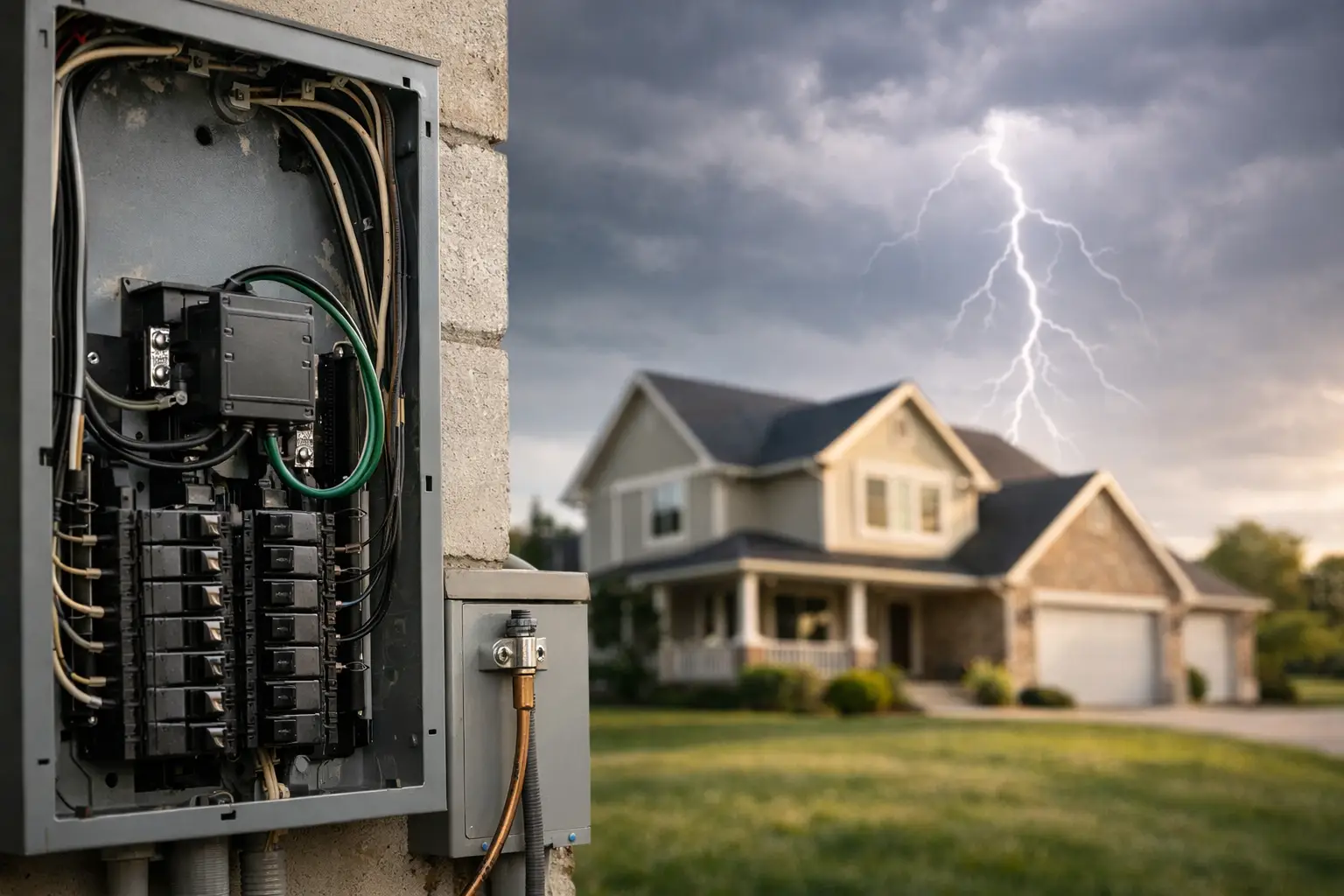
A power surge usually lasts a split second. That is all it takes to damage a refrigerator control board, knock out a garage door opener, shorten the life of an HVAC system, or ruin expensive electronics throughout the house. That is why whole house surge protection is not just an add-on anymore. For many homes and small commercial properties, it is a smart layer of protection at the panel where it counts most.
If you have ever replaced a microwave, modem, TV, or appliance after a storm and wondered what happened, a surge is a likely suspect. Some surges come from outside the home, often from utility switching or lightning activity nearby. Others start inside the building when large equipment cycles on and off. Air conditioners, dryers, refrigerators, and even some shop tools can create smaller repeated surges over time. One major event can cause immediate failure. The smaller ones are often harder to spot because they chip away at electronics slowly.
What whole house surge protection does
Whole house surge protection is installed at or near your main electrical panel. Its job is to intercept excess voltage and direct it safely away from your electrical system before that surge spreads through branch circuits and reaches connected devices. Think of it as the first line of defense for the home’s wiring and the equipment attached to it.
This kind of protection matters because modern homes run on far more sensitive electronics than they used to. It is not just computers and TVs anymore. Today’s ovens, washers, dryers, tankless water heaters, HVAC systems, security systems, smart thermostats, and EV charging equipment all depend on control boards and electronic components. Those parts are efficient, but they are also more vulnerable.
A whole house surge protector does not replace point-of-use surge strips entirely. It works with them. The panel-mounted device helps stop larger incoming surges, while quality surge strips can provide another level of protection for especially sensitive electronics. That layered approach usually makes the most sense.
Why whole house surge protection matters in real homes
In Bowling Green and surrounding areas, weather is part of the equation. Strong storms and unstable conditions can put extra stress on electrical systems. But weather is only one reason to consider protection. Everyday power fluctuations and internal load changes can be just as hard on your equipment over time.
A lot of homeowners assume surge protection is mostly about lightning. That is only part of the story. A direct lightning strike can overwhelm many systems, and no electrician should promise otherwise. But many damaging surges are smaller and more common than people realize. Those are exactly the kind of events whole house surge devices are designed to help manage.
For landlords and commercial property owners, the value is also practical. Downtime costs money. Replacing controls in HVAC equipment, office electronics, gate systems, or refrigeration equipment can become a much bigger issue than the cost of installing protection in the first place. It is one of those upgrades that tends to look cheap after the first avoided repair.
What it protects and what it does not
Whole house surge protection helps protect major appliances, built-in systems, and general household electronics connected to the electrical system. That includes things like your air conditioner, furnace, washer, dryer, dishwasher, range, garage door opener, and many plug-in devices throughout the home.
That said, there are limits. It does not fix poor grounding, bad wiring, outdated panels, or overloaded circuits. In fact, the surge protector works best when the electrical system itself is in good shape. If the panel is outdated, undersized, or has grounding issues, those problems should be addressed too.
It also does not mean every device is guaranteed against every possible event. Surge protection lowers risk. It is not magic. The quality of the device, the way it is installed, the condition of the panel, and the type of surge all matter.
Signs your property should have whole house surge protection
If your home has newer appliances, smart devices, or expensive electronics, protection is worth serious consideration. The same goes for homes with HVAC upgrades, home offices, entertainment systems, sump pumps, garage equipment, or EV chargers. The more electronics you depend on, the more there is to lose.
You should also pay attention if you have noticed flickering lights, recently had storm-related electrical issues, or replaced electronic equipment for no clear reason. Those signs do not always point directly to surge damage, but they can suggest that the system is seeing more stress than it should.
Older homes can especially benefit if they have been updated over the years with modern equipment but still rely on aging electrical infrastructure. Many houses were not built for the amount of sensitive electronics people use now.
Where it gets installed and why installation matters
A whole house surge protector is typically installed at the main service panel or sometimes at a subpanel, depending on the setup. Placement matters because the goal is to stop the surge as close to the source as possible. Proper installation also depends on panel compatibility, available space, correct breaker configuration, and a sound grounding and bonding system.
This is not a handyman job. Incorrect installation can leave the device ineffective or create safety issues at the panel. A licensed electrician should evaluate the panel, verify grounding, and install a properly rated device that fits the building’s electrical demands.
This is also a good time to look at the overall condition of the service. In some cases, surge protection is straightforward. In others, the electrician may find that the panel needs upgrades or that the grounding system needs correction first. That is not a sales tactic. It is how you make sure the protection can actually do its job.
Choosing the right device
Not all surge protectors are equal. Homeowners often see big claims on packaging and assume all protection is basically the same. It is not. Device ratings, response characteristics, durability, and manufacturer quality all play a role.
A professional will usually look at factors like the size of the electrical service, the type of property, and the equipment inside the building. A house with standard appliances has different needs than a property with a standby generator, workshop loads, or an EV charger. The best fit depends on the whole system, not just on buying the most expensive unit on the shelf.
This is one reason local service matters. A qualified electrician who works on homes and small commercial systems every day can match the protection to the property instead of guessing.
Whole house surge protection and insurance thinking
A lot of people only think about surge protection after something fails. That is normal, but it is also backward. This upgrade works best when you treat it like prevention, the same way you think about smoke alarms, GFCI protection, or routine HVAC maintenance.
The cost of replacing one control board can be significant. Replacing multiple appliances or dealing with hidden damage after a storm can be much worse. Even when insurance helps, there is still the hassle of claims, delays, deductibles, and the inconvenience of equipment being down. Protection at the panel is one of the cleaner ways to reduce that risk.
When to ask an electrician about it
The best time to add whole house surge protection is often during other electrical work. If you are upgrading a panel, adding a generator connection, installing an EV charger, or making service improvements, it makes sense to ask about surge protection at the same time. It is also worth considering if you recently bought a home, completed a remodel, or added expensive appliances.
If you are not sure whether your current setup includes protection, have it checked. Some homes have older devices that may no longer offer dependable performance, and some have none at all. A quick professional evaluation can tell you what you are working with.
For property owners who want practical protection without overcomplicating the issue, this is one of the more sensible upgrades available. M Power Electric LLC helps homeowners and businesses in the Bowling Green area make these decisions based on the actual condition of the electrical system, not guesswork.
Good electrical work is about reducing risk before risk turns into damage. Whole house surge protection fits that mindset. If your home or building depends on modern equipment, protecting the system at the panel is a solid step toward keeping everything running the way it should.