
If your lights dim when the HVAC kicks on, your breaker trips when you run the microwave and toaster together, or you’re planning an EV charger, the phrase electrical panel upgrade rebate starts to matter fast. A rebate can help offset part of the cost, but the bigger issue is whether your current panel is safe, adequate, and ready for the load you need today.
For many property owners in Bowling Green and nearby areas, panel upgrades stop being optional when a house or building starts showing its age. Older electrical systems were not designed for modern demand. Between larger appliances, home offices, electric vehicle charging, hot tubs, backup power setups, and added square footage, the panel often becomes the bottleneck.
What an electrical panel upgrade rebate actually covers
An electrical panel upgrade rebate is usually a financial incentive tied to improving the capacity or readiness of your electrical service. In some cases, the rebate is connected to an energy-efficiency program. In others, it is part of a utility, state, or federal incentive structure designed to support electrification, EV charging, or other upgrades that require a stronger electrical foundation.
That means the rebate usually does not exist in a vacuum. It is often tied to a larger project, like installing a Level 2 EV charger, replacing fossil-fuel equipment with electric appliances, or bringing service capacity up to a level that supports new electrical loads safely. Some programs may focus on panel replacement. Others may cover load management equipment or service upgrades only under specific conditions.
This is where people get tripped up. They hear “rebate” and assume every panel replacement qualifies. That is not always the case. Eligibility often depends on who is offering the program, what equipment is being installed, your income level, the age and condition of the existing service, and whether the work is done by a licensed electrician.
Why panel upgrades are getting more attention
A decade ago, many homes could get by with less. Today, electric demand is climbing. An older 100-amp panel may still function, but function is not the same as being prepared. If you’re adding an EV charger, generator interlock, heat pump, or new circuits for a remodel, your panel may not have the space or the capacity.
A rebate helps with cost, but it does not change the technical reality. The right question is not just “Can I get money back?” It is “What does my property need to operate safely and reliably?” If the answer is a panel upgrade, the rebate is a bonus, not the reason to cut corners.
Common situations where a rebate may apply
The most common scenario is an EV charger installation. A lot of homeowners start by shopping for the charger, then find out the panel cannot support the added load. Some rebate and incentive programs recognize that problem and include panel upgrades as part of making the home EV-ready.
Another scenario is whole-home electrification. If a homeowner is replacing gas appliances with electric equipment, the panel may need to be upgraded to handle the change. There are also cases where older panels need replacement because they are unsafe, obsolete, or no longer serviceable, though pure safety-based replacements do not always qualify for rebate money unless they tie into a broader program.
Commercial properties can run into similar issues. A small office, retail space, or rental property may need more capacity for equipment, tenant build-outs, or code-compliant improvements. Rebates in commercial settings tend to be more program-specific, so the paperwork and requirements can be stricter.
Electrical panel upgrade rebate rules vary more than people expect
This is the part that frustrates property owners. There is no single nationwide rulebook that applies to every panel upgrade. Rebates and incentives change by location, utility provider, program funding, and timing. One program may require pre-approval before work begins. Another may only reimburse specific equipment. Another may have income limits or inspection requirements.
You also need to separate rebates from tax credits and financing programs. They are not the same thing. A rebate is usually money back or a direct reduction tied to a specific program. A tax credit may help later, when taxes are filed, if the work meets the applicable rules. Financing can make a project affordable, but it is not a rebate.
That is why guessing is expensive. If you replace a panel first and ask questions later, you may miss a pre-approval requirement and lose the incentive altogether.
How to approach a panel upgrade the smart way
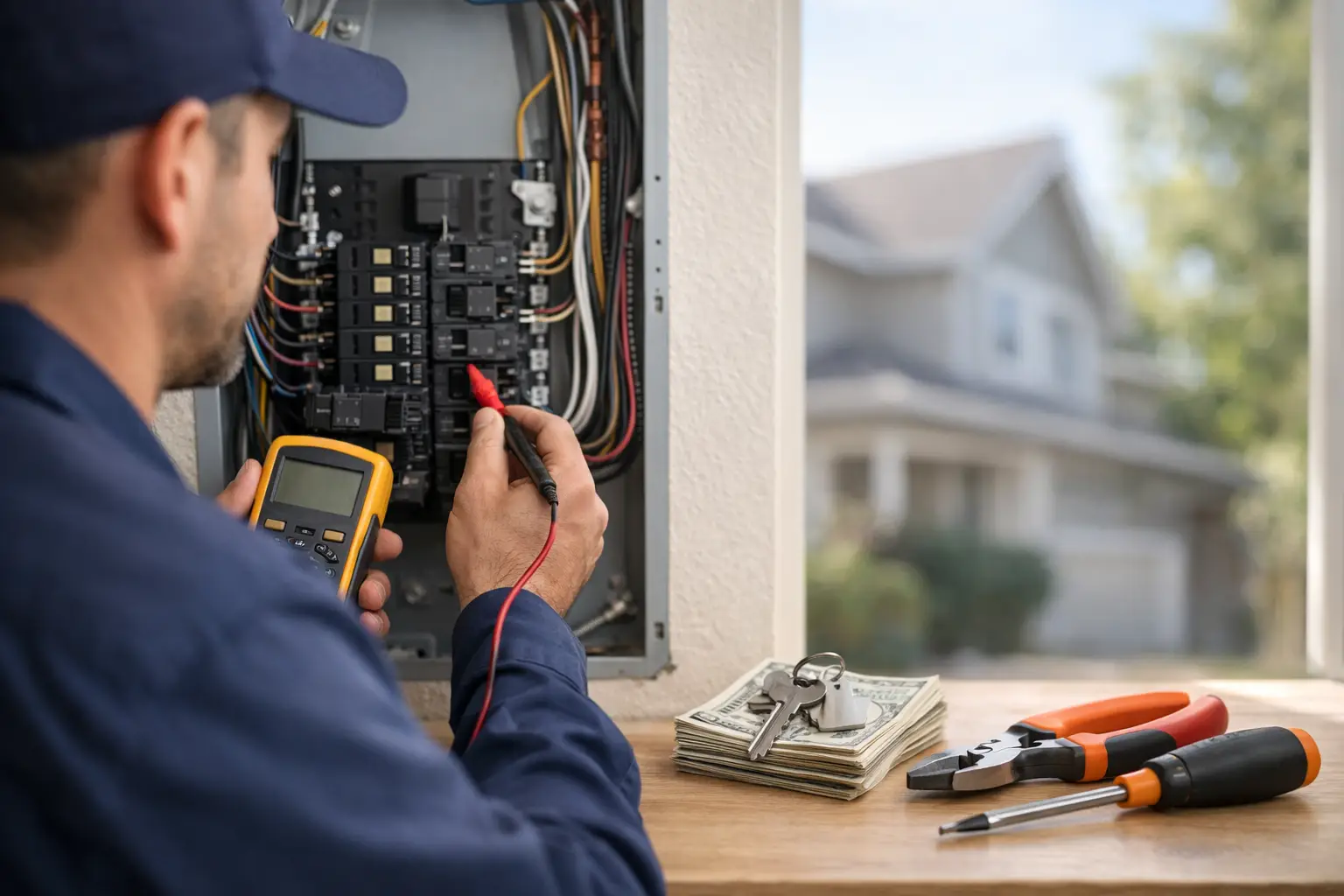
Start with the actual electrical need. If your panel is outdated, undersized, overloaded, or showing warning signs, get it evaluated by a licensed electrician. A proper assessment looks at service size, panel condition, breaker space, grounding and bonding, code issues, and the load from existing and planned equipment.
Once you know what the property needs, then look at rebate eligibility. That order matters. A safe, code-compliant installation should drive the scope of work. The incentive should support the project, not dictate it.
It also helps to be realistic about what a panel upgrade includes. Sometimes it is a straightforward panel replacement. Sometimes it involves meter work, service entrance upgrades, grounding improvements, permit requirements, and coordination with the utility. If you are planning additional work like an EV charger or generator connection, that should be accounted for upfront instead of added as an afterthought.
Signs your panel may need an upgrade even without a rebate
A rebate can make a project easier to justify, but it should not be the only reason you act. If breakers trip frequently, the panel feels warm, there are signs of corrosion, circuits are overloaded, or the property still relies on outdated equipment, those are warning signs. The same is true if you are relying heavily on extension cords or power strips because the existing electrical system cannot keep up.
Age alone does not automatically mean failure, but older panels deserve a closer look. Some obsolete or problematic panel brands have well-known safety concerns. Even when a panel is not immediately dangerous, it may still be a poor fit for current electrical demand.
For landlords and commercial property owners, delay can get expensive. Tenant complaints, nuisance tripping, limited expansion capacity, and insurance concerns can all point back to the panel. Waiting for a full failure usually costs more than addressing the issue before it escalates.
What to ask before moving forward with an electrical panel upgrade rebate
Before any work starts, ask whether the project qualifies for a rebate, whether pre-approval is required, what equipment standards apply, and what documentation must be submitted. You should also ask whether the rebate applies to labor, equipment, or both.
On the electrical side, ask what service size makes sense for your current and future needs. A property owner trying to save money by installing the minimum acceptable panel may end up paying twice if an EV charger, generator, or major appliance is added a year later. Bigger is not always better, but planning ahead usually is.
If you’re working with a contractor, make sure the scope is clear. Panel upgrades are not a place for vague estimates. You want to understand whether permit and inspection requirements are included, whether utility coordination is needed, and whether any additional code corrections may be required once the work begins.
Safety, code, and workmanship matter more than incentive money
The truth is simple. An electrical panel is not a cosmetic upgrade. It is the control center of the property’s electrical system. If it is undersized, outdated, or improperly installed, every connected circuit is affected.
That is why the cheapest bid is not always the lowest-cost decision. A proper panel upgrade should be done cleanly, safely, and up to code, with the right sizing for the property and the right planning for future use. If a rebate applies, great. If not, the work still has to be done right.
For local homeowners and business owners, that means working with an electrician who handles panel upgrades regularly and understands how these projects connect to EV chargers, generators, remodels, and modern load demands. M Power Electric LLC works with customers who need practical answers and solid electrical work, not guesswork.
The rebate is helpful, but the real value is capacity and peace of mind
A good electrical panel upgrade rebate can reduce upfront cost, and that matters. But the long-term value comes from a safer, more dependable system that supports how you actually use the property. No flickering lights. No overloaded circuits. No wondering whether the next upgrade is going to push the system too far.
If you’re considering a panel upgrade, treat the rebate as one part of the decision, not the whole decision. The real goal is a system that is ready for today’s load and tomorrow’s plans. That is money better spent, whether a rebate is attached or not.