
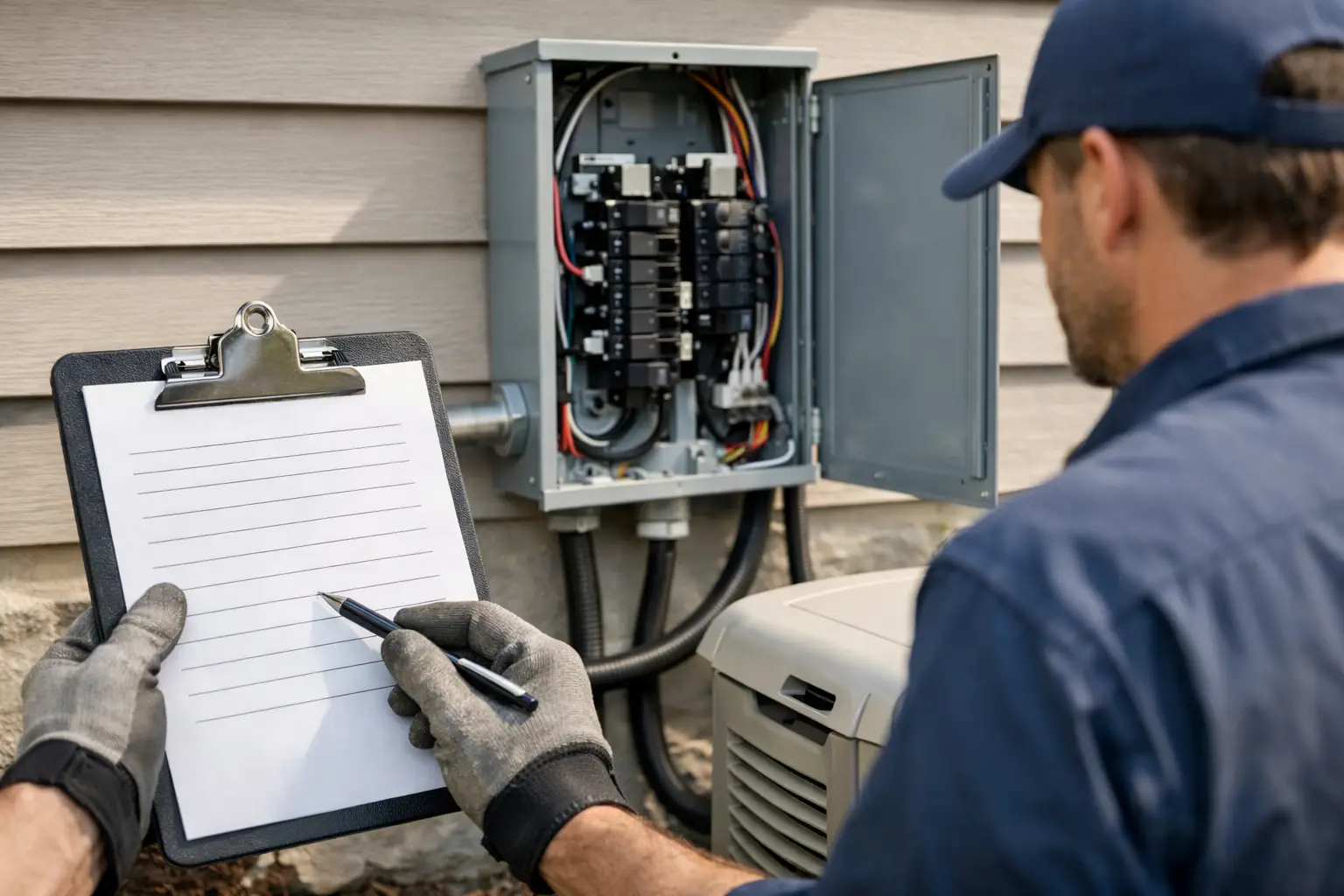
When the power goes out, a generator is only half the job. If the transfer switch is installed wrong, labeled poorly, or matched to the wrong load, backup power can turn into a safety problem fast. That is why a generator transfer switch installation review checklist matters – it helps homeowners and business owners confirm the system is safe, code-compliant, and ready to perform when it counts.
Why this review matters before you rely on backup power
A transfer switch does one critical job: it moves your electrical load from utility power to generator power without unsafe backfeeding. That sounds simple, but the real-world installation has a lot of moving parts. The electrician has to match the switch type to the generator, verify panel capacity, separate critical loads correctly, and make sure grounding and bonding are handled the right way for that specific setup.
This is where people get tripped up. Two systems can look similar on the wall and still be wired very differently. A manual transfer switch, an automatic transfer switch, and a service entrance rated setup each bring different installation details. The right review is not about checking a single box. It is about confirming that the equipment, wiring, labeling, and operation all work together safely.
Generator transfer switch installation review checklist basics
Start with the equipment match. The transfer switch should be rated for the generator and the loads it is intended to serve. That means checking amperage, voltage, phase where applicable, and whether the switch is designed for manual or automatic operation. If the generator can supply only selected circuits, the switch should reflect that design instead of pretending the whole building is covered.
The next point is location and accessibility. The switch should be mounted securely, with proper working clearance around it. If someone needs to operate it during an outage, they should be able to reach it safely and read the markings without guessing. Installations tucked into cramped corners or blocked by storage can create problems during the exact moment you need the system most.
Wiring quality matters just as much as the equipment itself. Conductors should be sized correctly, terminated cleanly, and protected in the proper raceway or cable method for the installation. Sloppy routing, loose terminations, or mixed-up circuit identification can lead to overheating, nuisance issues, or dangerous operation later on.
Service panel and load review
A good installation review always comes back to load planning. Many generator complaints are not equipment failures at all – they are load management problems. If the homeowner expects central air, refrigeration, lights, a well pump, and kitchen circuits to run at the same time, the generator and transfer switch setup has to be designed around that expectation.
For smaller standby or portable generator systems, the switch may only feed selected essential circuits. In that case, the review should confirm that those circuits are clearly identified and actually match the customer’s priorities. Refrigerators, freezers, sump pumps, heating equipment, medical devices, security systems, and a few lighting circuits are common picks. If the transfer switch includes circuits the customer does not care about while leaving out the ones they do, the installation may be technically functional but practically wrong.
The panel review should also confirm there is no confusion between generator-fed circuits and utility-only circuits. Good labeling saves time, avoids mistakes, and helps anyone servicing the system later. It also helps the property owner understand what will and will not stay on during an outage.
Safety checks that should never be skipped
Backfeed protection is the first non-negotiable item. The transfer switch must positively prevent generator power from feeding back into utility lines. This protects utility workers, protects the building, and keeps the installation aligned with code requirements. If there is any question about whether the isolation method is correct, the system needs a closer review before use.
Grounding and bonding are another area where details matter. The correct setup depends on the generator type and whether the neutral is switched. That is not guesswork territory. A review should confirm that grounding electrode connections, equipment grounding conductors, and neutral handling are all appropriate for the specific equipment design.
Overcurrent protection should also be verified. Breakers and disconnects need to be sized and located correctly for both the generator source and the circuits served. This is especially important on retrofits where new generator equipment is being tied into an older panel. Older service equipment may have limitations that affect how the transfer switch can be installed.
Then there is labeling. Every transfer switch installation should have clear operating instructions, source identification, and circuit marking where needed. In an outage, nobody wants to operate electrical equipment based on memory or guesswork.
Operational testing is part of the checklist
A transfer switch installation is not really reviewed until it is tested. Visual checks are necessary, but they do not replace operation under realistic conditions. The switch should be cycled properly to confirm it transfers as intended, returns to utility power correctly, and does not create unexpected interruptions or alarms.
For manual transfer switches, the review should make sure the operation is straightforward for the property owner. If the handle movement, breaker sequence, or startup process is confusing, that should be addressed before the next outage. The best setup is not just safe on paper – it is usable when the lights are out and stress is high.
For automatic systems, timing and behavior matter. The transfer delay, generator startup, retransfer to utility, and cooldown cycle should all be reviewed. If the system is set too aggressively or too slowly for the application, it may not perform the way the owner expects. A small business, for example, may have very different backup power priorities than a single-family home.
What homeowners and property managers should ask during the review
You do not need to know electrical code to ask good questions. Ask which circuits are covered, what the generator can realistically carry, and what happens if demand exceeds capacity. Ask whether the neutral switching method is correct for the generator being used. Ask how the system should be operated, how often it should be tested, and what maintenance schedule applies.
It is also smart to ask whether the installation leaves room for future changes. Maybe today you only want key circuits backed up, but next year you plan to add a larger generator, an outbuilding feed, or HVAC support. A professional and reliable installation should take both current needs and likely upgrades into account.
For commercial properties and multi-unit settings, ask how outage priorities were chosen. Critical refrigeration, office network gear, emergency lighting, gate controls, or tenant-essential loads may need to be reviewed differently than standard residential loads. The best electrician will not treat every transfer switch the same because every building uses power differently.
Common issues a checklist can catch
Some problems are obvious, like missing labels or loose conduit fittings. Others show up only when someone reviews the full installation carefully. One common issue is an oversized expectation on an undersized generator. Another is a transfer switch feeding circuits that were never supposed to be part of the backup plan.
There can also be compatibility issues between older service panels and newer transfer equipment. In some cases, the generator installation is fine, but the panel itself is outdated or lacks the space needed for a clean, code-compliant connection. That may turn the project into a larger electrical upgrade, but catching it early is better than forcing a risky workaround.
Improper placement is another real concern. Outdoor components need the right rating for weather exposure, and indoor components still need proper clearance and protection from damage. A neat-looking installation is not always a correct one.
When a professional review makes the most sense
If the system is brand new, a final installation review gives peace of mind before the first outage. If the equipment was installed years ago and has not been tested lately, a review can uncover wear, labeling issues, or changes in load needs. It is also worth scheduling a review after service panel upgrades, generator replacement, or building renovations that changed how power is used.
In Bowling Green and surrounding counties, backup power is not just a convenience for many properties. It protects food, comfort, business operations, and in some cases health and safety. That is why many customers want a trained electrician to look at the whole setup instead of only the generator itself.
At M Power Electric LLC, we cover all of your electrical needs, including generator-related work that has to be done safely and correctly. A proper transfer switch review is part of making sure your backup power system is ready when you need it, not after something goes wrong.
If you are planning a generator install or want an existing setup checked, treat the transfer switch like the heart of the system, not an accessory. A careful review now can save a lot of trouble later.