

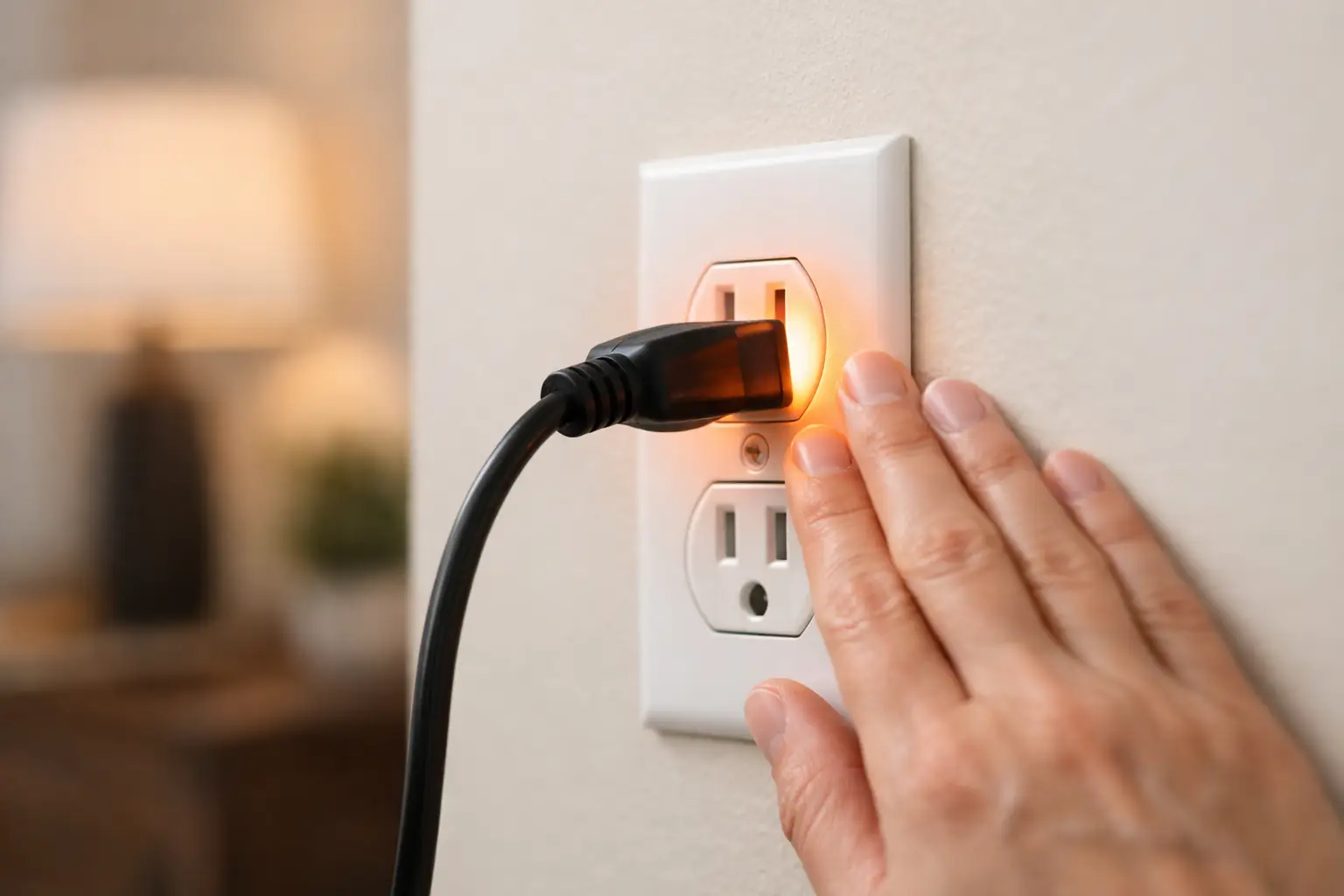
You plug in a space heater, phone charger, or microwave, reach for the cord later, and notice the receptacle feels warm. If you’re asking, why are outlets warm to touch, the short answer is this: a little warmth can happen under load, but noticeable heat is never something to ignore. An outlet should not feel hot, smell burnt, discolor, or make buzzing sounds. When it does, that points to a problem that needs professional attention.
At M Power Electric LLC, this is the kind of issue we take seriously because heat is one of the earliest warning signs of electrical trouble. Sometimes the fix is simple, like replacing a worn receptacle. Other times, the real issue is hidden deeper in the wiring, breaker, or circuit load.
Why are outlets warm to touch in the first place?
Electricity naturally creates some heat as current moves through wires and devices. That part is normal. What matters is how much heat is building up and where it is coming from.
A lightly warm outlet after powering a lamp or charging a phone is different from an outlet that feels distinctly hot or stays warm long after the device is unplugged. Excess heat usually means resistance is building somewhere it should not. That resistance can come from loose wire connections, a worn-out receptacle, damaged conductors, or too much demand on the circuit.
The important thing to know is that outlets are not meant to act like heating elements. If an outlet is producing enough warmth for you to notice right away, there is usually a reason.
When outlet warmth may be normal
There are a few situations where slight warmth is not automatically a red flag. High-draw appliances such as hair dryers, portable heaters, air fryers, microwaves, and window AC units pull more current than a phone charger or table lamp. During active use, the receptacle faceplate may feel a little warm.
Even then, there are limits. The outlet should not be hot to the touch. It should not have a plastic smell, scorch marks, or flickering power. The plug should also fit securely. If the plug feels loose or slips out easily, the receptacle may be worn, and that extra looseness can create arcing and heat.
So yes, a small amount of warmth can happen. But if you pause and think, “this feels warmer than it should,” it is worth getting checked.
Common reasons an outlet gets too warm
The most common cause is a loose connection. When wiring behind the outlet is not tight, electricity meets resistance at that connection point. Resistance creates heat, and heat can damage the outlet and surrounding wiring over time.
Another common issue is overload. If too many devices are running on one circuit, the outlet may get warm because the entire circuit is working harder than it should. This shows up often in older homes where modern power demands have outgrown the original electrical system.
Worn or damaged receptacles are also a frequent problem. Outlets do not last forever. Repeated plugging and unplugging weakens the internal contacts. Once those contacts loosen up, the plug no longer makes a solid connection, which can lead to heat buildup.
Backstabbed wiring can be part of the problem too. Some outlets are wired using push-in connections on the back instead of side terminal screws. Those push-in connections can loosen over time, especially under heavier use.
Then there is the bigger-picture issue: undersized or aging wiring, outdated panels, or circuits that were never designed for today’s appliances. If a home now supports larger TVs, kitchen equipment, garage tools, EV charging, or outdoor electrical features, the original circuits may be under more strain than intended.
Signs the outlet is not safe
If the outlet is hot, stop using it. That is the clearest line. Warm and hot are not the same thing.
You should also take the outlet seriously if you notice a burning smell, buzzing or crackling, sparks when plugging something in, browned cover plates, melted plastic, intermittent power, or breakers tripping around the same time. Any of those signs suggest more than routine warmth.
Sometimes homeowners assume the appliance is the issue because the problem happens only when one item is plugged in. That may be true, but it can also mean the appliance is exposing a weakness in the outlet or circuit. A space heater, for example, often reveals bad connections that stayed hidden under lighter loads.
If the outlet is on a kitchen counter, bathroom wall, garage, basement, outdoor area, or near a pool or hot tub setup, the stakes are even higher. Those spaces require the right protection and proper installation because moisture changes the risk level fast.
Why are outlets warm to touch after using certain appliances?
High-wattage devices are usually the reason. Portable heaters, coffee makers, toasters, hair dryers, and similar equipment draw a lot of current. If the outlet and circuit are in good shape, a little warmth might show up during use. If there is any weakness in that connection, the heat becomes much more noticeable.
This is why dedicated circuits matter. Some appliances should not share a circuit with several other loads. In homes and commercial spaces where usage has changed over the years, the outlet may be doing more work than it was originally meant to handle.
That is also why extension cords and power strips can make things worse. They often get used as a workaround when there are not enough conveniently placed outlets, but they do not solve the underlying load problem.
What you should do right away
Start by unplugging whatever is connected to the warm outlet. If the receptacle is hot, leave it alone and turn off the breaker if you can identify the correct one safely.
Do not keep testing it by plugging other devices into it. Do not swap cords around and assume the problem is gone if the outlet cools off. Intermittent heat is still heat, and electrical problems often come and go before they become obvious.
It is also smart to avoid DIY outlet replacement unless you know the circuit condition is sound. Replacing the face of the problem does not fix a loose connection in the box, a damaged wire, an overloaded circuit, or a panel issue.
How an electrician diagnoses a warm outlet
A professional electrician does more than replace the receptacle and hope for the best. The outlet gets tested for load, wiring condition, connection integrity, polarity, grounding, and overall circuit performance.
In some cases, the fix is a straightforward receptacle replacement with properly secured connections. In others, the circuit may need repair, breaker evaluation, or a capacity upgrade. If the home has older wiring or a panel that is already stretched thin, solving the heat problem may involve more than one step.
That is where experience matters. A warm outlet can be a small repair, or it can be an early sign of a bigger electrical safety issue.
Older homes, newer loads, bigger problems
A lot of homes in and around Bowling Green were not built with today’s electrical demand in mind. Even if nothing looks wrong on the surface, the system may be working harder than it should. Add in garage freezers, home office setups, kitchen upgrades, entertainment systems, EV chargers, or outdoor living features, and weak points start to show.
That does not mean every warm outlet requires a full rewire. It does mean the answer depends on the age of the system, the type of devices being used, and whether the same circuit is feeding several high-demand areas.
Property managers and business owners run into this too. An outlet that feels warm in a break room, office, retail space, or utility area may point to repeated heavy use, aging devices, or hidden wear in a high-traffic electrical system.
When to call for service
If the outlet is hot, discolored, loose, buzzing, sparking, or tied to breaker trips, call right away. If it is consistently warm under normal use, call before it gets worse. Waiting rarely improves an electrical issue.
Professional and reliable service matters here because electrical heat is not something to guess at. A trained electrician can tell whether you need a simple outlet replacement, circuit repair, panel work, or a safer setup for the equipment you are using every day.
If you are in Bowling Green or the surrounding counties and want a local team that covers all of your electrical needs, M Power Electric LLC can inspect the issue, find the cause, and fix it the right way.
A warm outlet is your electrical system telling you to pay attention. The safest move is to listen early, before warmth turns into damage.